Quick answer
Use the furnace data plate, blower and inducer motor information, service manual, and measured startup behavior to build the load. Add the running demand of every load that will remain on, then add the single largest additional motor-start demand and a planning reserve. Connect a hardwired furnace only through approved transfer equipment installed for its branch circuit. Never backfeed a receptacle or improvise a furnace cord conversion.
A gas furnace is an electrical system too
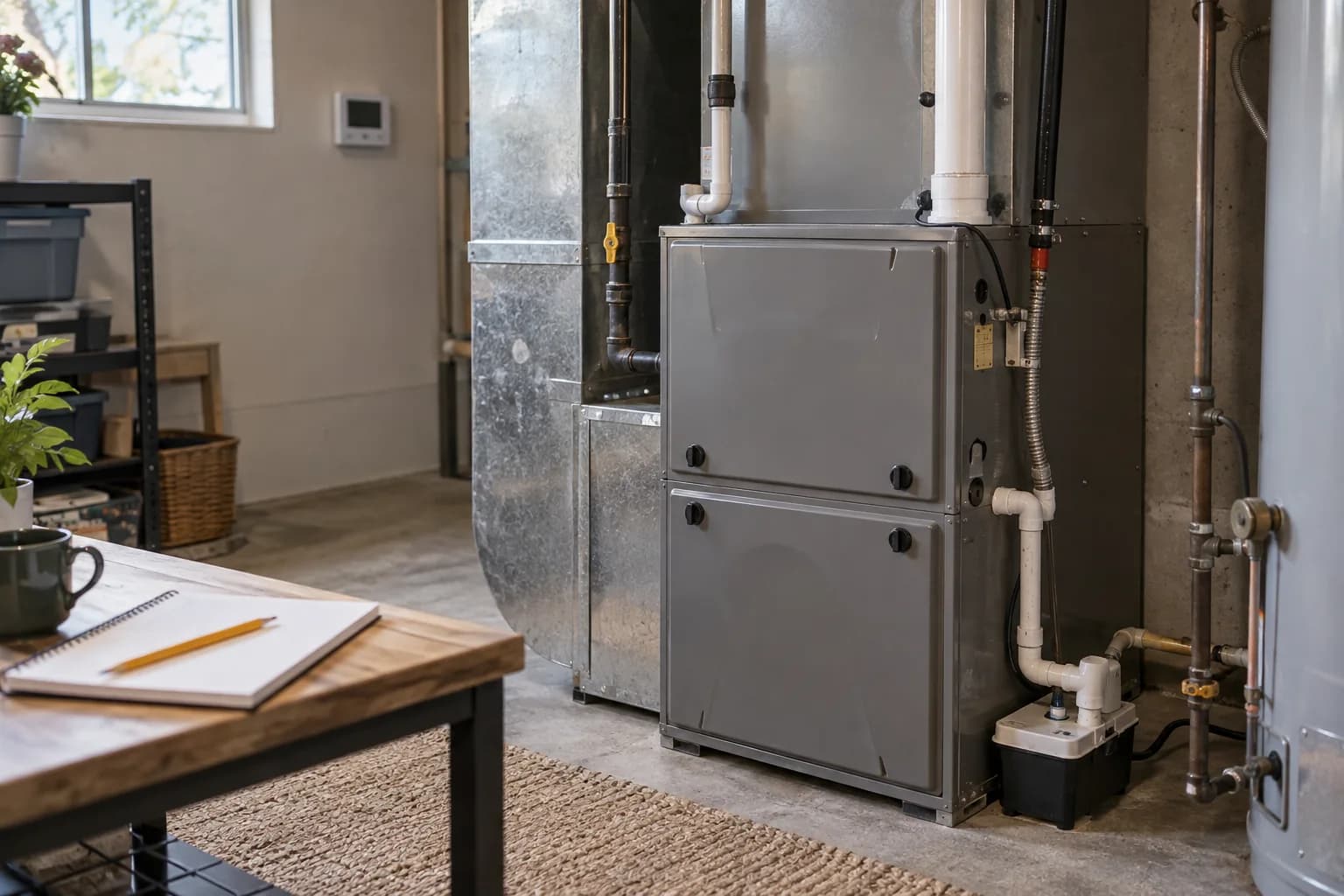
The gas flame supplies heat, but a modern forced-air furnace cannot normally deliver that heat without electrical power. A startup sequence may operate an inducer, pressure switches, igniter, gas valve, blower, control board, thermostat circuit, and safety controls. High-efficiency equipment may also rely on a condensate pump or powered accessories.
Do not size from the furnace fuel input in BTU per hour. That number describes heat from fuel, not the generator load. Use the furnace electrical rating, motor labels, wiring diagram, service literature, and any measured starting data. If an accessory shares the furnace circuit or must run with heat, include it.
A furnace can cycle many times during an outage. The generator must handle the startup event repeatedly while other selected loads are operating, not only run the blower after it reaches speed.
A pellet stove has different ignition, feed-motor, fan and shutdown needs. Use the pellet-stove backup guide for that appliance rather than applying a gas-furnace load estimate.
Size from one real operating sequence
List the running watts or volt-amps for the furnace and all simultaneous outage loads. Then identify the largest additional starting requirement among the motors that can start while those running loads remain on. CordFind uses running load plus one largest additional startup event because that is a clear planning baseline. If two motors can start together, model that actual sequence instead.
Keep continuous output separate from short-duration surge or motor-start performance. A generator can have an attractive peak-watt label yet allow voltage to sag enough to reset controls or stall a motor. Ask the generator manufacturer about the exact furnace motor, starting current, voltage recovery, output quality, fuel, altitude, and temperature.
The starter values in the worksheet are examples only. Furnaces differ by blower technology, heating and cooling speed, efficiency, accessories, and control design. A variable-speed electronically commutated motor should not be assigned a generic surge multiplier without its documentation.
| Input | Where to find it | Why it matters |
|---|---|---|
| Voltage and frequency | Furnace data plate and manual | The source must match the equipment |
| Running current or watts | Data plate, motor label, measured operation | Builds the continuous load total |
| Starting current or extra watts | Motor data, service literature, qualified measurement | Screens transient generator demand |
| Required accessories | System wiring and outage plan | Condensate pumps and controls may be essential |
| Other simultaneous loads | House outage circuit list | They remain present while the furnace starts |
Use a transfer method designed for the furnace circuit
Most central furnaces are hardwired to a branch circuit. Reliance Controls documents a furnace transfer switch that selects either utility or generator as the source for a wired furnace circuit and provides branch protection while on generator power. That product example illustrates the required function: intentional source selection and a defined branch connection.
The exact equipment must suit the furnace circuit rating, voltage, neutral and grounding arrangement, local requirements, and generator connection. A larger manual transfer panel or approved interlock system may also serve the circuit as part of a whole-home essential-load plan. Have a qualified electrician select and install the method.
Do not place a plug on furnace wiring simply because a nearby receptacle is convenient. Do not use a suicide cord, dryer receptacle, or wall outlet as an inlet. Never defeat a furnace disconnect, door switch, grounding path, circuit breaker, or safety control.
Check voltage behavior and control compatibility
The furnace manual may specify voltage and frequency tolerances or contain service notes for generator operation. Controls can react to low voltage, unstable frequency, poor connections, incorrect neutral treatment, or repeated interruption. A low total watt reading does not prove that the startup waveform and voltage recovery are acceptable.
Before an outage, test the approved system under realistic conditions with a qualified person. Observe the inducer and blower starts, burner sequence, control faults, generator sound, output voltage, and any transfer equipment indicators. Add other loads only after the furnace cycle is stable.
If a furnace locks out, a breaker trips, the generator hunts, voltage is abnormal, a motor fails to accelerate, or a control fault returns, shut the system down according to the manuals. Do not repeatedly reset a safety or enlarge protection to force operation.
Plan heat, fuel, ventilation, and cold-weather operation together
A heating outage plan is more than a watt calculation. Confirm generator fuel storage, cold-start performance, maintenance state, cord route or inlet access, snow and rain protection that does not enclose the generator, CO alarms, and a safe outdoor operating location. CPSC says portable generators should be used outdoors only, at least 20 feet from the home, with exhaust directed away.
Keep doors and windows closed near the operating area and never run the generator in a garage, porch, basement, shed, or partially enclosed space. Remote start does not change these placement rules. Test battery CO alarms on every level and outside sleeping areas.
Document which circuits must remain off while heat is running. Electric water heating, range elements, clothes drying, large pumps, and air conditioning may exceed a portable source. A simple panel card can prevent a cold, dark outage from turning into repeated overloads.
Portable and standby solutions solve different operating needs
A portable generator can supply a furnace through approved transfer equipment when someone can place, connect, fuel, start, monitor, and shut it down safely. A standby system can automate outage detection and approved load transfer, but it still needs correct sizing, fuel capacity, placement, installation, exercise, and service.
Choose based on response time, expected outage duration, occupant ability, climate risk, required circuits, fuel access, maintenance commitment, and local approval. A portable unit with a documented manual plan can be more useful than an automatic system whose fuel or service requirements were overlooked.
Frequently asked questions
Common questions
What size generator is needed for a gas furnace?
There is no universal size. Add the furnace and other simultaneous running loads, then the largest additional starting demand, plus a planning reserve. Verify the result against the furnace and generator manufacturers.
Can a 2,000 watt generator run a gas furnace?
It may or may not. Compare the exact furnace running and starting data, accessories, other loads, generator continuous and transient performance, voltage quality, and the approved connection method.
Can I plug a hardwired furnace into an extension cord?
Do not convert or bypass a hardwired branch circuit from generic instructions. Use transfer equipment selected and installed for the furnace circuit by qualified personnel.
Why does a gas furnace need generator power?
Forced-air gas furnaces normally need electricity for the blower, inducer, ignition, controls, gas valve, thermostat transformer, and sometimes condensate or air-quality accessories.
Should the furnace be the only load when it starts?
Staging large loads can reduce simultaneous starting demand. The actual plan should include every load that remains on during the furnace startup and prevent other large starts when necessary.
Primary references
CordFind summarizes connector specifications and public safety guidance. Always follow the instructions supplied with your equipment.
- Reliance Controls: Furnace Transfer Switch Instructions
- Reliance Controls: Portable Generator Transfer Switch Operating Instructions
- OSHA: Using Portable Generators Safely
- CPSC: Carbon Monoxide Information Center