Quick answer
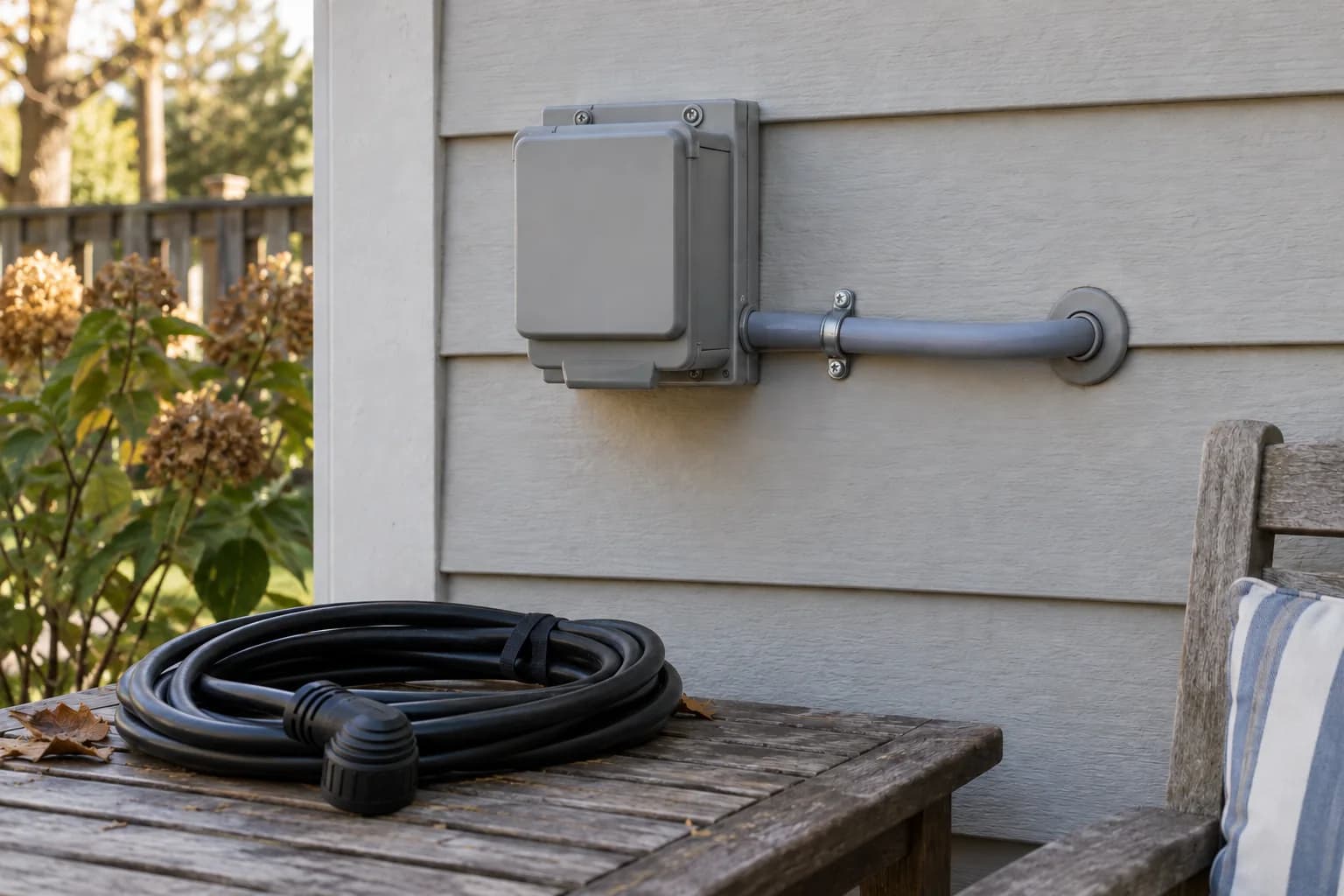
The typical safe path is generator receptacle → compatible generator cord → exterior power inlet → properly installed transfer equipment → selected home circuits. Never use a male-to-male cord or energize building wiring without transfer equipment.
Understand the safe connection path
The generator cord connects a compatible generator receptacle to a dedicated building power inlet. Inside the electrical system, approved transfer equipment prevents an unsafe connection between generator power and utility power.
The cord is therefore only one component. Its connector family, voltage, amperage, conductor count, and rating must align with both the generator and the installed inlet.
Have building equipment selected and installed professionally
OSHA states that a generator should not be attached directly to a structure’s electrical system unless a qualified electrician has properly installed it with a transfer switch. The correct design depends on the service, panel, grounding arrangement, generator configuration, intended circuits, and local requirements.
CordFind can help identify a generator-side connector, but it cannot inspect a panel or approve an installation. Use the labels on the installed inlet and the installer’s documentation to select the cord.
Why backfeeding is dangerous
Plugging a generator into a home outlet can energize wiring in unexpected directions and expose utility workers, neighbors, and occupants to electrocution. A male-to-male cord can also leave energized blades exposed.
CPSC specifically warns consumers not to use male-to-male extension cords and identifies electrocution, fire, and carbon-monoxide hazards.
The electrical connection does not remove exhaust risk
Operate portable generators outdoors and far from the home, doors, windows, vents, garages, and other occupied structures. Carbon monoxide is invisible and can be fatal.
Plan cord length and inlet location so the generator can remain in a safe outdoor position without cords being crushed, pinched, submerged, or routed near hot exhaust.
Frequently asked questions
Common questions
Can I plug a generator into a wall outlet to power my house?
No. That is backfeeding and can electrocute utility workers or others. Use a dedicated power inlet and properly installed transfer equipment.
Is a generator cord enough to connect a house?
No. The building also needs approved inlet and transfer equipment selected and installed for the electrical system.
What size generator cord connects to a house inlet?
Match the exact generator receptacle and inlet designations, then verify voltage, amperage, conductors, length, and the installer or manufacturer requirements.
Primary references
CordFind summarizes connector specifications and public safety guidance. Always follow the instructions supplied with your equipment.
- OSHA — Using Portable Generators Safely
- CPSC — Portable Generator Hazards
- CPSC — Male-to-Male Extension Cord Warning