Quick answer
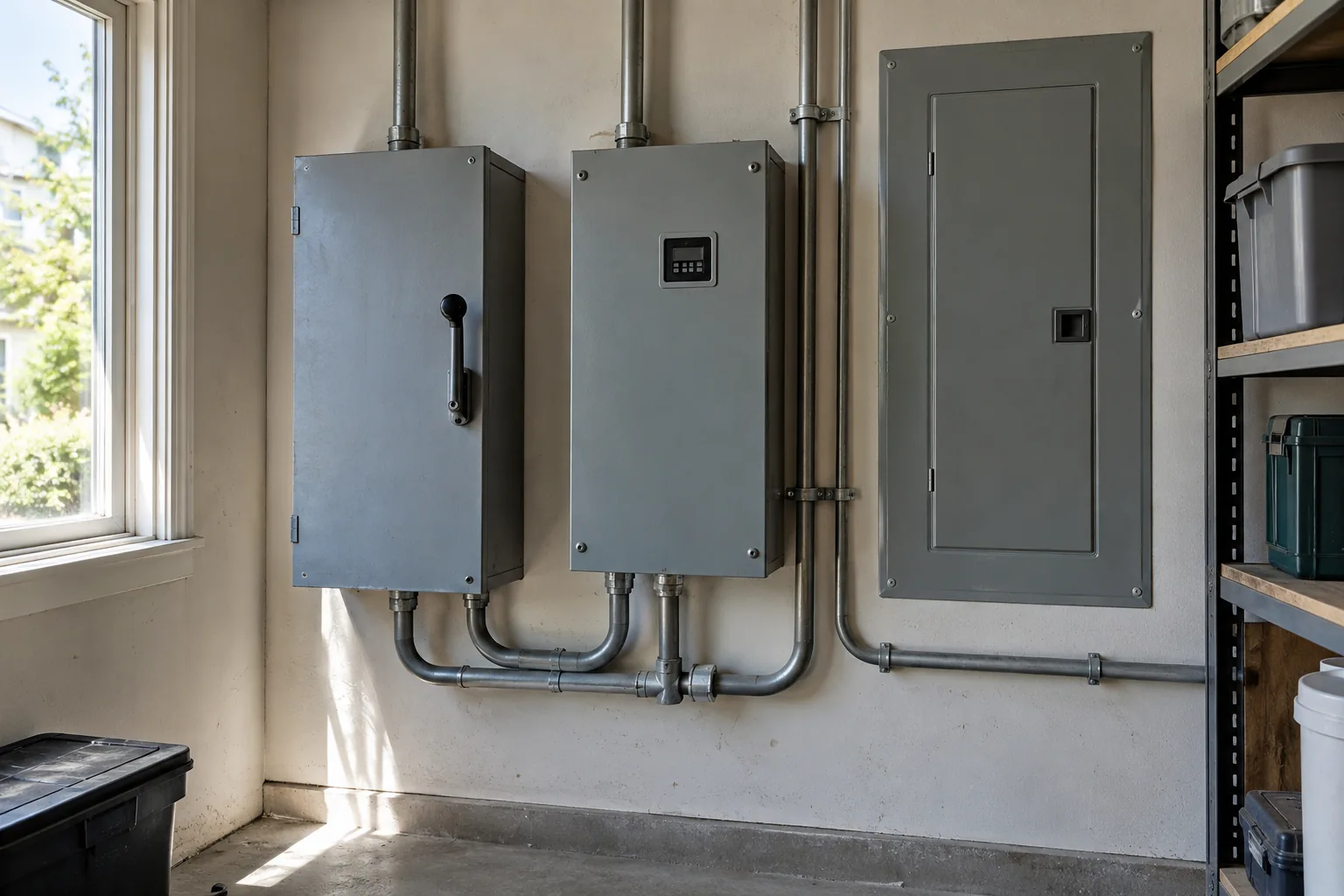
Portable generators commonly use a manually operated transfer system, often reached through a compatible power inlet and generator cord. Permanently installed standby generators commonly use an automatic transfer switch that monitors utility power. Either system must isolate the sources and be selected and installed for the specific electrical system by qualified personnel.
How a generator transfer switch works
A transfer switch provides a controlled path between utility and generator sources so the connected circuits are not supplied by both sources at the same time. This source isolation is what prevents generator power from feeding back toward utility lines.
The switch is only one part of the system. A portable-generator setup may also include a generator receptacle, compatible cord, exterior power inlet, overcurrent protection, and selected branch circuits. Every rating and connector in that path must agree.
Manual and automatic transfer switches solve different problems
A manual transfer switch requires a person to start the portable generator and deliberately change the selected source. Some manual systems feed a set of essential circuits; other approved designs may manage a larger load center while the user controls which loads operate.
An automatic transfer switch monitors the normal source and coordinates with a compatible standby generator. When utility power fails and generator voltage and frequency reach acceptable conditions, the system can transfer the connected load automatically. Automatic does not mean universal: the switch, generator controller, service arrangement, amperage, and load strategy must be compatible.
Match the switch to the service, generator, and loads
Selection starts with the generator output configuration and the circuits that need backup power. Confirm voltage, phase, generator breaker or receptacle rating, service-entrance requirements, neutral treatment, enclosure location, and the manufacturer’s approved equipment combinations.
Circuit count is not the same as available generator capacity. A transfer switch may make several circuits available, but the generator still has a running-watt and starting-watt limit. Plan which loads can run together and identify motor loads with significant starting demand.
- Record the generator model, output voltage, and connection designation.
- List the circuits and motor loads that need backup power.
- Identify whether the switch is service-entrance rated when the design requires it.
- Confirm indoor or outdoor enclosure requirements and the complete equipment instructions.
Transfer-switch installation is not a DIY cord project
OSHA guidance says a generator connected to a structure must use an approved transfer switch installed according to the manufacturer’s instructions by a qualified electrician. Installation decisions can involve service equipment, grounding and bonding, conductor sizing, fault-current ratings, permits, and local inspection.
CordFind explains the system and helps organize compatibility questions. It does not provide terminal-by-terminal wiring instructions or approve an installation.
Frequently asked questions
Common questions
Do I need a transfer switch for a portable generator?
You need approved transfer equipment when a portable generator supplies building wiring. Appliances connected directly with properly rated extension cords are a different use case and do not energize the building electrical system.
What is the difference between a manual and automatic transfer switch?
A manual switch requires deliberate user operation. An automatic transfer switch monitors the normal source and coordinates with a compatible standby generator to transfer loads automatically.
Can a 50 amp generator use any 50 amp transfer switch?
No. Amperage alone is insufficient. Voltage, phase, connector or feeder arrangement, neutral treatment, service rating, enclosure, generator compatibility, and load design must also match.
Primary references
CordFind summarizes connector specifications and public safety guidance. Always follow the instructions supplied with your equipment.
- OSHA — Grounding Requirements for Portable Generators
- Generac — What Is a Manual Transfer Switch?
- Generac — Automatic Transfer Switch Owner’s Manual