Quick answer
Read the current manual, inspect the generator, test carbon-monoxide alarms, and place the unit outdoors at least 20 feet from the home with exhaust directed away. Start it with loads disconnected, let it stabilize, and add approved loads without exceeding any rating. Shut it down and let it cool before refueling. Never operate it in a home, garage, shed, basement, crawlspace, or other enclosed or partially enclosed area.
Prepare the operating plan before an outage
Locate the owner manual for the exact model and record its running watts, starting capability, receptacle ratings, fuel requirement, oil specification, grounding instructions, and maintenance schedule. Test the generator outdoors on the manufacturer schedule so a stale battery, clogged fuel system, low oil level, or damaged cord is found before emergency use.
Decide which loads are essential and copy their nameplate watts or amps into a written load plan. Refrigerators, pumps, furnaces, and air conditioners may need extra power while starting. Use the generator size calculator to estimate the running total and largest starting addition, then verify the result against the generator manual and each receptacle rating.
- Current owner manual and model number
- Working carbon-monoxide alarms on every level and outside sleeping areas
- Approved fuel stored in suitable containers outside living areas
- Compatible grounded cords or installed transfer equipment
- A short list of essential loads and their actual ratings
Choose the outdoor location before starting the engine
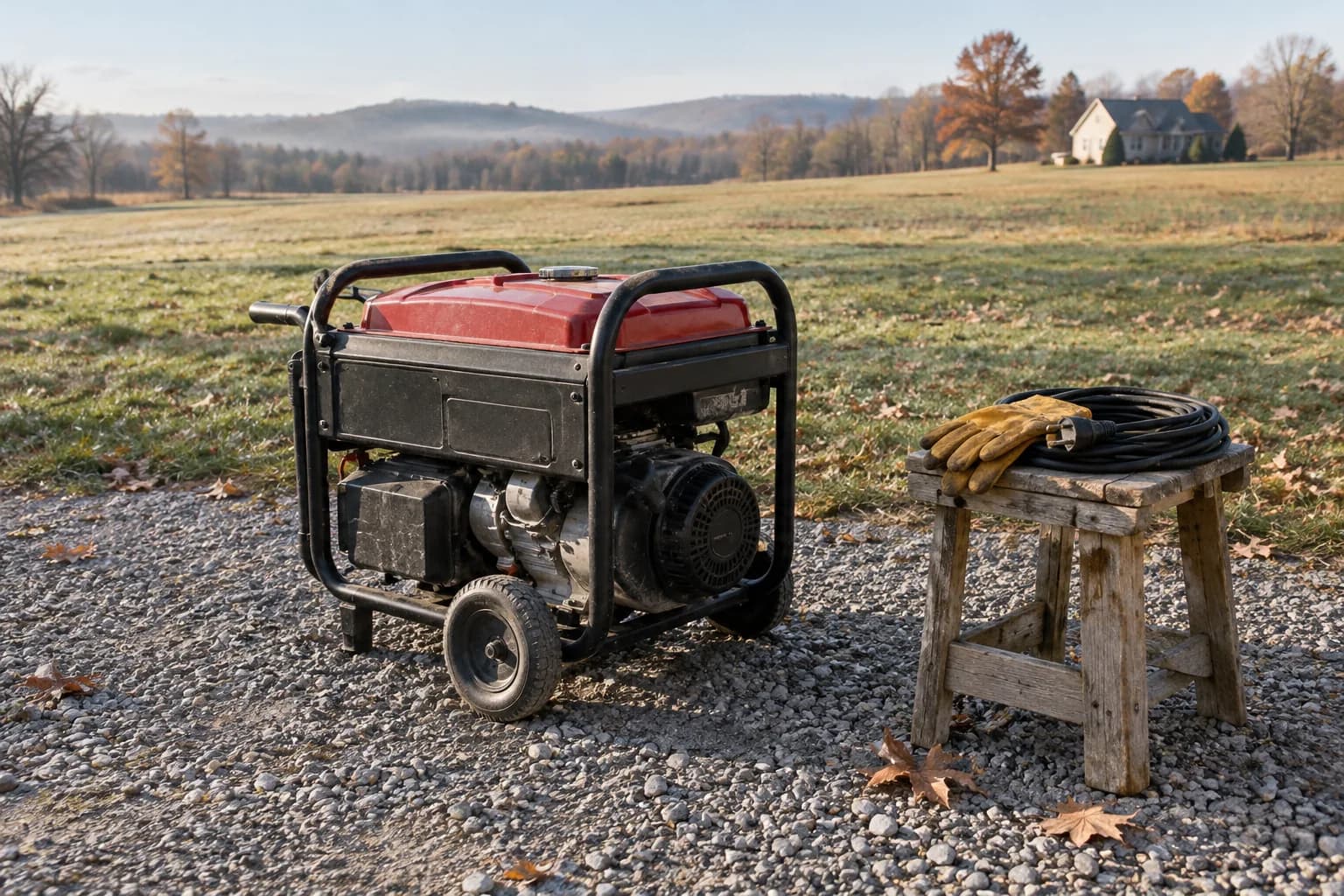
CPSC guidance says a portable generator should operate outside only, at least 20 feet from the home, with exhaust directed away from the home and other buildings. Check the full exhaust path for doors, windows, soffit vents, crawlspace openings, neighboring structures, and places where wind could carry exhaust back toward people.
Set the generator on a stable surface where it will not sit in water, block a walkway, expose cords to vehicles, or place hot parts near combustible material. Never use a garage, shed, porch, basement, or partially enclosed space. Weather protection has to follow the generator manufacturer’s instructions and must not trap exhaust or cooling air.
| Stage | Primary check | Stop condition |
|---|---|---|
| Place | Outside, at least 20 feet away, exhaust directed away | Any enclosed or partially enclosed location |
| Start | Oil and fuel checked, loads disconnected | Leak, damage, alarm, or unstable surface |
| Connect | One approved load at a time within every rating | Overload, hot cord, damaged plug, or repeated trip |
| Stop | Disconnect loads, shut down, allow cooling | Do not refuel while running or hot |
Start unloaded, then connect the planned loads
Follow the model-specific instructions for fuel valve, choke, electric start, and warmup. Unless the manual states otherwise, keep electrical loads disconnected during startup. Listen for unstable speed, check warning indicators, and stop if there is a fuel leak, unusual vibration, smoke, or a condition the manual identifies as unsafe.
Connect loads through intact, grounded cords that are rated for the environment and expected current, or through approved transfer equipment installed for the building. Add one planned load at a time so the generator can respond to starting demand. A multi-outlet cord does not increase capacity, and a household receptacle is not a generator inlet.
Monitor the generator, cords, fuel, and people
Keep the operating area restricted and recheck the exhaust direction, weather, cord routing, and warning indicators during use. A breaker or GFCI that trips repeatedly is a reason to remove the load and investigate, not to bypass protection. Stop if a plug or cord becomes hot, damaged, wet, loose, or discolored.
Carbon monoxide cannot be seen or smelled. If anyone develops headache, dizziness, weakness, nausea, chest pain, or confusion, move to fresh air immediately and call emergency services. A carbon-monoxide alarm is a backup layer. It does not make a closer or enclosed generator location acceptable.
Shut down, cool, refuel, and record the run
When stopping, turn off or disconnect loads according to the manual, let the generator run unloaded if the manufacturer specifies a cooldown period, and then stop the engine. Never refuel a running or hot generator. Gasoline spilled onto hot engine or exhaust parts can ignite.
After the unit cools, inspect for leaks or damage and record operating hours, fuel used, maintenance due, and any trip or fault. For storage, follow the model-specific fuel and battery procedure. Restock only approved fuel containers and keep them capped in a cool, well-ventilated location outside living areas and away from ignition sources.
Frequently asked questions
Common questions
Should appliances be connected before starting a generator?
Follow the owner manual. A common safe sequence is to start with loads disconnected, let the generator stabilize, and then add planned loads one at a time.
How far should a portable generator be from the house?
CPSC guidance says to operate it outdoors at least 20 feet from the home with exhaust directed away from the home and other buildings.
Can I use a portable generator in a garage with the door open?
No. A garage is an enclosed or partially enclosed location, and opening the door does not prevent lethal carbon-monoxide exposure.
Can I refuel a generator while it is running?
No. Shut the generator down and allow it to cool before refueling. Follow the exact cooldown and fuel instructions in the owner manual.
Primary references
CordFind summarizes connector specifications and public safety guidance. Always follow the instructions supplied with your equipment.
- CPSC: Generator and Engine-Driven Tool Safety
- CPSC: Portable Generator Safety
- OSHA: Using Portable Generators Safely
- CPSC: Fuel Container and Liquid Fuel Safety