Quick answer
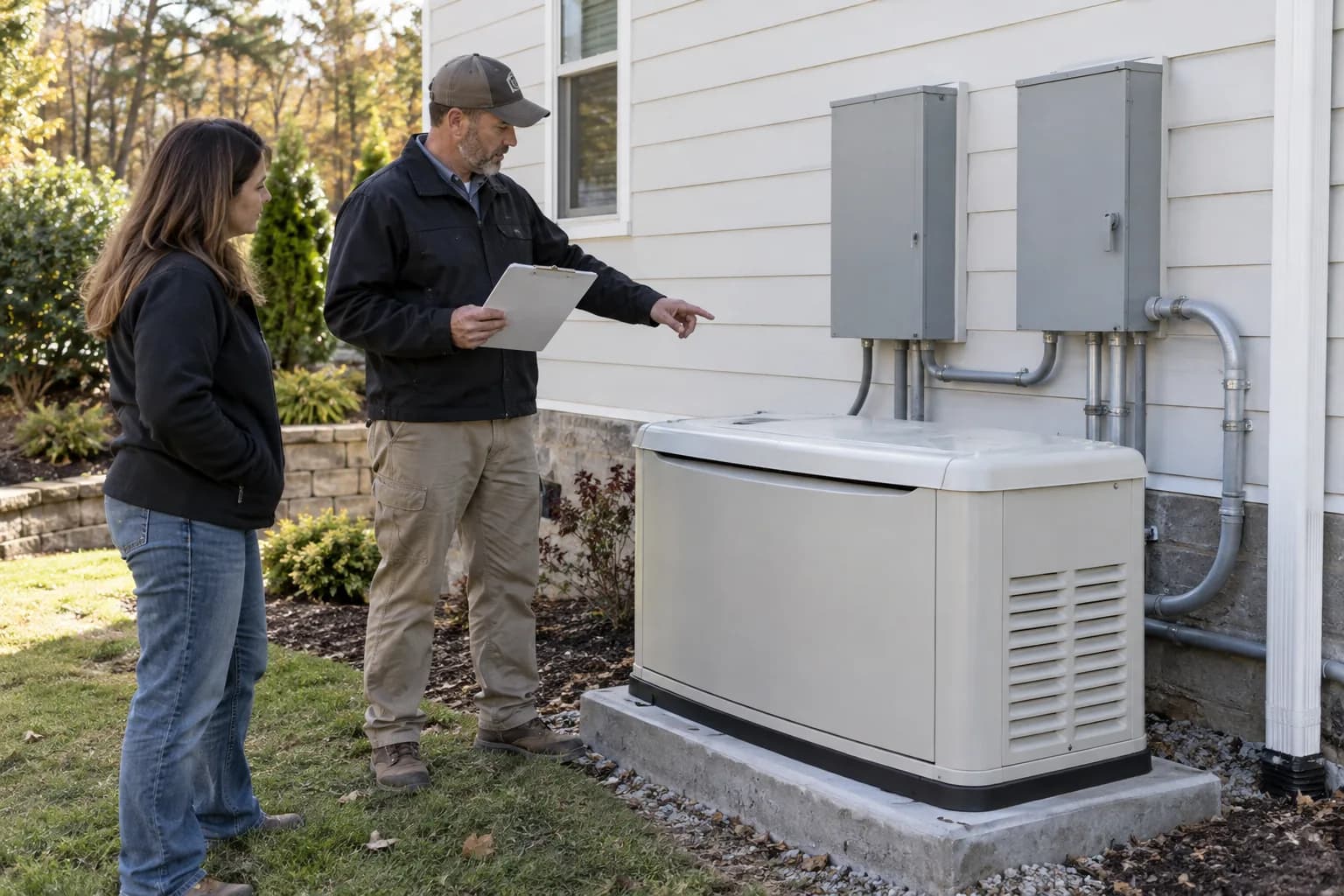
Start with the local authority having jurisdiction and give it the exact address and scope. Premises connections commonly require electrical review; permanent generators can also involve building, zoning, fire, fuel or mechanical review; utility coordination may apply to service and transfer work. Obtain the local answer before buying equipment or starting work.
Describe the complete project, not just the generator
State whether the source is portable or permanently installed, whether it will connect only to individual cord-and-plug loads or to premises wiring, and whether the project includes an inlet, interlock, manual or automatic transfer switch, service equipment, trenching, pad, enclosure, fixed fuel supply or storage.
Include generator model and ratings, site plan, proposed clearances, exhaust direction, connection or one-line diagram and the installer role. A scope change can change the required reviews, so confirm again before adding work.
Identify the authority having jurisdiction for the exact address
NFPA uses authority having jurisdiction for the organization, office or individual responsible for enforcing requirements or approving equipment, materials, an installation or a procedure. Depending on the location and property, that role can involve a building official, electrical inspector, fire marshal or another designated authority.
Do not assume the city, county, utility, fire district and venue share one process. Ask the first authority which other approvals apply, who files each permit, what documents are required and which inspections must occur before concealment or operation.
Request written requirements before procurement
Ask for the current application, adopted-code references, required drawings, contractor or licensing rules, equipment listing expectations, fee schedule, inspection sequence and expiration terms. Save the response with the project record.
For building power, document source isolation, transfer equipment, inlet, breakers, conductor and enclosure ratings, neutral and grounding design and labels. For permanent fuel systems, document the fuel supplier, storage or piping design and the authorities responsible for fire and mechanical review.
Close the project with inspection and commissioning records
Keep permit approvals, approved plans, inspection results, equipment manuals, model and serial records, installer information, settings and commissioning results together. Do not conceal work or operate a new premises connection before the required inspection and approval.
A passed arithmetic worksheet, a listed product or an installer statement does not replace local approval. If the installed scope differs from the approved documents, return to the AHJ before commissioning.
Frequently asked questions
Common questions
Do I need a permit for a portable generator?
The answer depends on location and use. Cord-only operation can still be subject to property, fire, noise, workplace or event rules. Any connection to premises wiring should be presented to the local electrical authority before work.
Who is the AHJ for a generator installation?
It is the authority responsible for enforcement or approval for that location and scope. It may involve a building department, electrical inspector, fire marshal or another designated office. Ask locally rather than assuming.
Does a transfer switch require utility approval?
Utility coordination requirements vary. Ask the serving utility and AHJ when the project affects service equipment, metering, transfer equipment or another utility interface.
Can an electrician decide that no permit is needed?
A qualified electrician can prepare and perform work within their scope, but the permit determination belongs to the responsible authority. Obtain the local answer directly and keep it with the project record.
Primary references
CordFind summarizes connector specifications and public safety guidance. Always follow the instructions supplied with your equipment.
- NFPA: Authority Having Jurisdiction Definition in NFPA 70 Materials
- OSHA: Grounding Requirements for Portable Generators
- CPSC: Generators and Engine-Driven Tools
- FEMA: Generator Safety