Quick answer
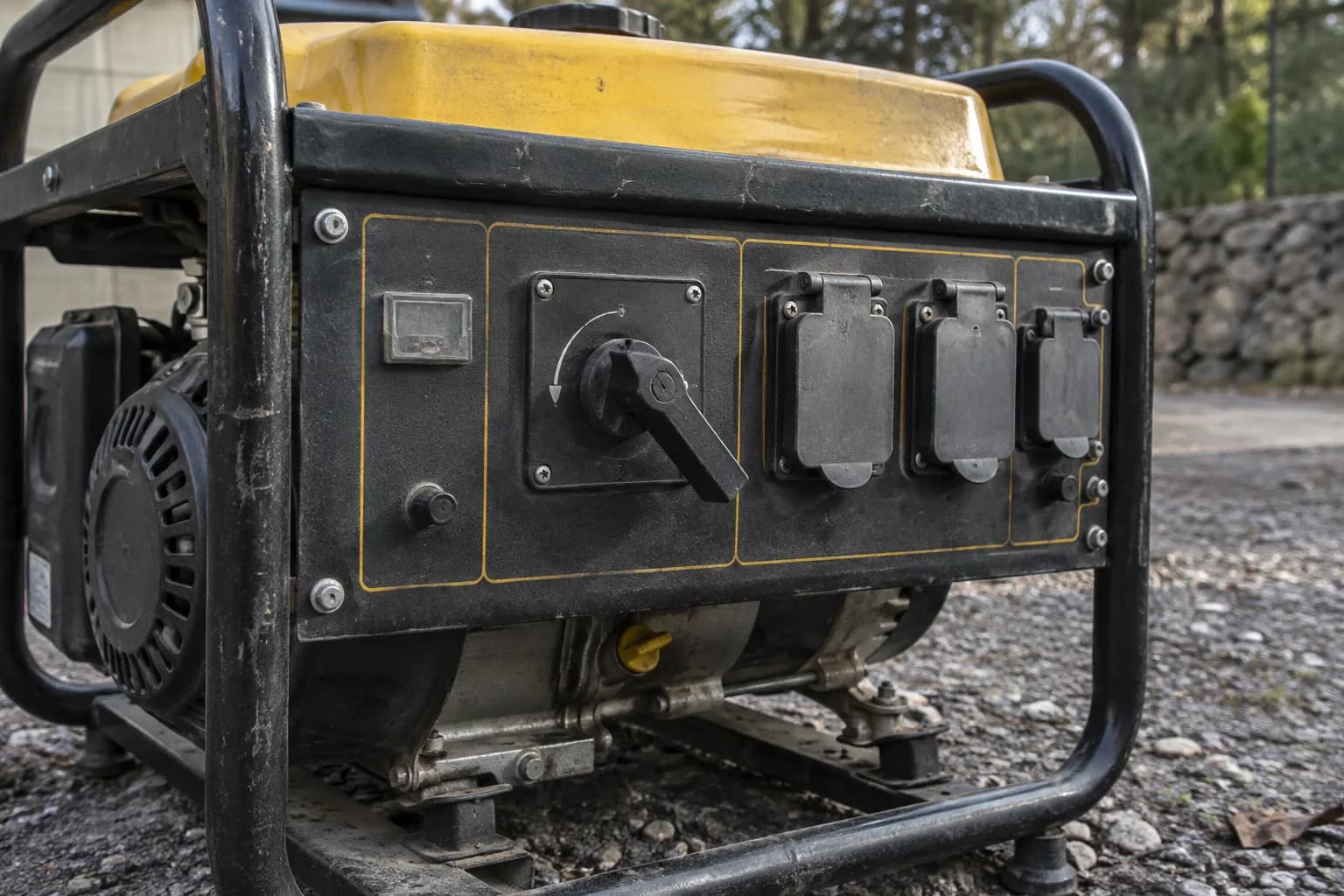
Use the selector position required by the connected equipment and the exact generator manual. Choose 120/240V when a verified 240V load or split-phase inlet requires it, then balance 120V loads across the two legs. Choose 120V only when the manual and connected equipment permit it. Never move the selector under load unless the manufacturer expressly instructs that procedure.
The selector can change the winding connection
Many portable generators with 120/240V output use two winding sections. In one selector position, the sections can support split-phase 120/240V output. In another position, some models reconnect the sections to make more of the winding capacity available to 120V loads. The exact behavior and energized receptacles vary by model.
Do not infer the circuit arrangement from the switch label alone. Use the AC receptacle-selection document or owner manual for the generator model and serial range. The manual should identify each receptacle, the controlling breaker, and the load available in each selector position.
120/240V mode creates a per-leg limit
In a typical split-phase arrangement, 120V loads connect from one hot leg to neutral, while a 240V load connects across both hot legs. A 240V load contributes current to both legs. The remaining 120V loads must be distributed so neither winding section or circuit exceeds its permitted rating.
A total-watt number can hide an overload on one leg. For example, a lightly loaded second leg does not automatically donate all of its unused capacity to a heavily loaded first leg in the 120/240V position. Use the generator’s receptacle and winding limits, not only the overall nameplate watts.
| Question | 120V position | 120/240V position |
|---|---|---|
| Can a 240V load operate? | Normally no; verify manual | Only through the approved 240V path |
| How are 120V loads limited? | Model-specific combined circuits | Per-leg and total limits apply |
| Does every receptacle remain energized? | Model-specific | Model-specific |
| Can the switch move under load? | Follow exact shutdown procedure | Follow exact shutdown procedure |
| What document controls? | Model and serial-specific manual | Model and serial-specific manual |
Balance 120V loads around the 240V load
For a planning screen, divide the wattage of a balanced 240V load equally between the two 120V legs, then add each leg’s separate 120V loads. Compare each result with the generator’s published per-leg limit. This arithmetic does not replace breaker, receptacle, conductor, starting-load, or transient checks.
Motors, pumps, compressors, chargers, and nonlinear loads can create starting or waveform demands that a simple watt balance misses. Schedule starts, verify nameplate amperes, and obtain manufacturer confirmation when the equipment is sensitive or the load approaches a limit.
The selector position must match the connection system
An L14-30 or similar 125/250V connection can carry two hot legs, neutral, and equipment ground. If the building transfer equipment or distribution box expects that complete arrangement, the generator must be configured and operated as required by both manufacturers. A 120V-only source does not become split phase through a cord or adapter.
Before connecting a building inlet, confirm selector position, source breaker, receptacle code, transfer equipment, neutral treatment, grounding, and the selected circuit list. Label the operating procedure near the equipment so the position is not guessed during an outage.
Change configuration only with the approved sequence
Moving a selector while loads are connected can interrupt power, create arcing, or apply an unexpected voltage to equipment. Many procedures require loads to be removed, the generator breaker opened, or the engine stopped before moving the selector. The exact sequence is model-specific.
If the switch is damaged, loose, hot, difficult to move, or missing a readable label, stop using the affected output and arrange qualified service. Do not hold the switch between positions, bypass it, or alter internal winding connections.
- Record the model and serial number
- Open the correct receptacle-selection document
- Identify every energized receptacle in each mode
- Record per-circuit and per-leg limits
- Post the approved unloaded switching sequence
Frequently asked questions
Common questions
Should a generator be set to 120V or 120/240V?
Use the position required by the connected equipment and permitted by the generator manual. A 240V load or split-phase inlet generally requires the 120/240V configuration.
Does 120V mode provide more 120V power?
Some models reconnect winding sections to make more capacity available to 120V loads, but the behavior and receptacle limits are model-specific.
Why does a generator overload when total watts look acceptable?
In 120/240V mode, too much 120V load may be concentrated on one leg even when the total is below the overall nameplate rating.
Can I move the voltage selector while the generator is running?
Follow the exact owner manual. Do not move it under load unless the manufacturer expressly provides that procedure.
Primary references
CordFind summarizes connector specifications and public safety guidance. Always follow the instructions supplied with your equipment.
- Honda: Generator Receptacle Selection
- Honda: AC Receptacle Selection Example
- Honda: Generator Owner Manuals
- OSHA: Using Portable Generators Safely