Quick answer
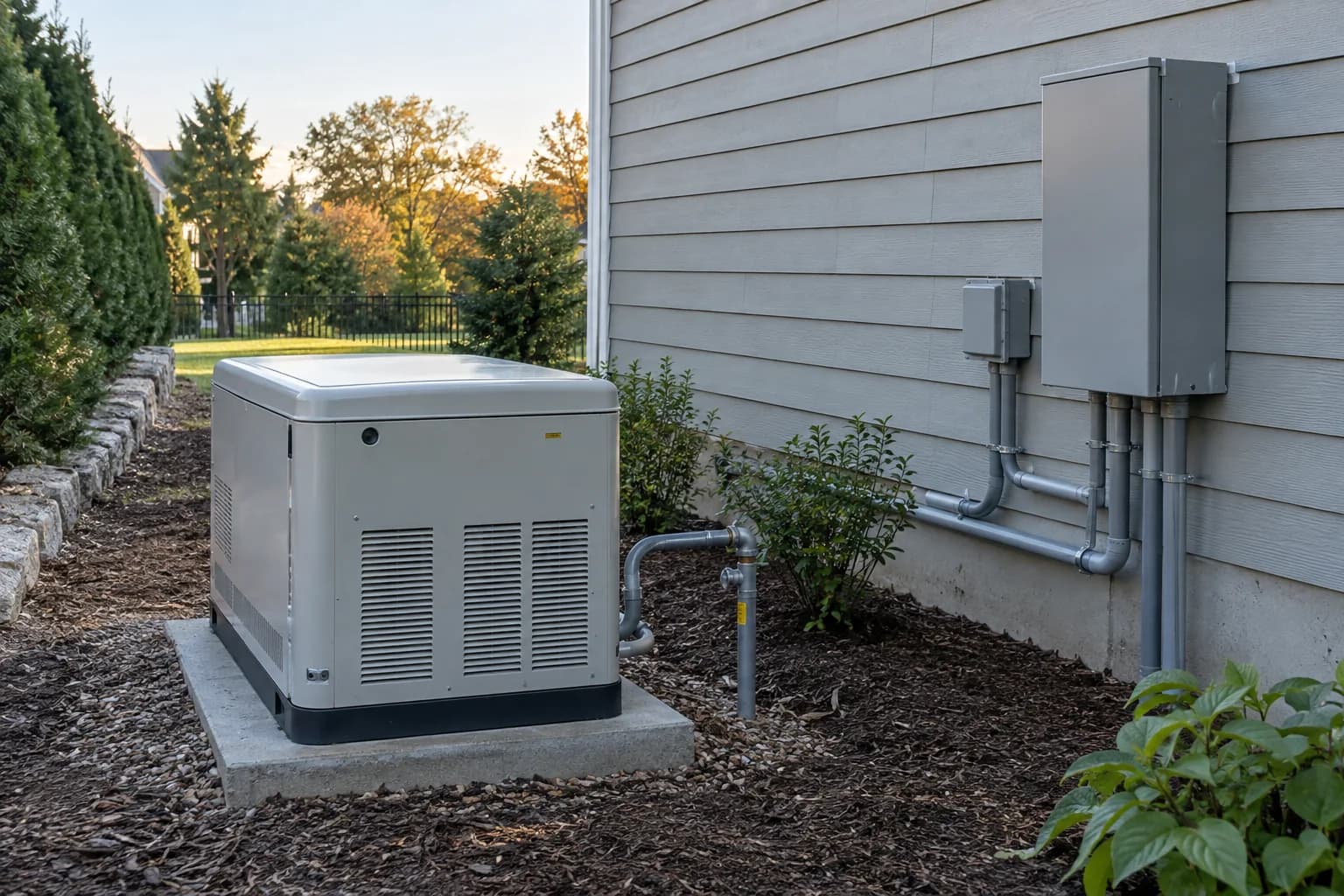
In an automatic standby system, the transfer controller monitors utility power. After a qualifying outage and programmed delay, it commands the generator to start. Once voltage and frequency are acceptable, the transfer switch disconnects the load from utility and connects it to generator power. When stable utility power returns, the switch retransfers the load, the generator completes its cooldown, and the system returns to automatic readiness. A portable system normally requires a person to place, start, connect, and transfer it through approved manual equipment.
Five functions make a standby system work
The generator converts fuel energy into mechanical rotation and then electricity. The transfer equipment selects which source supplies the connected loads. Controls monitor utility and generator conditions. The fuel system stores or delivers an approved fuel at the required pressure and flow. The load plan keeps electrical demand within generator, switch, conductor, and fuel-system limits.
Placement, grounding and bonding, overcurrent protection, service-entrance configuration, and local disconnects complete the system. These details are site-specific. The generator nameplate alone cannot describe how a home is connected or which neutral arrangement is correct.
The automatic sequence includes deliberate delays
When utility voltage leaves the controller’s acceptable range, the system waits through a programmed outage delay so a brief disturbance does not trigger an unnecessary start. It then signals the engine to crank. After startup, controls verify generator voltage and frequency before the switch transfers the connected load. Exact thresholds and times belong to the listed equipment and its settings.
When utility power returns, the controller normally confirms that it remains stable before retransfer. The load moves back to utility, and the generator may run without load for a cooldown period before stopping. The system then remains in automatic mode and follows its exercise and maintenance schedule.
| Stage | System action | What the owner should know |
|---|---|---|
| 1. Monitor | Controller watches utility source | A short utility disturbance may not start the generator |
| 2. Start | Controller commands engine crank after delay | Fuel, battery, oil, controls, and maintenance must be ready |
| 3. Qualify | Generator voltage and frequency are checked | Starting does not mean loads transfer immediately |
| 4. Transfer | Switch isolates utility and connects generator | Only planned loads should be connected |
| 5. Return | Stable utility is restored to the load | Generator may complete a no-load cooldown before stopping |
Whole-house wiring does not guarantee every load runs together
A transfer switch may be service-rated and connected broadly while controls still shed or stage large loads. Air conditioners, electric heat, pumps, water heaters, dryers, ranges, and vehicle charging can exceed the generator if they operate or start together. Load management protects the operating plan by delaying or disconnecting lower-priority demand.
Sizing therefore begins with simultaneous running loads and starting events, not floor area alone. A smaller selected-circuit system can be appropriate when the priority is refrigeration, heat controls, a pump, lighting, and communications rather than every appliance.
A portable backup plan uses a manual operating chain
A portable generator must be moved to its approved outdoor location, inspected, fueled, started, allowed to stabilize, and connected with suitable cords or an approved inlet and manual transfer system. The operator then selects the source and adds loads according to the written plan. It does not become an automatic standby system merely because it can feed building circuits.
Source isolation remains essential. Backfeeding a household receptacle can energize utility lines and expose users to energized prongs. A compatible inlet and transfer device installed for the building wiring provide the intended connection path.
Readiness depends on the parts that do not make electricity
A charged starting battery, available fuel, open fuel valves, correct oil level, clear airflow, current service, working controls, and an automatic-mode setting are all required before an outage. Exercise runs can reveal a starting problem, but they do not replace scheduled loaded tests or maintenance specified by the manufacturer.
Keep a record of model numbers, service dates, fault codes, fuel arrangements, load-management devices, and the shutdown procedure for an extended outage. A qualified service provider should investigate repeated faults, transfer problems, fuel leaks, abnormal voltage, or failed exercise cycles.
Frequently asked questions
Common questions
Does a standby generator turn on automatically?
A properly enabled automatic standby system can start after its controller detects a qualifying outage. The exact delay, transfer conditions, and sequence depend on the installed equipment.
How fast does a backup generator power the house?
There is normally an outage delay, engine-start period, and source-qualification period before transfer. Check the controller and transfer-switch documentation for the installed system.
Can a backup generator run every appliance?
Only if the complete system is designed for those simultaneous loads and starts. Many systems use selected circuits or load management to keep demand within capacity.
What happens when utility power comes back?
An automatic system generally confirms stable utility, retransfers the load, runs a cooldown if programmed, stops the generator, and returns to monitoring mode.
Primary references
CordFind summarizes connector specifications and public safety guidance. Always follow the instructions supplied with your equipment.
- Generac: Automatic Transfer Switch Owner’s Manual
- U.S. Department of Energy: Prepare for Utility Disruptions
- OSHA: Grounding Requirements for Portable Generators