Quick answer
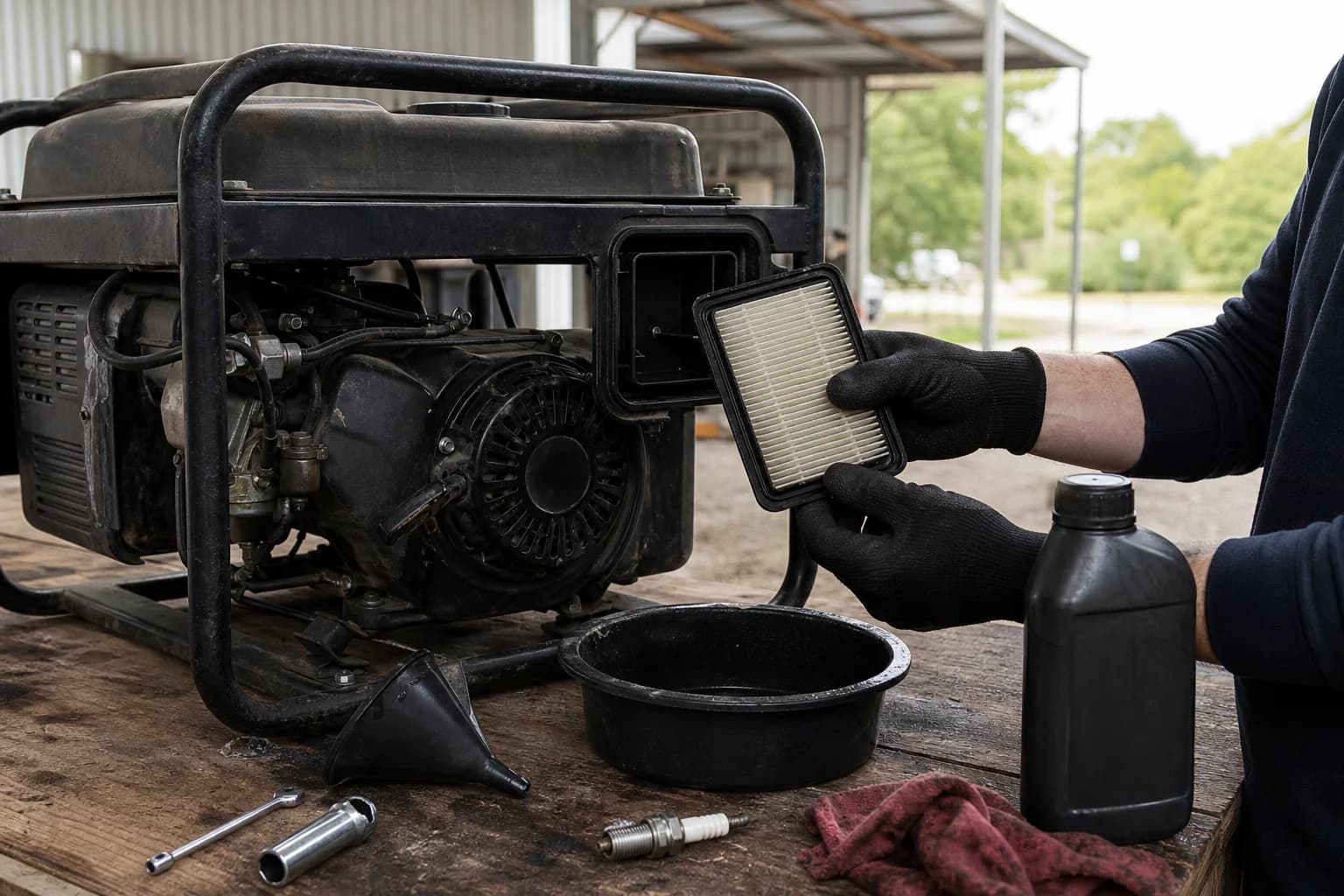
Start with the exact model and serial number, copy every service interval from the current owner’s manual, and record operating hours. Before each use, inspect for damage, leaks, blocked airflow, deteriorated cords, stale fuel, and missing safety labels. After use, cool the generator, record hours and load issues, and complete any interval that became due.
Create one model-specific maintenance record
Record the generator model, serial number, fuel type, manual revision, purchase or commissioning date, total operating hours, approved oil specification, filters, spark plug, and battery specification. Keep receipts and part numbers with the record so emergency maintenance does not depend on memory.
Transfer the manual’s first-service, recurring-hour, seasonal, and storage intervals into the checklist exactly. Different engines and standby systems use different intervals; a generic “change annually” instruction can be too early, too late, or incomplete.
For a newly purchased machine, record the model-specific generator break-in instructions before moving into this recurring maintenance schedule. Keep the first-use load requirements and first-service deadline as separate entries.
| Trigger | Record | Decision |
|---|---|---|
| Before each operation | Visual condition, fluids, cords, airflow, alarms | Operate or remove from service |
| Hour-based interval | Meter hours and required parts | Complete the exact manual task |
| Calendar interval | Date, exercise result, fuel and battery condition | Service, test, or replace |
| After an outage | Hours, load events, alarms, fuel used | Reset readiness and replenish supplies |
Before-use inspection
Check for fuel, oil, and battery-electrolyte leaks; damaged panels; loose fasteners; blocked cooling air; animal nests; corrosion; and deteriorated fuel lines. Verify the oil level and approved fuel condition using the manual’s procedure while the unit is safely shut down.
Inspect receptacles, grounding features, plugs, cords, inlets, and transfer equipment for damage or heat marks. Confirm that carbon-monoxide alarms work and that the operating location still meets outdoor distance and exhaust-direction guidance.
- Oil level and visible leaks
- Air inlet, exhaust area, and cooling clearance
- Fuel age, approved storage method, and shutoff condition
- Cords, receptacles, inlet, transfer equipment, and labels
- Battery, charger status, alarms, and exercise history where equipped
Monitor during operation and reset readiness afterward
During operation, watch for warning lights, unstable frequency or voltage indicators, overload trips, unusual vibration, smoke, fuel leaks, or a change in exhaust sound. Stop and follow the manual when the generator behaves abnormally; do not remove guards or troubleshoot near live or hot parts.
After shutdown and cooldown, record the hours, loads that caused difficulty, alarms, fuel consumed, and maintenance now due. Refill or store fuel only according to the manual, clean debris without introducing water into electrical components, and replace used emergency supplies.
Prepare fuel, battery and engine systems for storage
Fuel-storage procedures vary by fuel and engine. Follow the manufacturer’s instructions for stabilizer, draining, carburetor care, shutoff valves, and approved containers. Never store fuel in the generator’s operating space or near ignition sources.
Electric-start and standby generators may require battery inspection, charging, or replacement. Use the specified battery and charger configuration. Disable automatic starting before service exactly as the manual directs.
Know which work belongs to qualified service
Transfer switches, building wiring, fuel-gas systems, control wiring, internal alternator work, insulation testing, persistent leakage, and repeated fault codes require qualified diagnosis. Maintenance should not bypass guards, interlocks, emissions components, or source-isolation equipment.
For standby generators, confirm who is responsible for scheduled service, firmware or controller updates, battery replacement, load-bank or functional testing, permits, and warranty records.
Frequently asked questions
Common questions
How often should generator oil be changed?
Use the exact owner’s-manual interval, including any first-service interval and hour- or calendar-based requirement. There is no single oil-change interval for every generator.
Should I run my generator every month?
Use the exercise schedule in the model’s manual. Standby units may exercise automatically; portable-generator storage and test-run procedures vary by manufacturer and fuel.
What should be recorded after a generator run?
Record the date, starting and ending hours, load, alarms or trips, fuel used, abnormal behavior, maintenance completed, and next due service.
Can I service a standby generator while it is in Auto?
No. Follow the manufacturer’s complete procedure to disable automatic starting and isolate the relevant energy sources before service.
Primary references
CordFind summarizes connector specifications and public safety guidance. Always follow the instructions supplied with your equipment.
- Honda — Generator Owner’s Manuals
- Honda — Generator Maintenance Support Videos
- Generac — Portable Generator FAQ and Maintenance
- CPSC — Portable Generator Safety Guidance