Quick answer
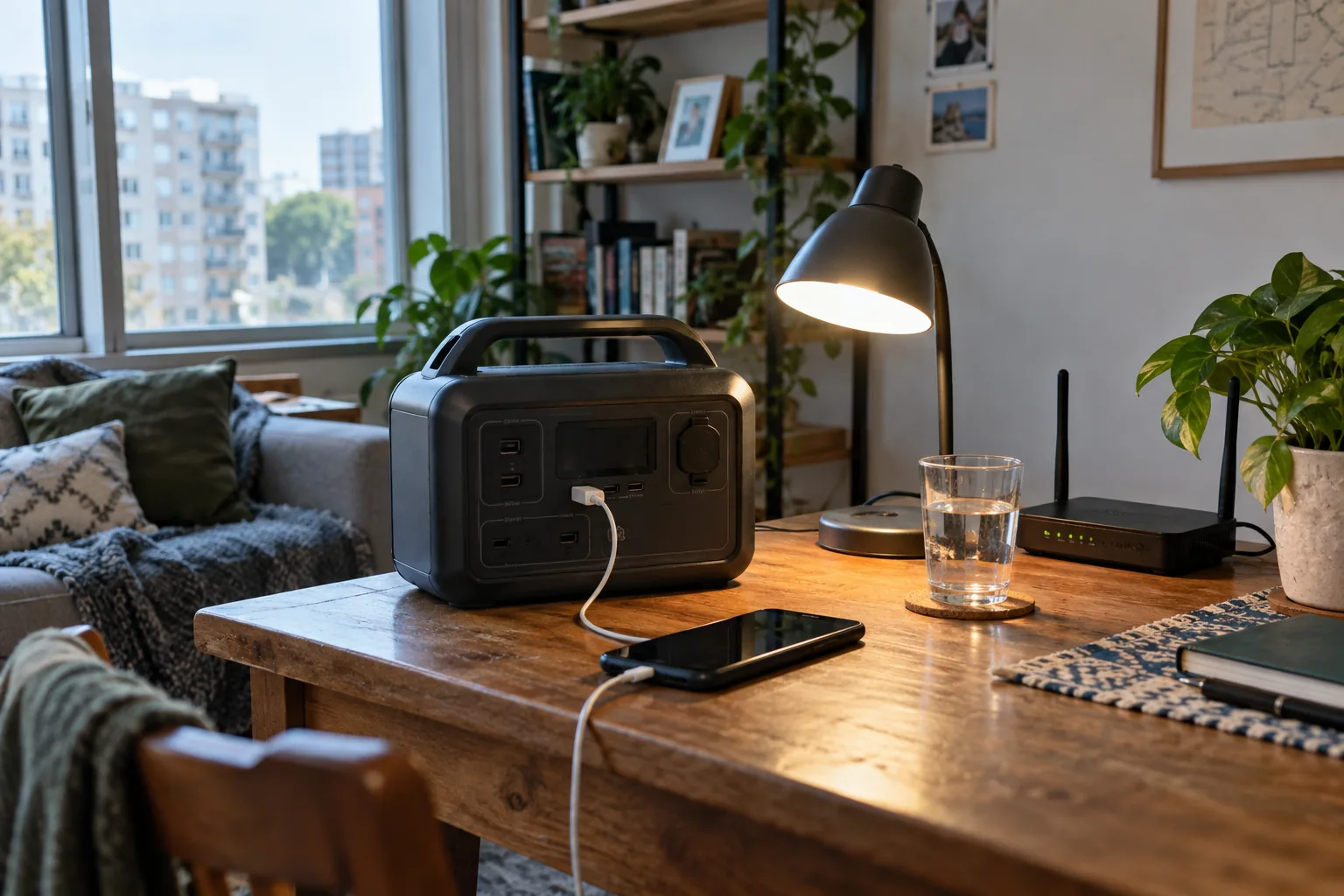
Never run a fuel generator inside an apartment, hallway, basement, parking garage, balcony enclosure, or other enclosed or partially enclosed area. CPSC says portable generators should operate outdoors at least 20 feet from the home with exhaust directed away. In a multifamily building, that distance must protect neighboring windows, doors, vents, and occupied areas too. Check lease, building, fire, fuel-storage, and local rules before purchase. For modest indoor loads, evaluate a listed portable power station, device-specific battery backup, and a charging plan.
Multifamily buildings remove the easy assumptions
A detached property may have a suitable outdoor point with controlled access and a route to approved connection equipment. An apartment resident may share walls, windows, ventilation systems, exits, courtyards, and parking areas. Exhaust placed away from one window can move toward another unit. A cord through a doorway can create a trip, fire-door, weather, or security problem.
Lease terms, condominium rules, fire codes, fuel-storage limits, noise rules, and emergency procedures can all apply. Property approval does not override carbon-monoxide or electrical safety, and a product purchase does not create a safe operating site.
A balcony is not automatically an outdoor generator location
Balconies can sit directly beside doors, windows, wall openings, soffit vents, and neighboring units. Overhangs and side walls can also make the space partially enclosed. CPSC’s distance and exhaust-direction guidance is incompatible with many balcony layouts. Parking garages, breezeways, stairwells, patios beneath units, and building entrances present similar problems.
Do not extend an exhaust hose as a substitute for safe placement. Leaks, backpressure, heat, and wind can make an unapproved exhaust modification dangerous. If the property cannot identify a compliant operating point and connection plan, a combustion generator is not the apartment solution.
| Option | Possible role | Decision limits |
|---|---|---|
| Fuel generator | Longer or heavier loads when a compliant site exists | Outdoor distance, all building openings, fuel, noise, security, connection, and permission |
| Portable power station | Indoor electronics and compatible small appliances | Continuous watts, surge watts, usable Wh, charging time, battery condition, and product instructions |
| UPS | Short bridge for specific electronics | VA/W rating, battery runtime, waveform, replacement schedule, and device compatibility |
| Device battery | Phone, light, radio, or approved medical device | Capacity, recharge source, connectors, storage, and replacement age |
| Relocation plan | Heat, cooling, medical, elevator, or long-outage needs | Transport, accessible shelter, medication, pets, alerts, and support network |
Build the smallest useful load plan
List communications, lighting, refrigeration, internet, medical equipment, heating controls, fans, and cooking alternatives. Record watts and hours, then separate equipment that can safely go without power from equipment that affects health. For medical devices, use the manufacturer’s backup-power instructions and coordinate an emergency plan with the relevant provider.
Battery energy is measured in watt-hours, while device demand is measured in watts. Divide usable watt-hours by average load for a first estimate, then account for inverter loss, cycling, temperature, and reserve. High-watt resistance heaters, hot plates, kettles, and air conditioners can empty portable batteries quickly or exceed their inverter rating.
A battery plan must include the second charge
A power station that covers the first night is not a multi-day plan unless it can be recharged. Record wall-charge time, compatible solar input, vehicle-charging limits, and any community charging location. Do not run a vehicle or fuel generator in a garage to recharge batteries. Keep charging cables and adapters matched to the product.
Store lithium battery products within their specified temperature and state-of-charge range. Stop using a pack that is swollen, damaged, wet, recalled, unusually hot, hissing, or emitting odor. Follow local disposal and fire guidance rather than placing a damaged battery in household trash.
Write an apartment-specific outage checklist
Ask property management how emergency lighting, elevators, access control, fire alarms, water pumps, heating, and resident communications behave during an outage. Identify accessible exits and a relocation threshold before the building loses comfortable temperature or elevator service. Keep flashlights, charged communications, medication information, food, water, and local alerts ready.
If the building offers a designated generator area or common backup system, obtain the written rules and equipment details. Do not connect a personal generator or battery system to apartment wiring through a wall receptacle. Permanent building circuits require equipment and installation approved for that system.
- Confirm property and local rules before buying fuel equipment
- Test smoke and carbon-monoxide alarms
- Prioritize health, communication, light, and food safety
- Record battery watts, watt-hours, and recharge time
- Set a clear point for relocating during an extended outage
Frequently asked questions
Common questions
Can I run a generator on an apartment balcony?
Do not assume so. Balconies are often close to windows, doors, vents, neighboring units, and overhead structures and may be partially enclosed. CPSC calls for outdoor operation at least 20 feet from the home with exhaust directed away.
What type of generator can be used indoors?
Do not use a combustion generator indoors. Battery power stations are sometimes marketed as battery generators, but their watt, watt-hour, charging, ventilation, and product-safety limits still apply.
Can I plug a portable power station into an apartment wall outlet to power the unit?
No. A household receptacle is not an inlet. Use only the outputs and connection methods approved by the power-station instructions.
How much battery capacity does an apartment need?
It depends on each load’s watts and operating hours. Build an hour-by-hour list, include starting demand, apply usable-capacity and efficiency limits, and preserve a reserve.
Primary references
CordFind summarizes connector specifications and public safety guidance. Always follow the instructions supplied with your equipment.
- CPSC: Carbon Monoxide Information Center
- FEMA Ready.gov: Power Outage Safety Information
- UL Solutions: Portable Power Pack Testing and UL 2743