Quick answer
Identify the exact water-heater technology and read its nameplate, circuit, voltage, element, compressor, and operating-mode documentation. Add the permitted water-heater load to all other simultaneous running demand, then account for the largest motor start. Verify 240V output, transfer and load-management controls, fuel-specific generator rating, site derating, and the manufacturer-approved outage mode before selecting equipment.
Classify the water heater before using a wattage value
Record whether the unit is gas storage, gas instantaneous, electric storage, electric instantaneous, integrated heat pump, or another design. Then identify every electrical component that must operate during an outage. Fuel-fired equipment can still need controls, ignition, fans, pumps, valves, condensate equipment, and freeze protection.
Do not transfer a wattage estimate between technologies. Department of Energy definitions cover storage, instantaneous, and heat-pump products with materially different input limits and operating behavior. The exact model documentation is the sizing source.
Electric storage water heaters add a large steady element load
A conventional electric tank uses one or more resistance elements. Use the element and unit nameplate ratings and determine whether elements are non-simultaneous or can operate together. A resistance element normally has no motor-start surge, but it can consume several kilowatts continuously during recovery.
Load scheduling can be more useful than attempting to run the heater continuously. An approved plan may heat the tank during a controlled period while HVAC, pumps, cooking, EV charging, or other high-demand loads are unavailable. The transfer and control system must enforce the intended limit rather than relying only on memory.
Gas and electric tankless units belong in separate sizing cases
A gas tankless heater uses fuel for heat but can depend on electrical controls, ignition, combustion air, venting, valves, and freeze protection. Record its voltage, watts or amps, grounding, waveform, and any UPS or generator requirements from the manufacturer. A small electrical load can still be critical if voltage or transfer behavior causes a control fault.
A whole-home electric tankless heater creates heat directly from electricity and can require multiple high-current 240V circuits. Do not size it from the electronics load of a gas tankless product. Use its full connected-load documentation and consider whether excluding hot-water production from the outage plan is more practical than selecting an extremely large generator and transfer system.
Heat-pump water heaters can change load by operating mode
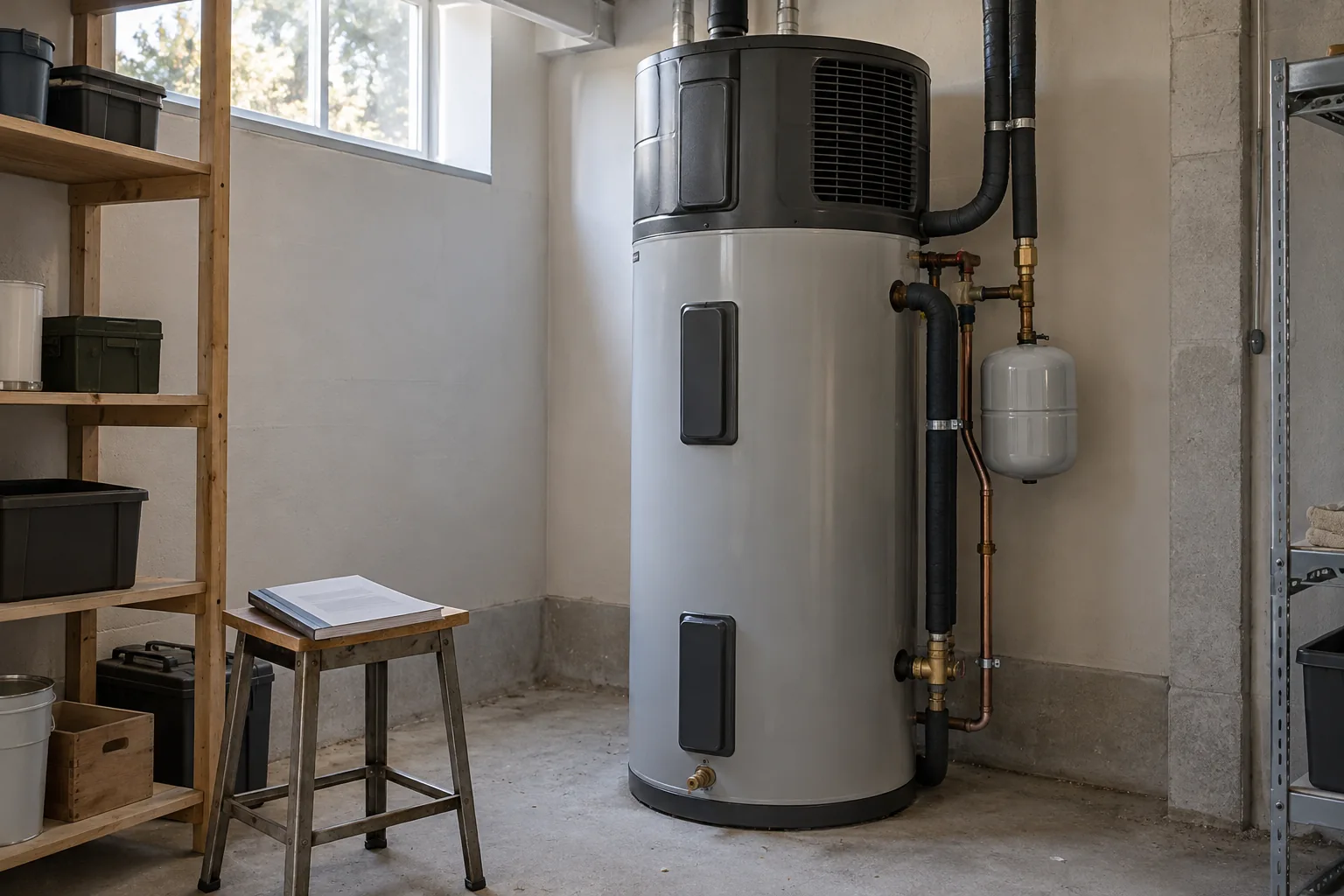
An integrated heat-pump water heater uses a compressor, fan, controls, and a storage tank. Many units also contain electric resistance elements for hybrid, high-demand, or emergency operation. The lower compressor-mode demand should not be used when controls may automatically enable a resistance element under the expected outage conditions.
Obtain manufacturer confirmation for an outage setting that limits or blocks resistance heat if the generator plan depends on it. Record compressor starting data, fan and control demand, element ratings, recovery performance, ambient-temperature limits, and what happens after a power interruption or mode reset.
Calculate the permitted mode with the rest of the outage load
Add every running load that can overlap with the water heater. For a resistance-only case, compare the total with generator continuous output and each 240V path. For a heat-pump case, add the largest permitted compressor start to the other running demand. For a fuel-fired unit, verify power quality and continuity as well as watts.
Apply fuel-specific output, altitude and temperature derating, per-leg balance, receptacle or feeder limits, transfer-switch rating, and load-management sequence. Commission the water heater in every permitted outage mode and confirm that restoration, thermostat calls, and other motor starts do not produce repeated trips or unstable voltage.
Frequently asked questions
Common questions
Will a 5,000 watt generator run an electric water heater?
It depends on the generator continuous rating, the exact element configuration, 240V output, other simultaneous loads, connection limits, and site derating. A nominal generator size alone cannot confirm the system.
Can a small generator run a gas tankless water heater?
Possibly, because the fuel supplies the heat, but the exact heater can require controls, ignition, fans, valves, pumps, grounding, and acceptable power quality. Follow the heater manufacturer requirements.
Can a portable generator run an electric tankless water heater?
Many whole-home electric tankless products have very large multi-circuit loads that are impractical for typical portable generators. Use the exact connected-load data and a qualified system review rather than a generic estimate.
Can I force a heat-pump water heater into heat-pump-only mode during an outage?
Only if the exact manufacturer documentation supports that mode and explains its behavior after power loss, low temperature, and high demand. Verify that resistance elements cannot return unexpectedly.
Primary references
CordFind summarizes connector specifications and public safety guidance. Always follow the instructions supplied with your equipment.
- Department of Energy: Consumer Water Heaters
- Department of Energy: Heat Pump Water Heater Technology and Backup Elements
- Department of Energy: Purchasing Energy-Efficient Residential Water Heaters
- Cummins: Liquid-Cooled Generator Set Application Manual