Quick answer
Define whether the generator will provide emergency standby, prime, or continuous power, then document voltage, phase, frequency, running load, starting events, nonlinear loads, site conditions, and operating hours. Select the applicable manufacturer rating and model the real load sequence. Plan fuel quality and storage, emissions compliance, transfer and distribution equipment, loaded testing, and maintenance as one system. Avoid extended low-load operation unless the exact manufacturer provides an approved strategy.
Portable, mobile, and stationary diesel sets solve different jobs
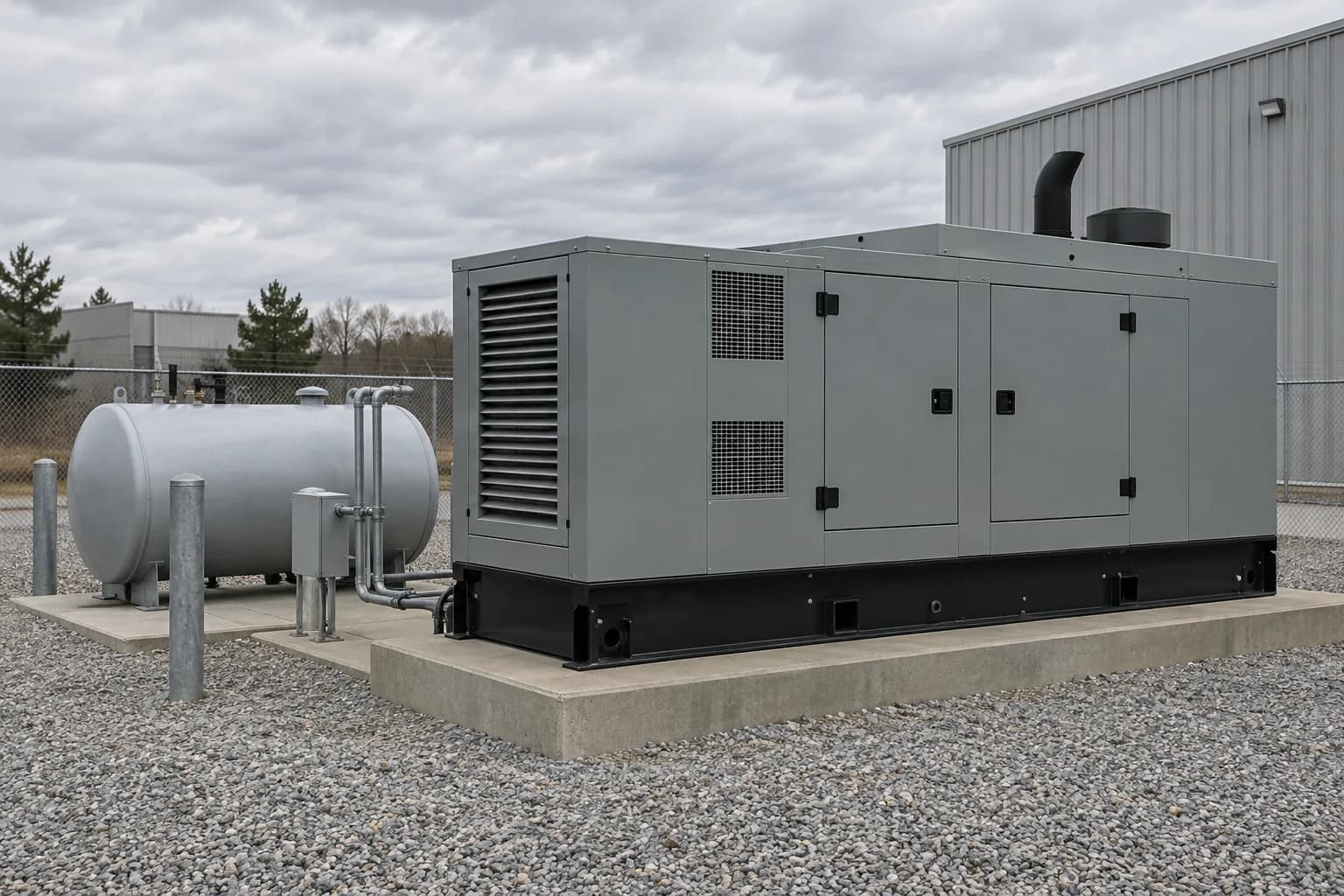
A small portable diesel generator may feed direct cord-and-plug loads. A towable set may supply temporary distribution at a construction or event site. A stationary standby set may start automatically through transfer equipment when utility power fails. A prime-power set may be the main electrical source for long operating periods.
Write the intended application, annual hours, maximum continuous run, outage duration, load criticality, mobility, and acceptable downtime before comparing models. The same nominal kilowatt label can represent different duty limits, enclosures, voltages, emissions certifications, tanks, and service expectations.
Use the manufacturer rating that matches the planned duty
Standby, prime, and continuous ratings are not interchangeable. Cummins application guidance ties the selection to how the source is used and how the load varies. A set advertised at one standby output may have a lower prime or base-load rating. Record the exact rating definition, permitted hours, overload allowance, and environmental basis from the model data.
Altitude, ambient temperature, ventilation restriction, fuel properties, enclosure configuration, and accessory loads can reduce usable output. Keep the site-rated figure with the project records. Future operators need to know why the working limit may differ from the largest nameplate number.
| Area | Inputs to collect | Decision produced |
|---|---|---|
| Duty | Source availability, hours, load variability, criticality | Applicable manufacturer rating |
| Electrical load | Volts, phase, kW, kVA, starts, power factor, harmonics | Generator and alternator selection |
| Site | Altitude, temperature, airflow, noise, space, access | Derating and installation scope |
| Fuel | Consumption by load, usable storage, quality, delivery | Runtime and replenishment plan |
| Operations | Testing, maintenance windows, alarms, staffing | Readiness and service plan |
Model starting, power factor, harmonics, and phase balance
A running-kilowatt total is only one part of generator sizing. Motors, pumps, compressors, elevators, and HVAC equipment may create starting kVA and voltage dip that control the selection. UPS systems, variable-frequency drives, welders, chargers, and electronic power supplies can add harmonic or transient requirements.
Create an operating sequence rather than assuming every nameplate maximum occurs together. Record which loads start first, what remains online during each start, and which loads can be delayed or shed. For three-phase systems, inspect current on each phase and the amount of single-phase load. Send this schedule to the manufacturer sizing tool or application engineer for critical systems.
Plan for low-load operation instead of discovering it after installation
Extended light loading can keep a diesel engine below its intended operating temperature. Caterpillar describes wet stacking, also called exhaust slobber, as a possible result of long periods below the model's recommended load. The appropriate minimum load and corrective procedure are engine-specific, so a universal percentage should not be treated as a service instruction.
Compare the hour-by-hour load with the manufacturer's operating guidance before oversizing for a rare peak. Load sequencing, multiple smaller sets, load management, or a documented load-bank program may be considered by the designer. Loaded testing should verify the complete standby system without exposing critical loads to an uncontrolled test.
Treat diesel storage and emissions as project systems
Runtime depends on the exact model's published fuel rate at the expected load, usable tank quantity, reserve, temperature, and refill access. Fuel quality can deteriorate through water, contamination, microbial growth, or long storage. Define inspection, sampling, treatment, rotation, spill response, and delivery responsibility before commissioning.
Stationary engines and fuel tanks can be subject to federal, state, and local emissions, storage, release-detection, fire, and environmental requirements. EPA guidance distinguishes stationary-engine compliance and underground-storage obligations. The applicable rules depend on engine type, use, age, location, fuel system, and jurisdiction. Include permitting and recordkeeping in the original scope.
Compare the service system, not only engine specifications
A useful bid names transfer equipment, controls, starting batteries, charger, block or coolant heaters, enclosure, exhaust, ventilation, tank, leak detection, monitoring, load-bank connection, commissioning, training, warranty, and service response. Remote locations may value parts access and technician coverage more than a small efficiency difference.
Create a log for exercises, loaded tests, fuel condition, battery checks, alarms, repairs, and operating hours. Test the real transfer sequence and staged loads where the site plan permits. A generator that starts without carrying the intended load has not completed a readiness test.
Frequently asked questions
Common questions
Is a diesel generator better than a gasoline generator?
It depends on duty, load, fuel logistics, emissions, noise, maintenance, mobility, purchase cost, and service support. Compare complete systems serving the same operating plan.
What size diesel generator do I need?
Use verified running kW and kVA, starting events, power factor, harmonics, phase balance, duty rating, environmental derating, reserve, and future load. Critical applications need manufacturer or engineering review.
What is wet stacking in a diesel generator?
It is a condition associated with extended light-load operation in some diesel engines, often seen as dark exhaust-system deposits or liquid. Follow the exact manufacturer guidance for prevention and correction.
How long can stored diesel fuel run a generator?
Divide usable fuel by the model's consumption rate at the planned load, then account for reserve, test runs, fuel quality, temperature, tank limits, and delivery uncertainty.
Primary references
CordFind summarizes connector specifications and public safety guidance. Always follow the instructions supplied with your equipment.
- Cummins: Liquid-Cooled Generator Set Application Manual
- Caterpillar: The Impact of Generator Set Underloading
- EPA: Compliance Requirements for Stationary Engines
- EPA: Emergency Power Generator Underground Tank Requirements
- OSHA: Using Portable Generators Safely