Quick answer
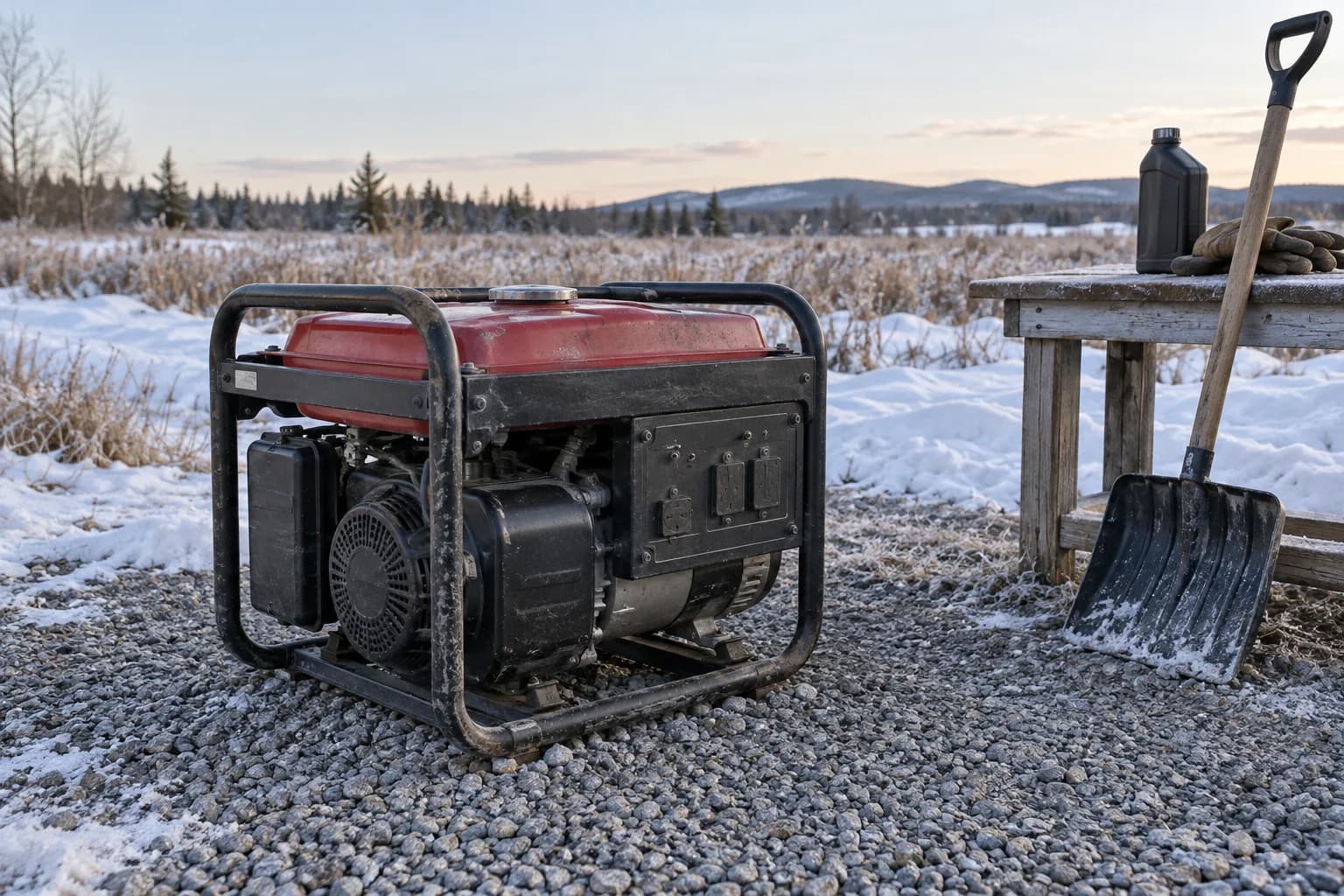
Before the storm, identify the approved outdoor operating location, confirm weather protection allowed by the exact generator manual, use the specified oil and fuel, check battery and maintenance condition, clear snow from airflow and exhaust paths, and test the planned loads. Portable generators stay outside at least 20 feet from the home with exhaust directed away. Never move one into a garage, shed, porch, or carport because it is cold or snowing.
Prepare the operating location before snow begins
CPSC’s 2026 winter guidance says portable generators belong outside only, at least 20 feet from the house, with exhaust directed away from the home and other buildings. A porch, carport, garage, shed, basement, crawlspace, or partly enclosed structure is not an acceptable substitute. Close openings in the exhaust path and maintain working CO alarms.
Prepare a stable dry surface, an illuminated access path, approved cord routing, snow-removal tools, safe fuel handling, and weather protection allowed by the generator manufacturer. CPSC advises following the manufacturer’s inclement-weather instructions, which may identify a suitable noncombustible tent or may require waiting until rain or snow passes.
Match oil, battery, fuel and accessories to the exact model
Use the oil viscosity and temperature range specified in the current engine or generator manual. Check oil level on the required surface. Inspect the battery state, terminals, charger, air filter, spark plug, fuel condition, hoses, regulators, and visible wiring. Cold weather can reveal a marginal battery or maintenance problem that a mild-day exercise did not show.
Standby heaters, battery warmers, breather heaters, snow kits, and cold-weather packages are model-specific equipment. Generac requires particular oil when certain cold-weather accessories are installed on named product families. Do not attach a generic heater, heat lamp, blanket, or improvised enclosure to a generator or propane cylinder.
| Area | Before starting | Operating boundary |
|---|---|---|
| Placement | Outdoor point, exhaust direction, openings, CO alarms | Never move into a building or partial enclosure |
| Engine | Specified oil, level, battery, filter and maintenance | No starting fluid or unapproved heating |
| Fuel | Fresh approved fuel, pressure or tank plan | No hot refueling or improvised regulators |
| Weather | Approved cover, dry surface, snow-clearing plan | Stop if protection or airflow cannot be maintained |
| Loads | Essential-load order and starting demand | Do not add every heating load at once |
Start unloaded and add a winter load plan in stages
Move a portable generator to its approved outdoor position before starting. Follow the cold-start choke or controller instructions, allow the engine and output to stabilize, then add verified loads in the planned order. Do not start with cords, transfer loads, chargers, or appliances already demanding power unless the exact manual instructs otherwise.
Winter loads can be deceptive. A furnace blower, heat pump, well pump, sump pump, refrigerator, battery charger, and portable heating equipment may start automatically. Electric resistance heat and auxiliary heat can create large sustained demand. Define which loads are essential, managed, or kept off during generator operation.
Keep snow, ice and drifting exhaust out of the system
Monitor snow accumulation around a standby enclosure and the portable generator’s approved weather protection. Maintain the manual’s intake, cooling, exhaust, service, and combustible clearances. Do not pile shoveled snow where it can block air paths, melt under electrical connections, or redirect exhaust toward a building.
Wind direction and snow drift can change during a long outage. Recheck exhaust direction, openings, cords, water runoff, fuel supply, indicators, and CO alarms. Stop operation when the generator cannot remain dry within its instructions, weather protection becomes unstable, airflow is obstructed, or exhaust separation cannot be maintained.
Use a documented shutdown, refuel and post-storm sequence
Remove loads in the required order, allow any prescribed cooldown, shut down, and let the generator cool before refueling. Clear snow without contacting hot components. Store gasoline and propane outside living areas in approved arrangements and keep ignition sources away.
After the storm, inspect for water entry, ice damage, blocked airflow, damaged cords, fuel leaks, loose connections, maintenance hours, and alarms. Dry and service the equipment according to its manual before storage. Record any hard start, shutdown, unstable output, alarm, or unusual fuel consumption for follow-up.
Frequently asked questions
Common questions
Can you run a generator in snow?
Only when the exact manufacturer instructions permit the weather setup and the generator remains outside, dry as required, at least 20 feet from the home, with safe exhaust direction, airflow, cords, and monitoring.
Why is a generator hard to start in cold weather?
Cold can affect oil flow, battery output, fuel delivery, air intake, icing, and maintenance margins. Follow the model’s temperature-specific oil, fuel, choke, battery, and accessory instructions.
Can I warm a generator in a garage before starting it?
Follow the exact manufacturer guidance. A combustion generator must be moved to its approved outdoor operating position before starting and must never run in a garage, even with doors open.
Should snow be cleared around a standby generator?
Yes, according to its installation and owner manuals. Preserve every required intake, exhaust, cooling, service, and combustible clearance without damaging the equipment.
Primary references
CordFind summarizes connector specifications and public safety guidance. Always follow the instructions supplied with your equipment.
- CPSC: 2026 Winter Weather Generator Safety Tips
- Generac: Model-Specific Cold Weather Kit Specifications
- Generac: Portable Generator No-Start Checks
- Generac: Winter Energy Preparedness