Quick answer
Use a storage cover only after the generator is shut down, cooled, dry, and prepared according to the manual. During operation, use only weather protection approved for the exact generator and operating conditions. It must preserve outdoor placement, exhaust clearance, combustion and cooling airflow, access, electrical dryness, and manufacturer service space. Never use a cover to justify operation in a garage, shed, porch, or other enclosed area.
Identify the cover category before comparing products
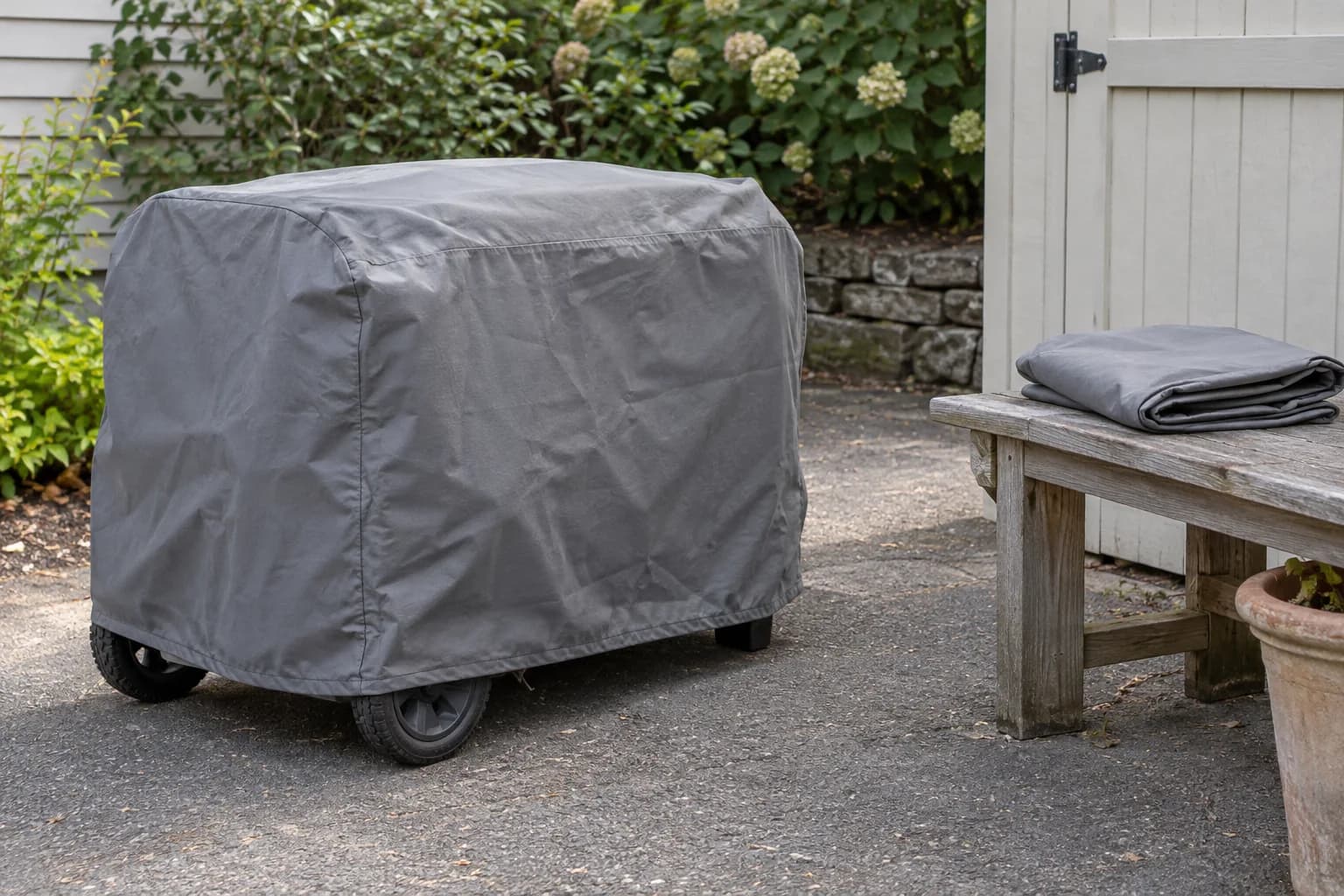
A fabric cover protects a stored machine from dust and minor exposure after shutdown. A running cover or canopy is intended to manage precipitation while the engine operates. A permanently installed standby enclosure is part of a listed generator system. These categories are not interchangeable.
Product photos can hide openings, clearances, hot surfaces, cord routing, and exhaust direction. Require instructions that name the compatible generator models and operating conditions. Reject a generic cover that relies only on approximate dimensions.
Cover only a cool, dry, storage-ready generator
Shut down, disconnect loads, close fuel systems as instructed, and allow the generator to cool before installing a storage cover. Covering hot exhaust or engine surfaces can damage the cover and create a fire hazard. Trapped moisture can also corrode electrical and engine components.
Prepare the fuel, battery, oil, and carburetor according to the storage interval in the exact manual. A cover does not replace a dry, secure storage location or the required separation from fuel containers and ignition sources.
Running protection must preserve every operating boundary
An approved running protection system must keep precipitation away from sensitive electrical connections while maintaining the airflow and clearances the generator needs for combustion and cooling. It must not recirculate exhaust or make inspection, emergency shutdown, refueling, or fire response difficult.
Wind-driven rain can change direction, and runoff can reach cords or plugs. Protect the complete electrical path according to product instructions. Use GFCI protection where required and stop operation when weather exceeds the approved setup.
A cover cannot make an enclosed location acceptable
Carbon monoxide is invisible and odorless. Open doors, fans, vents, improvised exhaust hoses, and partially open structures do not turn a garage, shed, porch, or box into the open outdoor location required for a portable generator.
Follow current CPSC guidance to operate outside only, at least 20 feet from the home, with exhaust directed away from the home and other buildings. Preserve working CO alarms. A cover sits inside that outdoor plan; it never replaces it.
Use a cover compatibility checklist
Confirm exact model fit, storage-only or running-use status, wind limits, precipitation limits, anchoring, material temperature rating, exhaust opening, cooling-air paths, control access, refueling instructions, cord exits, grounding provisions, warranty effect, and pack-down procedure.
Inspect the cover before each use for tears, blocked openings, loose supports, water pooling, melted material, corrosion, or movement. Stop if the cover contacts hot parts, changes engine operation, traps exhaust, or cannot keep electrical connections within their approved environment.
Frequently asked questions
Common questions
Can I cover a generator while it is running?
Only with a protection system expressly approved for the exact generator and conditions, installed to preserve exhaust clearance, cooling airflow, access, stability, and electrical dryness.
Can I use a tarp over a generator?
Do not place a tarp on or around a running generator. It can trap heat, contact hot parts, block airflow, collect water, and concentrate exhaust.
Should a generator be covered in storage?
A suitable storage cover can help after the generator is shut down, cooled, dry, and prepared according to its manual. It does not replace safe fuel and battery storage.
Does a generator cover make rain operation safe?
No cover provides universal approval. Follow the generator and cover instructions, protect the full electrical path, and stop when conditions exceed the approved arrangement.
Primary references
CordFind summarizes connector specifications and public safety guidance. Always follow the instructions supplied with your equipment.
- CPSC: Carbon Monoxide Information Center
- OSHA: Using Portable Generators Safely
- Honda: Generator Operation
- OSHA: Grounding Requirements for Portable Generators