Quick answer
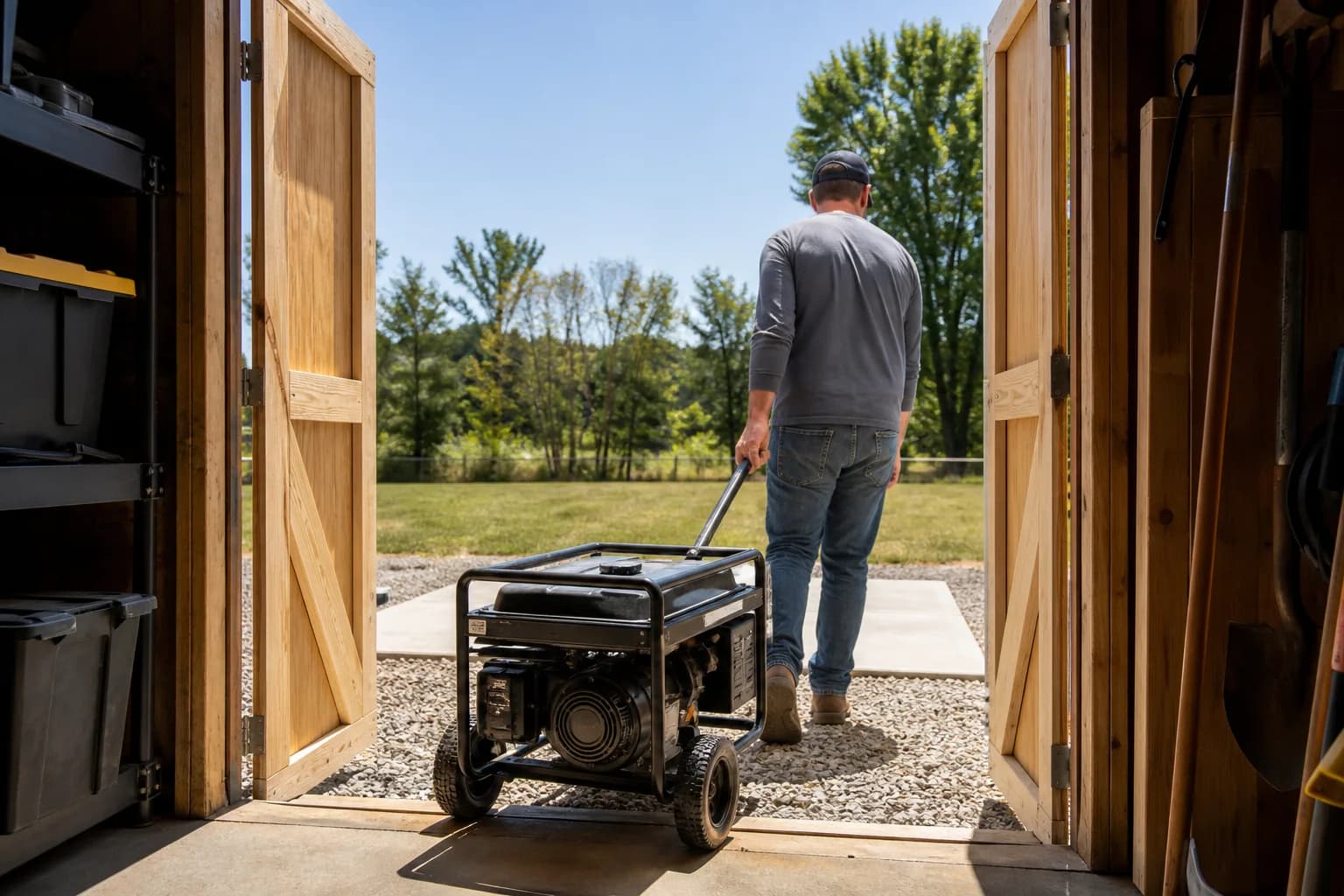
Never operate a portable generator in a shed, garage, or other enclosed or partially enclosed space. Store a cool, shut-down generator according to its manual and local fuel rules. During operation, move it outside to a compliant location at least 20 feet from the home with exhaust directed away. A factory standby enclosure is a listed part of a model-specific installed system, not a template for a DIY portable-generator box.
Identify the enclosure category before planning details
A storage-only shed protects an idle generator and supplies from theft and weather. It is evaluated around fuel storage, cooldown, battery care, moisture, corrosion, lifting, and access—not running-engine ventilation.
A portable-generator operating enclosure attempts to contain a running engine and introduces carbon monoxide, heat, fire, airflow, exhaust, vibration, noise, and service-access problems. A permanent standby generator has a manufacturer-designed enclosure that is installed under a specific manual and site approval.
| Category | Generator state | Controlling rule |
|---|---|---|
| Storage-only shed | Off and fully cooled | Owner’s manual, fuel storage, and local fire rules |
| DIY portable operating box | Running | Do not treat as a safe substitute for open outdoor placement |
| Factory standby enclosure | Automatic or running | Exact installation manual and approved site plan |
Design storage around cooldown, fuel and readiness
Allow the generator to shut down and cool in the outdoor operating location before moving it. Follow the manual for fuel shutoff, carburetor or stabilizer procedures, battery care, and long-term storage. Store fuel only in approved containers and locations permitted by local rules.
Keep the unit dry but allow moisture to escape. Protect electrical connectors from corrosion, prevent pests from blocking airflow passages, secure the generator without damaging fuel or control components, and retain clear access for safe lifting and inspection.
- Generator fully shut down and cooled before storage
- Fuel handled in approved containers and locations
- Battery and fuel system prepared for the storage duration
- Periodic inspection for moisture, corrosion, pests, and leaks
Move portable generators out of storage before operation
CPSC says portable generators should run outside only, at least 20 feet from the home, with exhaust facing away. Honda instructs users not to enclose a portable generator in a box or casing and to provide space around the top and sides. Opening shed doors or adding a fan does not convert the structure into open outdoor placement.
Plan cord length, inlet location, security, and weather response around the outdoor operating position. Do not shorten the safety distance because the stored cord or adapter cannot reach.
Treat standby-generator enclosures as engineered equipment
A standby enclosure coordinates cooling airflow, exhaust discharge, service access, sound, weather, and the generator’s safety systems. The installation manual specifies how that enclosure may be placed and what must remain clear.
Do not build another shed or wall around a standby generator unless the generator manufacturer provides a compatible design and the local authority approves the site. Added structures can recirculate exhaust or hot cooling air and obstruct maintenance.
Frequently asked questions
Common questions
Can I run a portable generator in a shed with ventilation?
No. CPSC guidance says never operate a portable generator in a shed or other enclosed or partially enclosed area.
Can a generator be stored in an outdoor shed?
A shut-down, fully cooled generator may be stored according to its owner’s manual and applicable fuel and fire rules. Manage moisture, corrosion, battery condition, pests, and theft.
Is a generator tent the same as a shed?
No. Any operating cover must be specifically approved by the generator manufacturer and must not create an enclosed or partially enclosed space or obstruct cooling and exhaust.
Can I build a shed around a standby generator?
Only with a manufacturer-compatible design and site-specific approval. Added walls or roofs can violate airflow, exhaust, service, and clearance requirements.
Primary references
CordFind summarizes connector specifications and public safety guidance. Always follow the instructions supplied with your equipment.
- CPSC — Carbon Monoxide Safety Center
- Honda — Generator Operation and Required Space
- Honda — Generator Safety