Quick answer
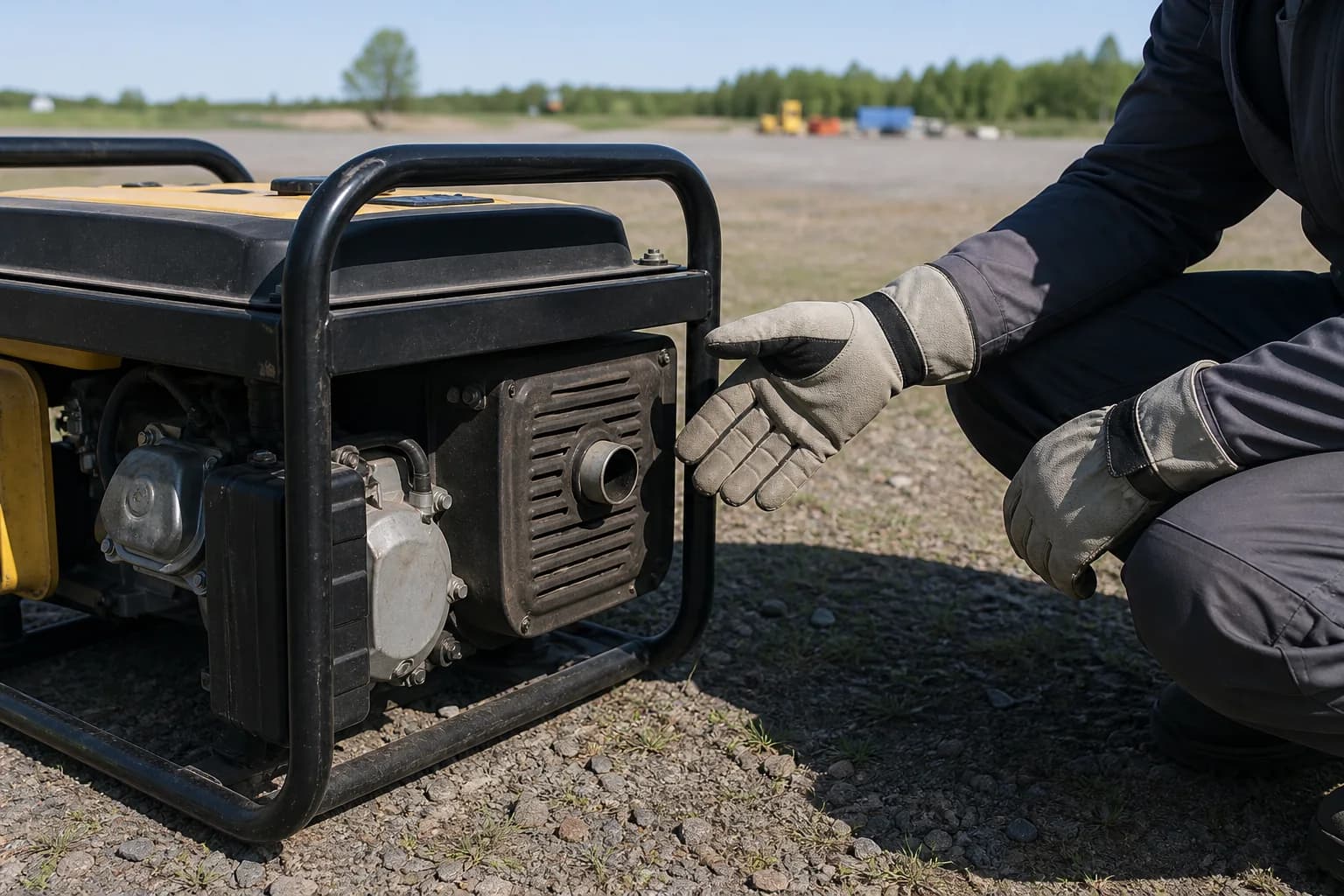
Do not add a generic exhaust pipe or flexible hose to a portable generator. For portable use, move the generator to a compliant outdoor location instead of trying to pipe exhaust out of a garage, shed, or enclosure. For an onboard RV generator, use only the exact manufacturer-approved exhaust design and installation process for that model; Cummins specifically states that it does not endorse aftermarket RV exhaust pipe extensions.
Separate portable-generator ideas from RV exhaust systems
A portable generator is designed to run outside in an open location. Adding a hose so it can operate in a garage, shed, basement, or box does not make that location safe. Carbon monoxide can leak or collect, and improvised piping can expose people to hot surfaces and fire risk.
An onboard RV generator has a vehicle-integrated exhaust system designed around a specific generator and coach. Even there, the generator and vehicle manufacturers control component selection, routing, joints, support, termination, and inspection. A roof-line add-on marketed as universal is not automatically approved for that system.
| Situation | Safe decision path | Unsafe shortcut |
|---|---|---|
| Portable generator near a building | Relocate outdoors to a compliant distance | Pipe exhaust through a wall or door |
| Portable generator in a shed or garage | Stop operation and move outdoors | Add a fan or flexible hose |
| Onboard RV generator | Follow the exact RV and generator installation manuals | Fit a universal extension without written approval |
Why an extension can create new failure modes
Every added joint has to remain gas-tight despite heat, vibration, handling, and repeated setup. Added weight can stress the original tailpipe. A vertical or redirected outlet can place exhaust near roof vents, windows, air conditioners, or neighboring occupied areas instead of eliminating the exposure.
Diameter, length, bends, and termination can affect exhaust back pressure and engine performance. Exposed piping can also create contact-burn and combustible-clearance hazards. These variables require model-specific engineering information, not a generic diameter chart.
- Gas-tight fit throughout heat and vibration cycles
- Mechanical support without loading the original outlet
- No exhaust path toward doors, windows, vents, or occupied areas
- Back pressure, emissions, heat, and warranty compatibility
Use a written manufacturer approval workflow
Locate the full generator model and specification code, then read its current operator and installation manuals. Ask the manufacturer whether the proposed component and configuration are approved for that exact generator and application. For an RV, include the coach manufacturer because the exhaust is part of the vehicle installation.
If the manufacturer does not approve the extension or cannot provide a compatible design, do not improvise. A retailer listing, forum photo, or matching pipe diameter is not an engineering approval.
Solve the underlying placement or noise problem directly
If the concern is carbon monoxide, increase outdoor separation and correct the exhaust direction. If the concern is noise, use distance, load management, a quieter generator, and hearing protection without enclosing the engine or obstructing cooling air. If the concern is weather, use only a manufacturer-approved outdoor operating solution.
Maintain working carbon-monoxide alarms in occupied buildings or vehicles. An alarm is a backup layer, not permission to operate a generator closer, indoors, or with an unapproved exhaust modification.
Frequently asked questions
Common questions
Can I extend a portable generator exhaust outside a garage?
No. The generator itself should be operated outside in a compliant open location. An exhaust hose does not control all leaks, heat, ventilation, and carbon-monoxide risks.
Are generator exhaust extension kits universal?
No. Exhaust configuration, back pressure, support, heat, emissions, and installation requirements are model-specific.
Does Cummins approve RV generator exhaust extensions?
Cummins states in its RV Generator Handbook that it does not endorse RV generator exhaust pipe extensions and identifies concerns including weight, fit, exhaust direction, heat, back pressure, and warranty.
Will a carbon-monoxide alarm make an exhaust extension safe?
No. CO alarms are an important backup layer, but they do not replace outdoor placement, separation, correct exhaust direction, or manufacturer instructions.
Primary references
CordFind summarizes connector specifications and public safety guidance. Always follow the instructions supplied with your equipment.
- Cummins — RV Generator Handbook, Exhaust Extensions
- CPSC — Carbon Monoxide Safety Center
- Honda — Generator Safety