Quick answer
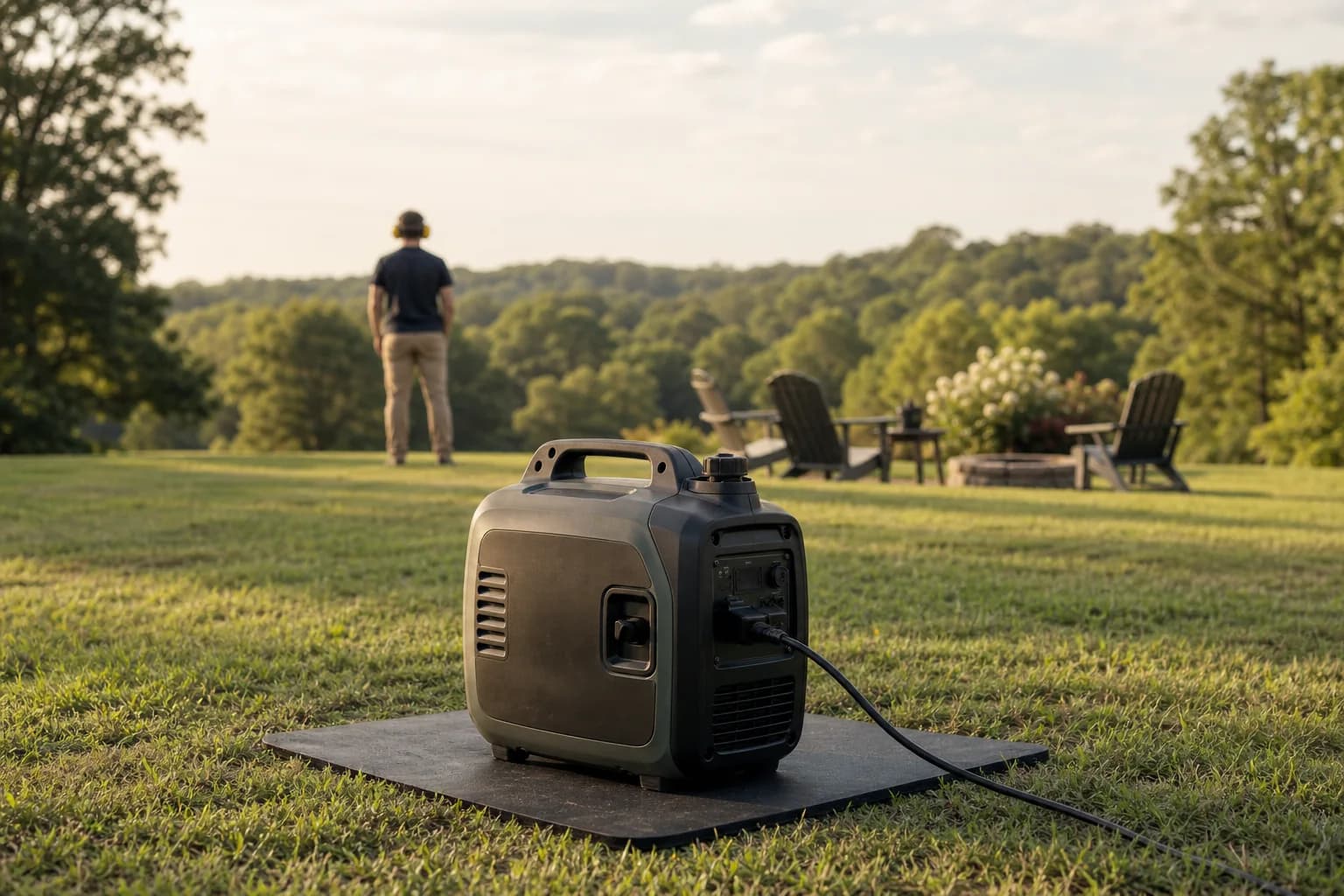
Start with controls that do not alter the generator: maximize safe outdoor distance, point the exhaust away from occupied areas, reduce unnecessary load, place the unit on a stable manufacturer-approved surface, select a lower-noise model for future use, and use properly selected hearing protection when exposure remains high. Never move a generator indoors or into a shed to make it quieter.
Use a noise-control order that preserves generator safety
Distance lowers sound exposure without changing the exhaust or cooling system. CDC recommends keeping portable generators as far as possible from homes, work areas, and gathering spaces while also maintaining at least 20 feet from windows, doors, and vents for carbon-monoxide safety.
Next, reduce unnecessary engine load, shorten exposure time, and use hearing protection. For a future purchase, compare noise ratings under stated load and distance conditions; decibel claims are only comparable when the test conditions are comparable.
| Control | Useful when | Safety boundary |
|---|---|---|
| Increase outdoor distance | Cord and site plan allow more separation | Keep exhaust away from all occupied buildings |
| Reduce or sequence loads | Optional loads increase engine speed | Do not interrupt critical equipment |
| Choose a quieter model | Noise is a recurring operating requirement | Verify capacity, outlets, and CO controls too |
| Hearing protection | People must remain near the generator | Select, fit, and use it correctly |
Inverter technology can reduce noise under partial load
Many inverter generators can vary engine speed with electrical demand, while many conventional designs operate at a more constant speed. Enclosed inverter models also commonly use sound-damping construction. These tendencies do not guarantee that every inverter is quieter than every conventional generator.
Compare each model’s published continuous and starting capacity, noise test condition, fuel, weight, outlets, and runtime. A quieter unit that cannot start the required load or provide the correct connection is not a suitable replacement.
Treat barriers and surfaces cautiously
A stable surface and manufacturer-approved vibration isolation may reduce structure-borne noise, but the generator must remain level and retain required airflow. Keep loose absorptive materials, vegetation, and combustible panels away from hot and moving components.
Do not build a box, operate in a shed, place the generator behind a wall that recirculates exhaust, or obstruct intake and cooling discharge. A barrier that seems open from one side can still create a partially enclosed CO pocket.
Avoid generic muffler and exhaust modifications
An added muffler or pipe can change back pressure, heat, mechanical support, emissions, and warranty conditions. It can also move exhaust toward windows, roof vents, or another occupied property.
Use only manufacturer-approved parts and procedures for the exact model. If the manufacturer does not publish an approved modification, solve the noise problem with placement, operating plan, equipment selection, and hearing protection.
Frequently asked questions
Common questions
What is the safest way to make a generator quieter?
Increase safe outdoor distance, reduce unnecessary loads, limit exposure time, compare quieter equipment, and use properly fitted hearing protection without changing required placement or airflow.
Can I put soundproof panels around a generator?
Not unless the generator manufacturer provides an approved operating enclosure design. Panels can trap heat, obstruct cooling, and recirculate carbon monoxide.
Are inverter generators quieter?
Many are quieter under partial load because engine speed can vary and the enclosure may include sound control, but compare model-specific decibel test conditions and capacity.
Can I install a car muffler on a generator?
Do not improvise. Exhaust changes are model-specific and can affect back pressure, heat, support, emissions, safety, and warranty.
Primary references
CordFind summarizes connector specifications and public safety guidance. Always follow the instructions supplied with your equipment.
- CDC — Protect Your Hearing While Operating a Generator
- Honda — Inverter Generator Advantages
- CPSC — Carbon Monoxide Safety Center