Quick answer
Use the exact pump and controller documentation. Record voltage, phase, full-load or operating current, input power, starting or locked-rotor data when applicable, speed schedule, heater, salt system, cleaner, lights, automation, valves, freeze-protection controls, and other loads. Decide the minimum safe outage operating plan with the pool professional, then verify generator transient response, 240-volt capability, transfer equipment, site derating, fuel, and weather-safe operation.
Map every pool-system load and control dependency
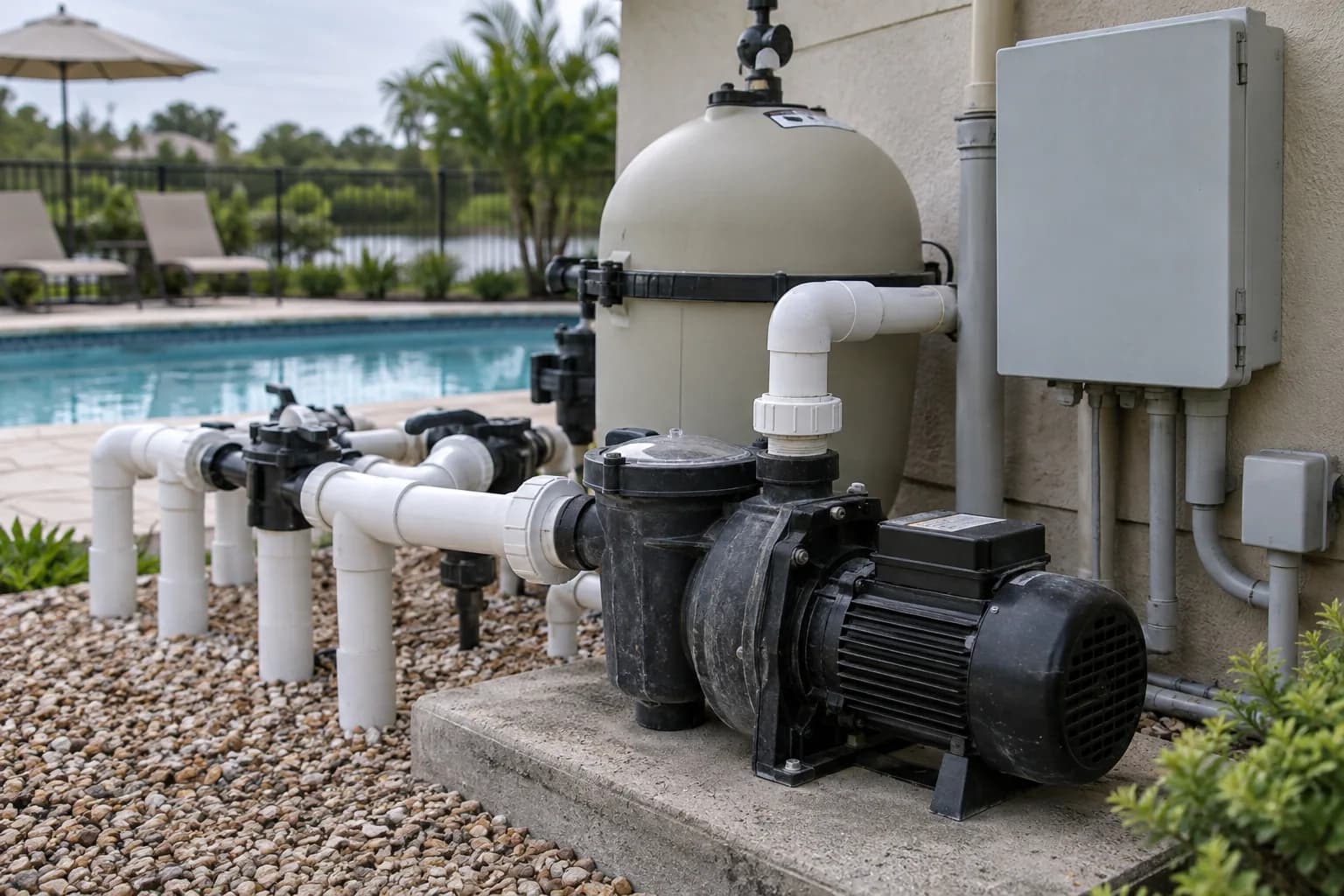
List circulation pump, booster or cleaner pump, heater or heat pump, salt chlorine generator, automation panel, valves, freeze-protection controls, lights, cover system, and any shared subpanel. Record which devices start automatically and which can be disabled by an approved outage mode.
Do not assume the circulation pump is the only required load. A control panel may command a heater, valve, or secondary pump after power returns. The outage procedure must prevent unplanned combinations that exceed the source.
Use exact motor or drive data instead of generic horsepower watts
For a fixed-speed induction motor, use published running current and starting or locked-rotor information when available. For a variable-speed pump, use the drive and pump documentation for voltage, full-load current, maximum input, speed limits, and generator-source requirements. Input changes sharply with speed and hydraulic conditions.
MCA, breaker size, service factor, total horsepower, hydraulic horsepower, and watts are not interchangeable. Record the actual nameplate and submittal values. If startup data are absent, request them from the manufacturer rather than inventing a surge multiplier.
Choose an outage schedule based on freeze and water risk
A warm-weather short outage can permit a different schedule from freezing conditions or a long interruption. Ask the pool professional how long circulation may stop, how freeze protection is maintained, which chemicals or heaters must be disabled, and what manual steps are safe for the exact equipment.
Do not drain, bypass, or operate valves from generic advice. A generator plan that depends on continuous pump operation needs fuel, supervision, weather protection, and maintenance for the full outage. Preserve a backup action if the generator fails.
Verify the complete 240-volt and transfer path
Many pool pumps use 208 to 230 or 240 volts and are hardwired. Confirm generator output, breaker, conductors, transfer equipment, pool subpanel, grounding and bonding, GFCI protection, neutral where used, and load balance. A 120-volt-only generator cannot supply a 240-volt pump.
Pool areas add wet-location and equipotential-bonding considerations. Temporary cords and adapters are not a substitute for the approved pool electrical system. Use qualified electrical and pool-equipment professionals.
Test the approved outage mode before freeze or storm conditions
Apply site and fuel derating, then test with other permitted loads already operating. Observe pump start or drive ramp, voltage, frequency, current, control alarms, flow, valve operation, heater lockout, generator response, and the return-to-utility sequence.
Document the speed or schedule used, maximum concurrent loads, controls disabled by the approved plan, fuel duration, inspection frequency, and stop conditions. Recheck after pump, drive, automation, heater, generator, or transfer changes.
Frequently asked questions
Common questions
What size generator do I need for a pool pump?
Use exact voltage, running and starting data or variable-speed maximum input, all required controls and accessories, other simultaneous loads, and generator transient and derated output.
Can I run only the pool pump during an outage?
Possibly, if the pool professional defines a safe outage mode and automation will not add other equipment. Verify freeze, sanitation, heater, valve, and control requirements.
Does a variable-speed pool pump need starting watts?
Its electronic drive can ramp differently from a fixed-speed motor, but it still has maximum input, voltage, current, power-quality, and control requirements. Use exact manufacturer data.
Can I plug a hardwired pool pump into a generator?
Do not improvise that conversion. Use approved transfer equipment, protection, conductors, grounding and bonding, and qualified installation for the pool system.
Primary references
CordFind summarizes connector specifications and public safety guidance. Always follow the instructions supplied with your equipment.
- Pentair: IntelliPro Variable-Speed Pump Specifications
- Pentair: IntelliPro3 VSF Pump Specifications
- OSHA: Grounding Requirements for Portable Generators
- CPSC: Generators and Engine-Driven Tools