Quick answer
Download the exact warranty for the model, buyer type, country, and intended use before purchase. Record when coverage begins, time and hour limits, parts, labor, travel, transport, diagnostics, consumables, batteries, transfer equipment, fuel-system work, connected equipment, software or monitoring, exclusions, registration, maintenance evidence, transferability, and claim contacts. Keep the dated warranty, receipt, serial number, installation and commissioning records, maintenance log, fuel records, and every service communication.
Match the warranty to the exact buyer, product and use
A portable consumer generator, residential standby unit, commercial standby system, rental machine, and prime-power application can have different warranty terms even within one brand. Confirm model and serial applicability, territory, original purchaser rules, residential or commercial classification, and whether the planned duty is covered.
Save the warranty version available before purchase. A marketing page that says five years is not the contract. Coverage may step down, end at an hour limit, or apply differently to the engine, alternator, controller, enclosure, battery, transfer switch, and accessories.
Turn coverage into a component and cost table
For each major component, record covered time and hours, parts, labor, diagnostics, travel, transport or freight, removal and reinstallation, consumables, and who chooses repair or replacement. Note deductibles, claim authorization, and whether emergency work must be approved first.
Separate the generator product warranty from installer workmanship, transfer equipment, fuel system, building wiring, remote monitoring, and any dealer maintenance plan. A failure can cross several scopes, so know who owns each part before an outage.
Document maintenance and installation conditions without inventing them
Use the warranty and manuals to identify installation, commissioning, fuel, oil, battery, exercise, inspection, service-interval, storage, and record requirements. Maintain the system on both calendar and hour schedules. Keep receipts and dated logs rather than relying on a dashboard that may later be unavailable.
For U.S. consumer-product warranties covered by the Magnuson-Moss Warranty Act, FTC guidance says a manufacturer generally cannot require paid use of a specific part or service to keep coverage unless it supplies them free or has a waiver. Damage caused by an incorrect part, misuse, or missed maintenance can still be excluded. Coverage depends on the product type’s normal personal, family, or household use, not solely on whether an individual buyer uses it commercially. Industrial equipment outside that consumer-product definition and purchases in other countries require their applicable rules. Read the actual terms and obtain legal advice for a dispute.
Read exclusions as operating boundaries
Look for exclusions involving improper installation, overload, unsuitable fuel, stale fuel, contaminated fuel, corrosion, flood, weather, pests, neglected batteries, unauthorized modification, rental or commercial use, prime power, environmental conditions, transport, cosmetic damage, and connected loads. Do not assume an extended term removes these conditions.
Check whether labor, mileage, weekend response, cranes, landscaping removal, shipping, and temporary power are excluded even when a part is covered. These items can be the largest claim expense.
Prepare the claim file before a failure occurs
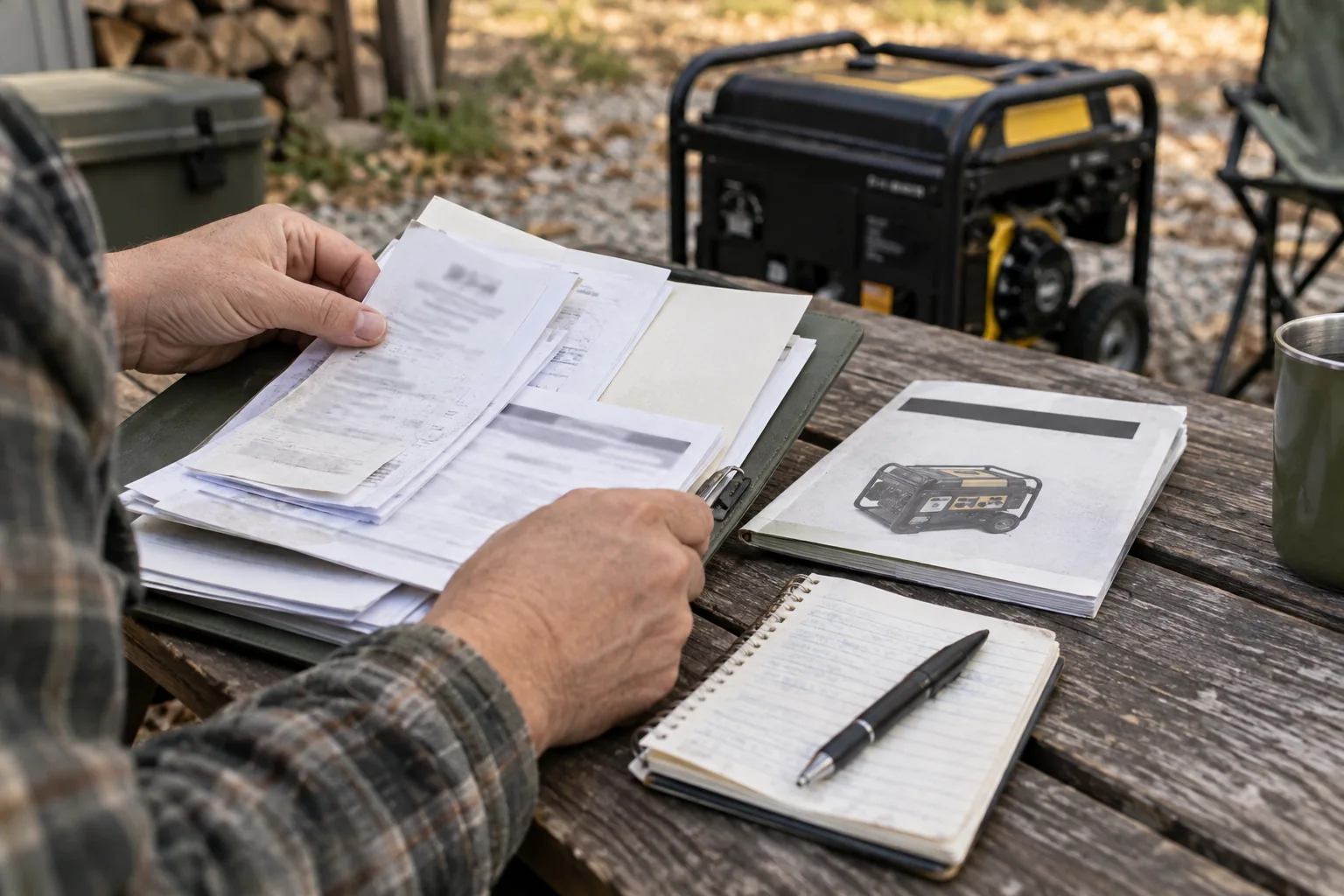
Keep the receipt, warranty, serial and model photos, installation invoice, permits, commissioning report, transfer and fuel records, registration confirmation where required, maintenance log, parts receipts, exercise and event history, and authorized service contacts in one location. Back up digital copies.
When a fault occurs, preserve codes and conditions, stop if operation may be unsafe, and follow the claim process before authorizing nonemergency work. Record dates, people, diagnosis, photos, parts, decisions, and downtime. Spoken promises should be confirmed in writing.
Frequently asked questions
Common questions
What does a generator warranty usually cover?
Coverage varies. Read the exact document for parts, labor, time, hours, travel, transport, diagnostics, accessories, batteries, transfer equipment, fuel work, exclusions, and remedies.
Is an extended warranty the same as the original warranty?
Not necessarily. It may be a separate service contract with different provider, coverage, exclusions, claim process, and cancellation terms. Compare both documents.
Do I need maintenance records for a warranty claim?
They can be critical when coverage depends on correct operation and service. Keep dated logs, receipts, hours, installation and commissioning records, and fault history.
Does a warranty transfer to a second owner?
Only if the exact terms allow it and any transfer procedure is completed. Verify before buying or selling a used generator.
Primary references
CordFind summarizes connector specifications and public safety guidance. Always follow the instructions supplied with your equipment.
- FTC Consumer Advice: Warranties
- FTC: Businessperson’s Guide to Federal Warranty Law
- FTC: Magnuson-Moss Warranty Act
- eCFR: Products Covered by the Magnuson-Moss Warranty Act
- Generac: Product Information and User Manuals