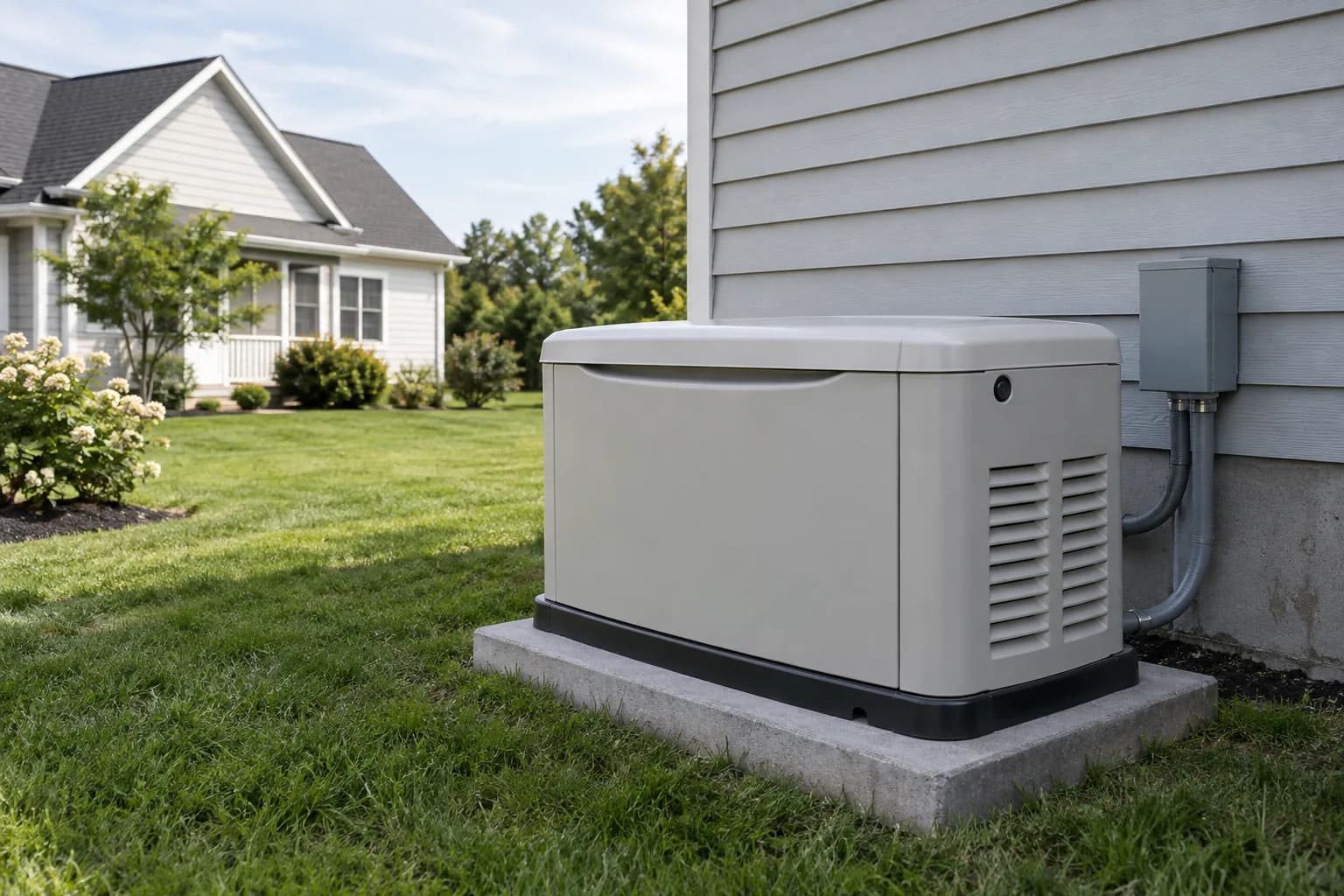
Quick answer
Define the circuits and appliances that must operate during an outage, including motor starts and heating or cooling priorities. Then have qualified professionals select and commission the generator, automatic transfer switch, fuel system, placement, conductors, protection, neutral and grounding arrangement, load management, and permits as one project. Compare installed and ownership cost, not generator price alone.
Define what standby power must accomplish
Whole-home wiring does not mean every load can run together. Decide whether the system will support essential circuits, most everyday loads, or large electric heating, cooling, cooking, water-heating, well-pump, and EV loads. Document priorities and the loads that may be shed or delayed.
Automatic operation is valuable when no one is home or a resident cannot deploy a portable generator. It also means the system can start without someone standing beside it, so service isolation, controller state, battery work, and maintenance procedures must control unintended startup.
Size running loads and motor starts with load management
Use nameplates and manufacturer data for running watts, voltage, and starting demand. The largest motor event can occur while other loads are already operating. Heat pumps, central air, well pumps, sump pumps, and compressors require more evidence than a generic appliance chart.
Load-management modules can delay selected equipment or prevent conflicting starts. They do not create generator capacity. The operating sequence should be designed, documented, and tested so occupants understand which loads are available and under what conditions.
Choose fuel by capacity, availability, and outage conditions
Natural gas avoids onsite liquid-fuel refilling but depends on utility pressure, meter capacity, piping, and service continuity. Propane creates an onsite fuel reserve but depends on usable tank amount, vaporization, temperature, regulators, and delivery access. Use fuel-specific generator output and consumption data.
Coordinate every other fuel appliance. A propane tank may also serve space heat, and a natural-gas meter may serve furnaces and water heaters. The generator fuel design must hold required pressure and flow during the combined emergency demand.
Treat placement and automatic transfer as one design
The exact installation manual controls clearances from walls, openings, vegetation, combustibles, exhaust paths, property lines, snow, water, and service access. Local permits, utility requirements, fire rules, electrical rules, fuel-gas rules, and manufacturer listings can all affect the site.
The automatic transfer switch must match voltage, phase, service arrangement, amperage, generator controls, neutral treatment, available fault current, enclosure, and load strategy. Installation and commissioning require qualified work; a product bundle does not prove compatibility with a particular home.
Budget for the years after commissioning
Include exercise fuel, scheduled service, oil and filters, battery replacement, monitoring, repairs, snow and vegetation control, fuel-system inspection, and eventual major service or replacement. Keep a current service log, manuals, serial numbers, installer contacts, and shutdown instructions.
Observe exercise cycles and investigate alarms instead of repeatedly clearing them. Schedule a controlled outage simulation that proves sensing, start, transfer, load response, retransfer, cooldown, and return to automatic readiness. A no-load exercise alone does not prove that the complete home load plan works.
Frequently asked questions
Common questions
What size standby generator does a house need?
It depends on the documented load plan, voltage, motor starts, fuel-specific rating, load management, and site derating. Square footage alone is not enough.
Does a standby generator power the whole house automatically?
It can transfer automatically, but the generator may still rely on selected circuits or load management. The commissioned design determines what can operate together.
Is natural gas or propane better for a standby generator?
Compare fuel-specific output, required flow, local reliability, meter or tank capacity, other appliance demand, outage duration, delivery access, and ownership cost.
How often should a home standby generator be serviced?
Follow the exact model schedule, hour limits, calendar intervals, exercise requirements, and continuous-operation instructions. A generic annual rule may miss model or usage requirements.
Primary references
CordFind summarizes connector specifications and public safety guidance. Always follow the instructions supplied with your equipment.
- Generac: Home Standby Generator FAQ
- Generac: Product Information and User Manuals
- Generac: Continuous-Use Maintenance for Home Standby Generators
- CPSC: Stationary Generator Carbon Monoxide Hazard Report