Quick answer
Choose from the generator’s natural-gas rating and consumption table. Size electrical loads first, then have the gas utility, generator manufacturer, fuel contractor, and electrical installer confirm available pressure and flow, meter capacity, pipe route, simultaneous gas demand, placement, transfer equipment, permits, and commissioning. Natural gas availability during an emergency is useful but not guaranteed.
Interactive fuel worksheet
Calculate fuel use and runtime
Build an outage schedule from the fuel-consumption rates published for your exact generator, fuel, and load levels. The worksheet does not infer a rate from wattage.
Fuel schedule stopped. Every block with operating hours needs a published rate, and the container or delivery amount must be greater than zero.
Actual consumption changes with load, fuel, temperature, altitude, condition, and operating mode. Confirm every rate in the current owner manual or manufacturer data sheet, verify legal storage limits and reliable delivery access, and never refuel a running or hot generator.
Separate installed standby systems from portable tri-fuel equipment
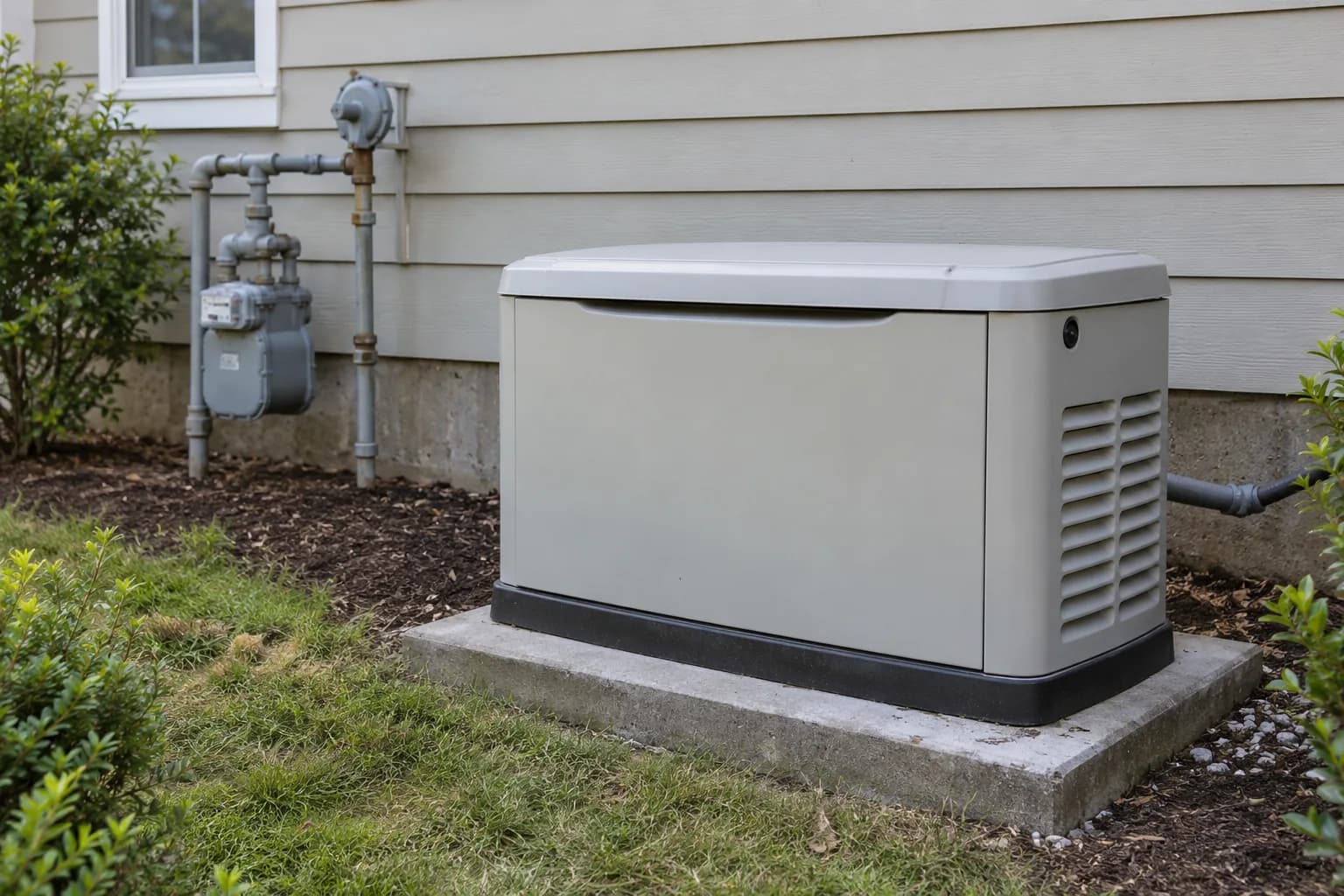
A home standby generator is installed outdoors, connects to an approved transfer switch, and starts through system controls. A portable tri-fuel generator remains portable equipment with manual placement, startup, connection, and shutdown requirements. Both may use natural gas, but their duty, controls, connections, and installation scopes are different.
Do not convert a gasoline or propane generator unless the manufacturer approves the exact fuel system and configuration. A generic conversion can change emissions, combustion, warranty, controls, fuel pressure, and safety assumptions.
Use the natural-gas output and consumption columns
Manufacturer tables may show lower output on natural gas than on propane or gasoline. Use the natural-gas continuous rating for simultaneous loads and the natural-gas starting capability for motor events. Confirm voltage, phase, breaker, and transfer equipment independently.
Consumption is normally published in cubic feet per hour or another gas-volume unit at named load points. Record the stated pressure and gas quality assumptions. Do not estimate pipe size by dividing electrical watts by a generic energy value.
The property must deliver fuel under simultaneous demand
The generator can call for substantial gas flow at the same time as space heating, water heating, cooking, or process equipment. The review should include available service pressure, meter and regulator capacity, pipe material and length, fittings, elevation, other appliance demand, local code, and the generator inlet requirement.
Fuel-system design belongs to the utility and qualified fuel-gas professionals. A generator that starts during mild-weather commissioning can still experience inadequate supply during a cold outage if the combined demand was not evaluated.
Treat pipeline fuel as one dependency, not unlimited runtime
Natural gas can remain available when roads are blocked or liquid fuel is difficult to obtain, but service can be interrupted by utility action, damage, pressure problems, fire response, or regional emergencies. Build an outage plan around the reliability information available from the local utility rather than assuming uninterrupted supply.
Runtime still has maintenance limits. Long operation can require oil checks, inspections, cooldowns, and service at hour intervals stated by the manufacturer. The standby controller, battery, charger, transfer switch, and fuel valves also need scheduled attention.
Commission the generator, fuel supply, and transfer system together
A complete test observes startup, gas pressure under load, voltage, frequency, transfer timing, largest allowed motor start, load-management response, cooling, alarms, and return to utility power. Record readings and the equipment configuration.
Placement, exhaust clearances, openings, property boundaries, snow, vegetation, service access, flooding, and combustion-air paths must follow the exact installation manual and local approvals. A generic distance from another product is not an installation rule.
Frequently asked questions
Common questions
Can a natural gas generator run continuously?
Only within the duty, inspection, oil-check, maintenance, temperature, and fuel limits of the exact generator. Pipeline availability does not remove engine service requirements.
Does natural gas reduce generator output?
Many multi-fuel generators publish different ratings by fuel. Use the exact natural-gas continuous and starting ratings instead of applying a universal reduction.
Will my existing gas meter support a standby generator?
That requires a site-specific utility and fuel-system review including pressure, meter and regulator capacity, piping, and all simultaneous gas appliances.
Is a natural gas generator safe indoors?
No. Combustion generators produce carbon monoxide and require the approved outdoor installation and exhaust clearances stated by the manufacturer and local requirements.
Primary references
CordFind summarizes connector specifications and public safety guidance. Always follow the instructions supplied with your equipment.
- Generac: 28 kW Standby Generator Natural Gas Specifications
- Generac: Home Standby Generator FAQ
- Generac: Product Information and User Manuals
- CPSC: Generators and Engine-Driven Tools