Quick answer
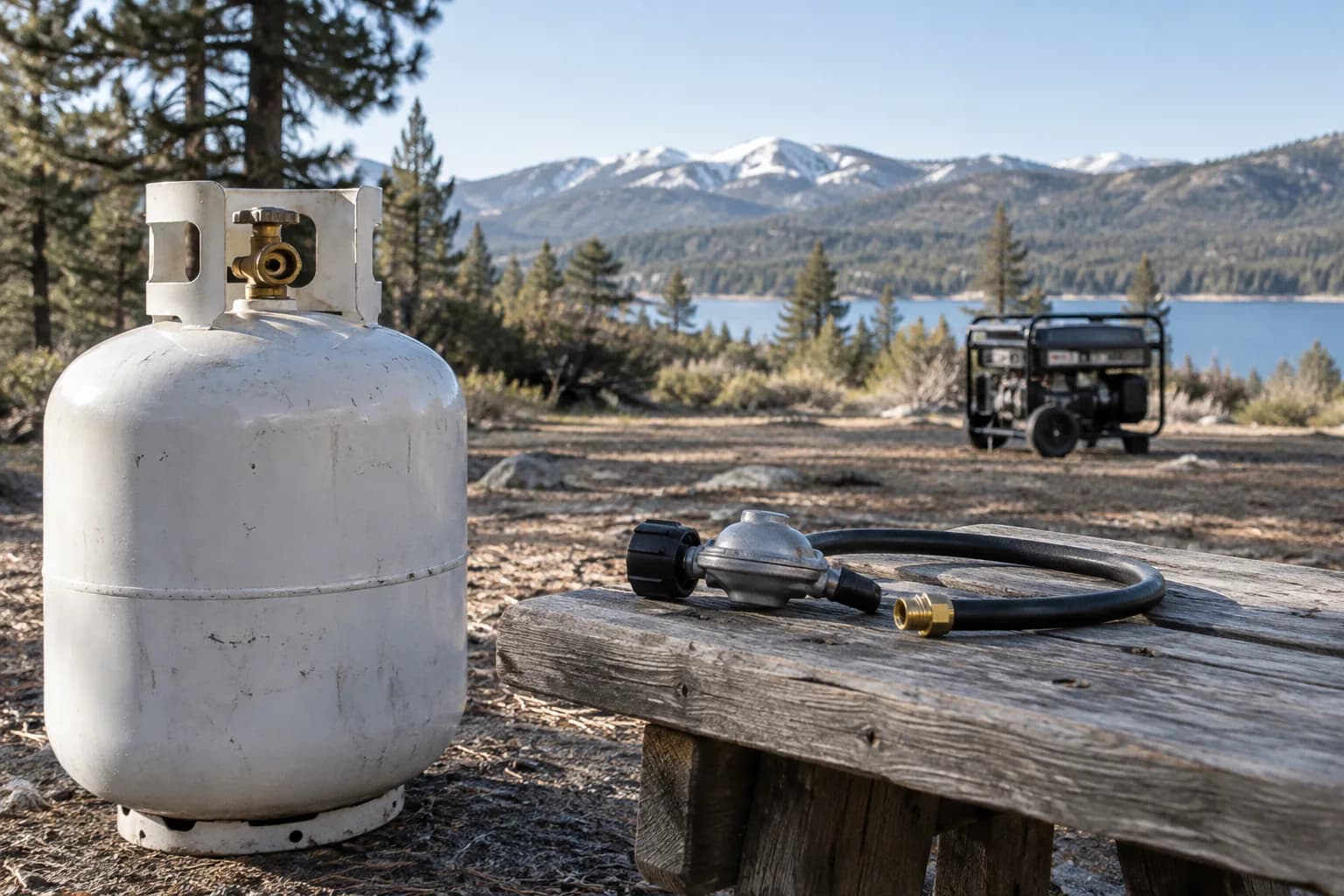
Use the generator’s propane continuous and starting ratings, not its gasoline numbers. Obtain the published propane consumption rate at a stated load, determine the usable fuel in the approved cylinder or tank, preserve a reserve, and confirm that the complete regulator, hose, tank, temperature, and fuel-pressure arrangement supports the required flow. Keep the engine outdoors because propane operation still produces deadly carbon monoxide.
Interactive fuel worksheet
Calculate fuel use and runtime
Build an outage schedule from the fuel-consumption rates published for your exact generator, fuel, and load levels. The worksheet does not infer a rate from wattage.
Fuel schedule stopped. Every block with operating hours needs a published rate, and the container or delivery amount must be greater than zero.
Actual consumption changes with load, fuel, temperature, altitude, condition, and operating mode. Confirm every rate in the current owner manual or manufacturer data sheet, verify legal storage limits and reliable delivery access, and never refuel a running or hot generator.
Propane output may differ from gasoline output
Dual-fuel and tri-fuel generators commonly publish a separate continuous and starting rating for each fuel. Use the propane row for the loads, even when the product name emphasizes a larger gasoline peak number. Confirm voltage and receptacle limits on propane operation as separate checks.
A permanently installed standby generator may also publish different maximum continuous capacity on liquid propane vapor and natural gas. One current Generac 28 kW product page, for example, lists 28 kW on LP and 25 kW on natural gas. That example shows why the exact model table matters; it is not a universal conversion rule.
Translate the tank label into usable fuel carefully
A cylinder described by pounds, a tank described by water capacity, and a tank gauge showing a percentage are not interchangeable inputs. Use the fuel supplier and equipment documentation to determine the usable propane amount. Do not assume every labeled gallon or pound can be committed to the operating plan.
Protect a reserve for uncertainty, fuel delivery timing, other propane appliances, and cold conditions. A home that uses the same tank for heat may have competing demand during the exact weather event that triggers a generator outage.
Cold weather and high demand can limit vaporization
A propane generator typically receives vapor, not liquid, unless the equipment is expressly designed otherwise. Vaporization depends on tank size, fill level, temperature, wetted surface, and withdrawal rate. A cylinder can contain fuel yet fail to sustain a large engine if the system cannot vaporize and deliver it fast enough.
Do not size regulators, piping, or tanks from a generic internet chart. The generator data, other connected appliances, distance, pressure drop, local code, tank arrangement, and supplier requirements must be reviewed as one fuel system by qualified professionals.
Use the manufacturer rate and show every runtime assumption
Enter a pounds-per-hour, gallons-per-hour, or cubic-feet-per-hour rate published for the exact model, fuel, and load point. Keep units consistent. A rate at half load should not be used as if it represented full load, and a stationary generator rate should not be transferred to a different portable model.
For a changing outage, calculate separate blocks for essential overnight loads, higher daytime loads, and short motor-start events. Consumption is not perfectly linear with electrical output, so do not invent intermediate rates when the manufacturer provides only specific load points.
Inspect the propane path and practice the changeover
Check the cylinder or tank, valve protection, regulator, hose, connectors, leak-check procedure, and required shutdown sequence in the manual. Keep replacement components model-approved. Do not modify a gasoline-only generator or assemble a fuel conversion from generic parts.
Practice starting, loading, unloading, shutdown, cooldown, cylinder change or supplier coordination, and storage before storm season. Preserve generator airflow and follow the manufacturer’s operating temperature and placement instructions.
Frequently asked questions
Common questions
How long will a propane tank run a generator?
Divide the usable propane amount by the manufacturer consumption rate for the exact model and load, then preserve a reserve. Tank vaporization, temperature, fill level, and other propane loads can shorten usable runtime.
Does a generator make fewer watts on propane?
Some models publish a lower propane rating, while others differ by another amount. Use the fuel-specific table for the exact generator rather than a universal percentage.
Can I connect a portable generator to a large home propane tank?
Only through an approved, properly sized fuel system that satisfies the generator, tank, regulator, pressure, piping, code, and supplier requirements. This is qualified fuel-gas work.
Will propane work in freezing weather?
Propane remains present, but vaporization and delivery can become the limiting issue. Tank size, fill, temperature, demand, regulators, and piping require a site-specific review.
Primary references
CordFind summarizes connector specifications and public safety guidance. Always follow the instructions supplied with your equipment.
- Generac: 28 kW Standby Generator Fuel Specifications
- Generac: Home Standby Generator FAQ
- CPSC: Carbon Monoxide Information Center
- CPSC: Generators and Engine-Driven Tools