Quick answer
Find the exact generator full-load propane rate in gallons per hour, multiply it by the longest planned run, then add the reserve by dividing by the usable fraction. Treat that result as required usable fuel, not a nominal tank label. The propane supplier must separately verify vaporization, regulator capacity, pressure, pipe or hose sizing, other appliance demand, local requirements, and the generator manufacturer’s fuel specification.
Tank capacity and vapor delivery are separate constraints
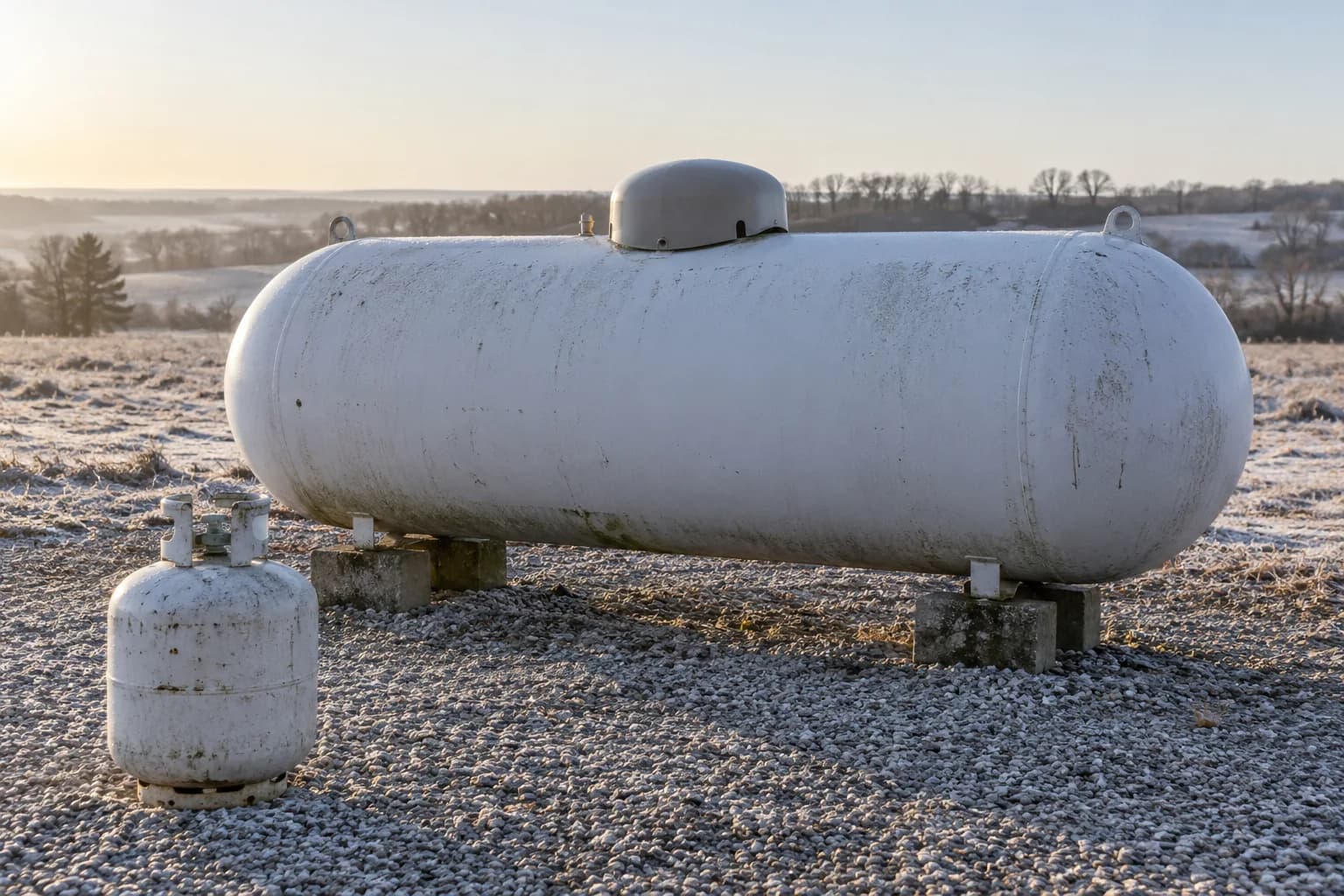
Fuel capacity answers how many gallons are available before the selected reserve is reached. Vaporization answers whether liquid propane can turn into vapor quickly enough to meet the engine demand. Temperature, tank dimensions, wetted surface, fill level, withdrawal rate, regulator arrangement, and other connected appliances affect that delivery condition.
A tank can contain more than enough fuel for the planned hours and still fail to sustain a large generator during cold weather. The opposite can also occur: a tank may support the required instantaneous flow but contain too little usable fuel for a long outage. Keep both checks visible through design and commissioning.
| Check | Required evidence | What this calculator does |
|---|---|---|
| Fuel capacity | Published gallons per hour, hours, usable gallons, reserve | Calculates runtime arithmetic |
| Vaporization | Full-load BTU/hr, minimum temperature, minimum fill, tank data | Flags supplier verification |
| Fuel delivery | Pressure, regulators, pipe or hose, total appliance demand | Does not size components |
| Installation | Generator instructions, tank location, code and permits | Does not approve a site |
Use the exact model’s full-load propane consumption
Read the generator specification or installation manual for the selected fuel and rating. Portable dual-fuel units and permanently installed standby generators can publish different output on gasoline, natural gas, and propane. Use the propane output when checking electrical loads and the propane consumption row when planning fuel.
Keep units attached to every value. Cubic feet per hour, pounds per hour, gallons per hour, and BTU per hour are not interchangeable labels. Use a manufacturer conversion only when it applies to the stated fuel conditions. Do not estimate consumption from electrical kilowatts alone because engine efficiency and fuel-specific ratings vary by model and load.
Calculate usable fuel for the longest credible run
Multiply the published full-load gallons per hour by the planned continuous runtime. To preserve a 20 percent reserve, divide that result by 0.80. For example, a documented 2 gallon-per-hour rate for 24 hours uses 48 gallons before reserve and requires 60 usable gallons when 20 percent is held back.
This is deliberately conservative when the real load varies, but it is still only arithmetic. The usable amount supplied by a tank is not necessarily its nominal water capacity or marketing size. Ask the propane supplier to state the usable fuel basis that applies to the proposed tank, fill policy, required reserve, and jurisdiction.
Verify vaporization at minimum temperature and low fill
Generac’s gaseous-fuel guidance directs designers to compare the generator full-load propane demand with tank vaporization at the lowest expected temperature and the minimum fill level allowed in service. That low-temperature, low-fill case is more demanding than a mild-day test with a full tank.
Do not solve a vaporization shortfall by adding an unapproved regulator, heating a cylinder, connecting improvised cylinders, or moving fuel equipment closer to ignition or openings. Tank arrangement, regulators, piping, protection from damage, clearances, and pressure testing belong to the propane supplier and qualified installer.
Keep a one-page fuel-system record with the outage plan
Record the generator model, propane output rating, full-load gallons or BTU per hour, tank identification, supplier-confirmed usable fuel, minimum design temperature, minimum fill assumption, regulator stages, delivery pressure, other connected appliance demand, and the approved service contact. Date every source document.
Commission the system at representative electrical load while qualified personnel verify fuel pressure and generator operation. Recheck the plan after a generator, regulator, tank, meter, piping, appliance, or operating-hour change. A successful short exercise does not establish multi-day runtime or cold-weather vaporization.
Frequently asked questions
Common questions
What size propane tank do I need for a generator?
Start with the exact model’s full-load propane rate, planned runtime, and reserve. Then have a propane supplier select a tank that satisfies both usable capacity and the required vaporization rate at minimum temperature and fill.
Can I size a propane tank from generator kilowatts?
No. Use the model’s published propane consumption and propane output rating. Equal electrical ratings do not guarantee equal fuel consumption.
Why can a propane generator stop when fuel remains in the tank?
A tank may contain liquid propane yet be unable to vaporize and deliver it at the required rate under the current temperature, fill level, regulator, and piping conditions.
Does a larger propane tank always solve cold-weather operation?
Not by itself. Tank geometry, fill, temperature, required withdrawal, regulators, piping, pressure, other loads, and manufacturer limits must be reviewed as a complete system.
Primary references
CordFind summarizes connector specifications and public safety guidance. Always follow the instructions supplied with your equipment.
- Generac: Gaseous Fuel Systems and LP Tank Sizing
- Propane Education and Research Council: Generator Sizing for Homes
- Generac: 26 kW Standby Generator Fuel Specifications
- CPSC: Portable Generator Hazards