Quick answer
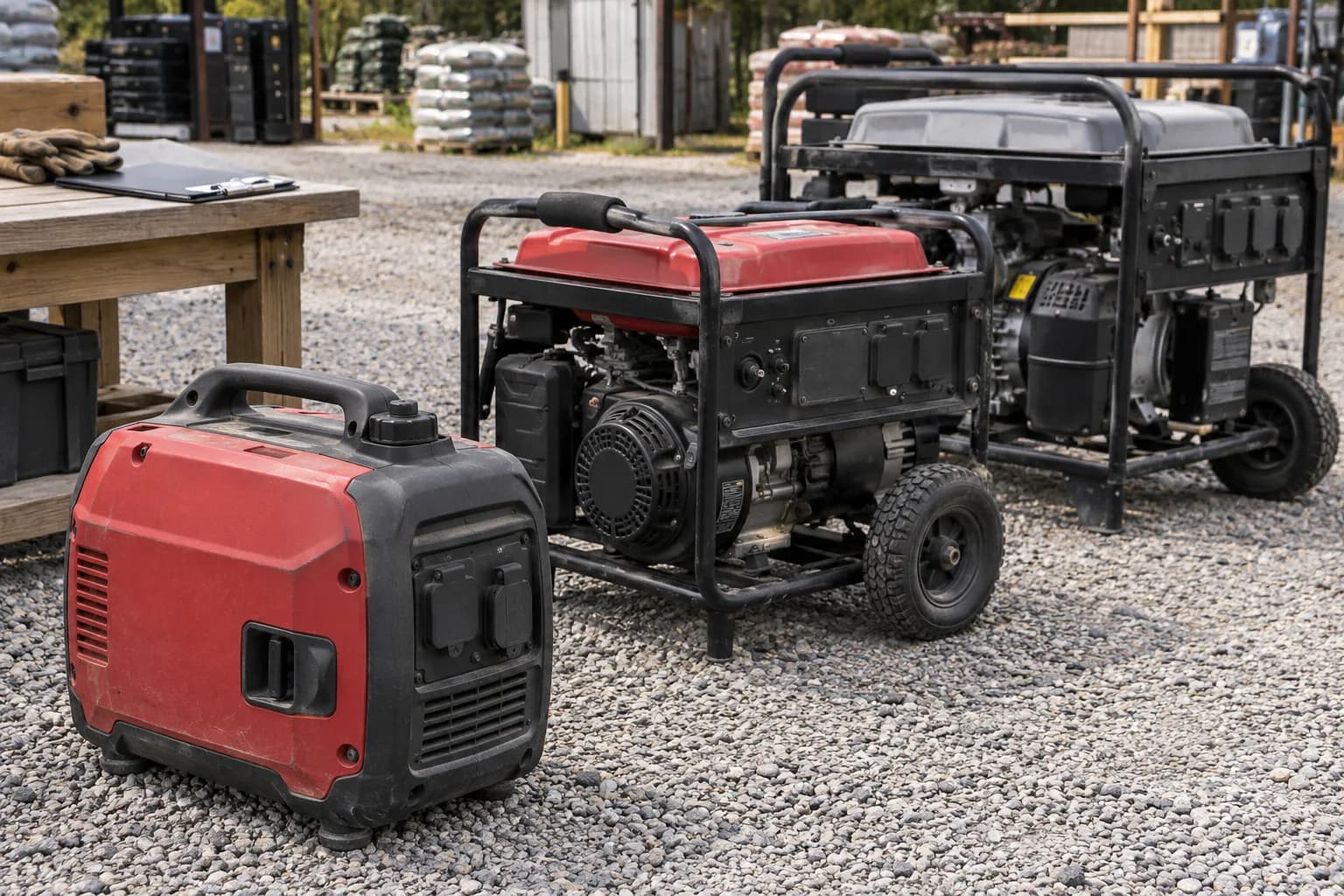
List required loads and hours first. Match continuous watts, the largest allowed motor start, voltage, receptacles, breaker limits, power quality, fuel-specific ratings, runtime, noise test conditions, weight, service access, emissions eligibility, and safety features. Plan the outdoor location, cords or approved transfer equipment, weather protection, fuel reserve, maintenance, and a full outage drill before purchase.
Turn the outage into a load schedule
Separate must-run loads from comfort loads. Record running watts, voltage, starting demand, and hours for refrigeration, pumps, heating controls, communications, lighting, medical equipment approved for the source, and any optional loads. Decide which motors can start at the same time.
Use continuous output for simultaneous running loads and starting output for the largest permitted additional start. Reserve capacity for uncertainty and site derating. A larger machine also consumes storage space and may use more fuel at light load, so size from the plan rather than buying the largest peak-watt label.
Read the electrical panel on the generator
Confirm 120V or 120/240V output, phase, frequency, each receptacle designation, each breaker rating, GFCI protection, neutral and grounding instructions, and published total harmonic distortion when sensitive loads require it. A 50A receptacle does not mean the generator can continuously produce 50A on every conductor.
Map the actual cords, adapters, distribution equipment, inlet, and transfer equipment. Reject vague product listings that omit connector codes or voltage. Never use an adapter to defeat grounding, create a missing neutral, change voltage, or backfeed a building.
Compare fuel and runtime on the same basis
Use the output and consumption figures for the fuel you will operate. Compare rates at the same load percentage where possible, and keep tank or cylinder units consistent. Build a reserve and include other uses of the same propane or natural-gas supply.
Plan fuel rotation, approved storage, refueling or cylinder changes, local availability, and cold-weather limits. Dual-fuel flexibility is useful only when both fuel paths are complete, familiar, and supported by current parts and instructions.
Measure usability beyond the noise headline
Check dry and operating weight, lift points, wheel and handle design, dimensions, battery requirements, electric and recoil start, service access, display, covered outlets, noise measurement distance and load, economy mode, and parallel capability. A quiet number without test conditions is not a fair comparison.
Weather protection must preserve airflow, cooling, exhaust clearance, electrical dryness, and outdoor placement. A storage cover is not automatically approved while the generator is running, and a shed or garage is not an operating enclosure.
Score warranty, parts, safety, and service before price
Compare warranty exclusions, residential versus commercial terms, authorized service access, replacement parts, current manuals, emissions eligibility, low-oil shutdown, overload protection, carbon-monoxide shutoff, and required maintenance. A discontinued bargain can become expensive when a control board or fuel component is unavailable.
Complete a pre-purchase worksheet and an after-purchase drill. The drill should prove placement, alarms, setup, startup, load order, monitoring, shutdown, cooldown, fuel handling, storage, and recovery from a protective trip without bypassing it.
Frequently asked questions
Common questions
How many watts should a portable generator have?
Enough continuous output for simultaneous running loads and enough documented starting capability for the largest allowed motor start, after fuel and site derating. Voltage and outlet limits must also match.
Is an inverter portable generator better?
It may offer lower partial-load noise, variable engine speed, and specified power quality, but output, voltage, outlets, runtime, fuel, service, and price still decide the fit.
Can a portable generator connect to a house?
Only through approved transfer equipment, a compatible inlet or feeder, correct conductors and protection, and qualified installation. Never connect through a household receptacle.
Should I buy a dual-fuel portable generator?
Only after comparing the separate output, consumption, startup procedure, storage, availability, and service implications for both fuels.
Primary references
CordFind summarizes connector specifications and public safety guidance. Always follow the instructions supplied with your equipment.
- CPSC: Carbon Monoxide Information Center
- OSHA: Grounding Requirements for Portable Generators
- Honda: Generator Operation
- Champion: Generator Wattage Chart