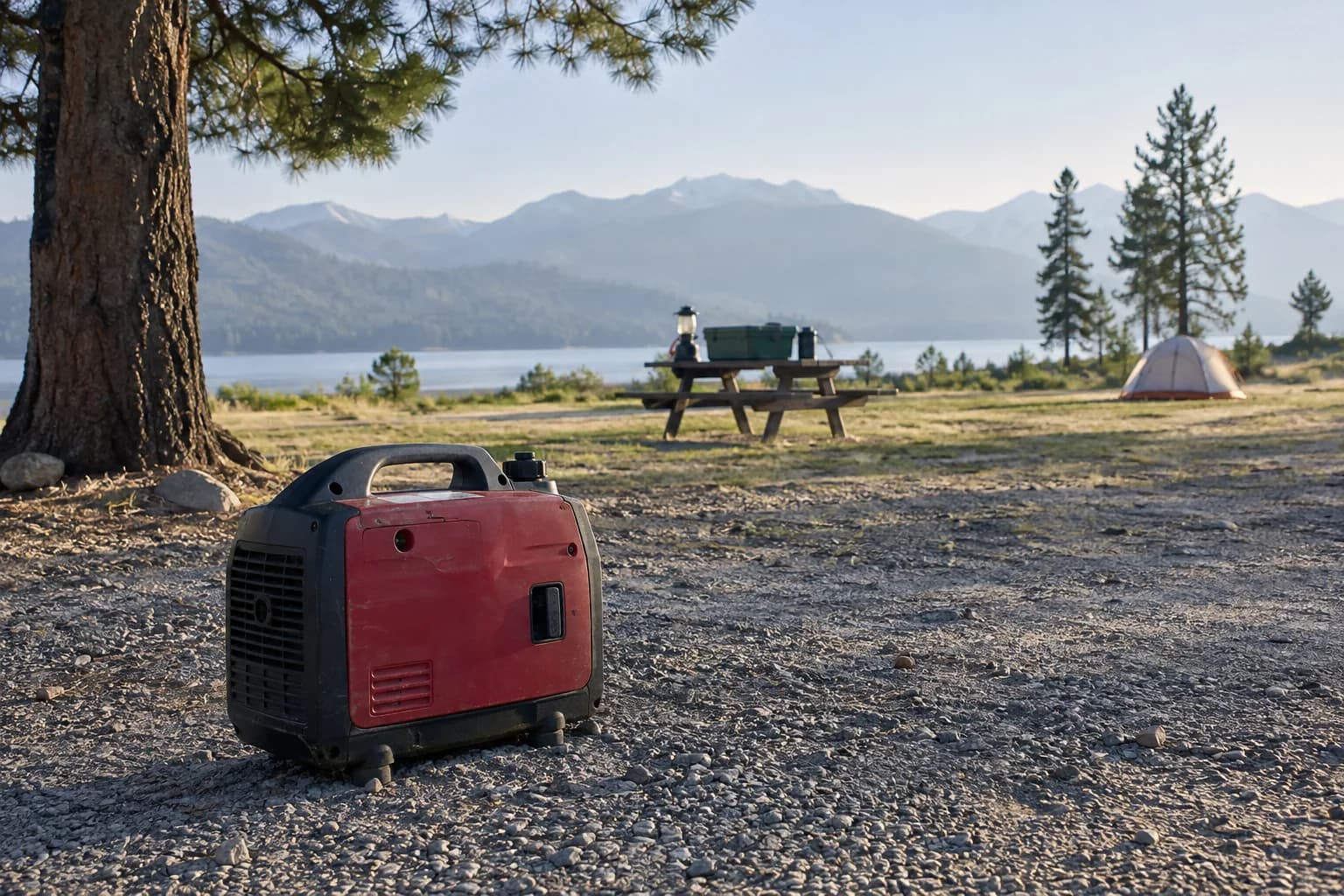
Quick answer
Check the campground or land-manager rules first. Then list the devices, chargers, RV loads, pump or air-conditioner starts, and operating hours. Choose a generator with adequate continuous and starting output, compatible receptacles, documented noise conditions, practical fuel storage, and safe transport. Operate it outdoors and far from tents, vehicles, openings, and occupied areas according to current safety guidance and site rules.
Campsite rules can decide before generator specifications
Confirm whether generators are allowed, the permitted hours, any sound or fuel restrictions, fire-season rules, and whether the site provides shore power. Rules can change by campground, season, fire condition, or individual loop. Save the current rule and ask the host when language is unclear.
Permission to use a generator does not approve a particular placement. Tents, vehicle doors, rooftop vents, neighboring sites, terrain, wind, dry vegetation, and foot traffic all affect the operating plan.
Build the smallest useful camping load plan
List device watts and hours for lighting, phones, radios, laptops, refrigeration, mobility equipment, medical devices approved for the source, battery charging, pumps, and RV appliances. Keep AC loads separate from DC charging and include conversion losses where the equipment documentation provides them.
An RV air conditioner or pump can dominate starting demand. Use its exact electrical data and check the generator receptacle and RV connection. Load management, such as running one high-demand appliance at a time, can reduce generator size and campsite noise.
Compare noise only when the test conditions match
A decibel value needs a distance, load percentage, operating mode, and measurement standard. Inverter generators may reduce engine speed under lighter loads, but no technology makes a combustion generator silent. Compare published figures at similar conditions.
Use distance and operating schedule before experimenting with barriers. Never enclose the generator, restrict cooling, redirect exhaust with an improvised hose, or place it in a vehicle, tent vestibule, storage box, or generator compartment not designed for that exact equipment.
Plan transport, storage, runtime, and fire conditions
Carry only approved fuel containers or cylinders, secure them for transport, protect valves, and follow land-manager and local requirements. Keep fuel away from living and sleeping areas. Refuel only after shutdown and cooling using the generator manual procedure.
Calculate runtime from the published consumption rate and a realistic load schedule. A battery power station may cover quiet overnight loads, while a generator operates during permitted daytime hours for larger loads and approved battery charging. Verify charging input limits before using a hybrid plan.
Use a repeatable arrival and departure checklist
Before starting, inspect the generator, fuel system, cords, alarms, weather conditions, exhaust direction, and clearances. Start unloaded when instructed, add loads in the planned order, and monitor for overload, heat, unstable operation, fuel leaks, and changing wind.
Before departure, shut down, cool, inspect, and secure the generator and fuel. Do not leave fuel spills, damaged batteries, or hot equipment in vegetation. Record maintenance hours so the next trip does not begin with overdue service.
Frequently asked questions
Common questions
What size generator is best for camping?
Use the exact loads, starting demand, voltage, receptacles, and permitted operating hours. Small charging loads may need far less capacity than an RV air conditioner or pump.
Are inverter generators quieter for camping?
Many can reduce speed at light load, but compare published decibels at the same distance and load. Site rules and considerate operating hours still apply.
Can I run a generator beside a tent?
Do not place a generator near tents or occupied areas. Follow current CPSC outdoor separation and exhaust guidance, the manual, terrain and wind conditions, and campground rules.
Can a generator charge a portable power station?
Only if the power station accepts that AC source and the generator output meets its voltage, frequency, power-quality, grounding, and wattage requirements. Use both manuals.
Primary references
CordFind summarizes connector specifications and public safety guidance. Always follow the instructions supplied with your equipment.
- CPSC: Carbon Monoxide Information Center
- CPSC: Generators and Engine-Driven Tools
- Honda: Generator Operation
- OSHA: Using Portable Generators Safely