Quick answer
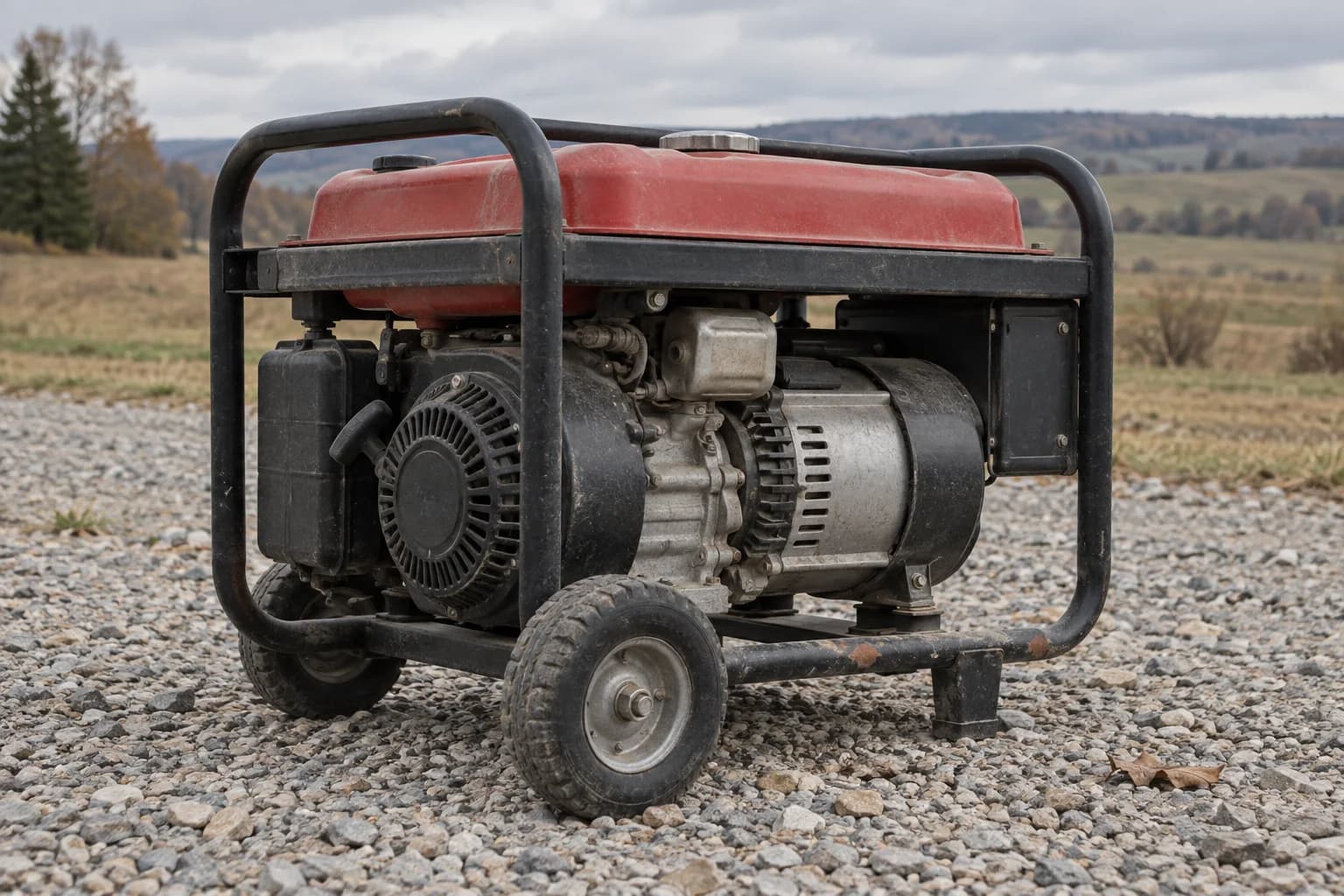
The engine burns fuel and turns an alternator. A moving magnetic field induces voltage in stationary windings, and a connected load draws current. Controls manage engine speed and electrical output. An inverter generator adds an AC-to-DC-to-AC conversion stage. Usable power still depends on continuous and starting ratings, voltage, outlet protection and the connected equipment.
From fuel to electricity in three stages
First, combustion releases energy from gasoline, propane, diesel or natural gas. The engine converts some of that energy into shaft rotation; heat and exhaust carry away part of the input. More fuel energy enters the system than electrical energy leaves it.
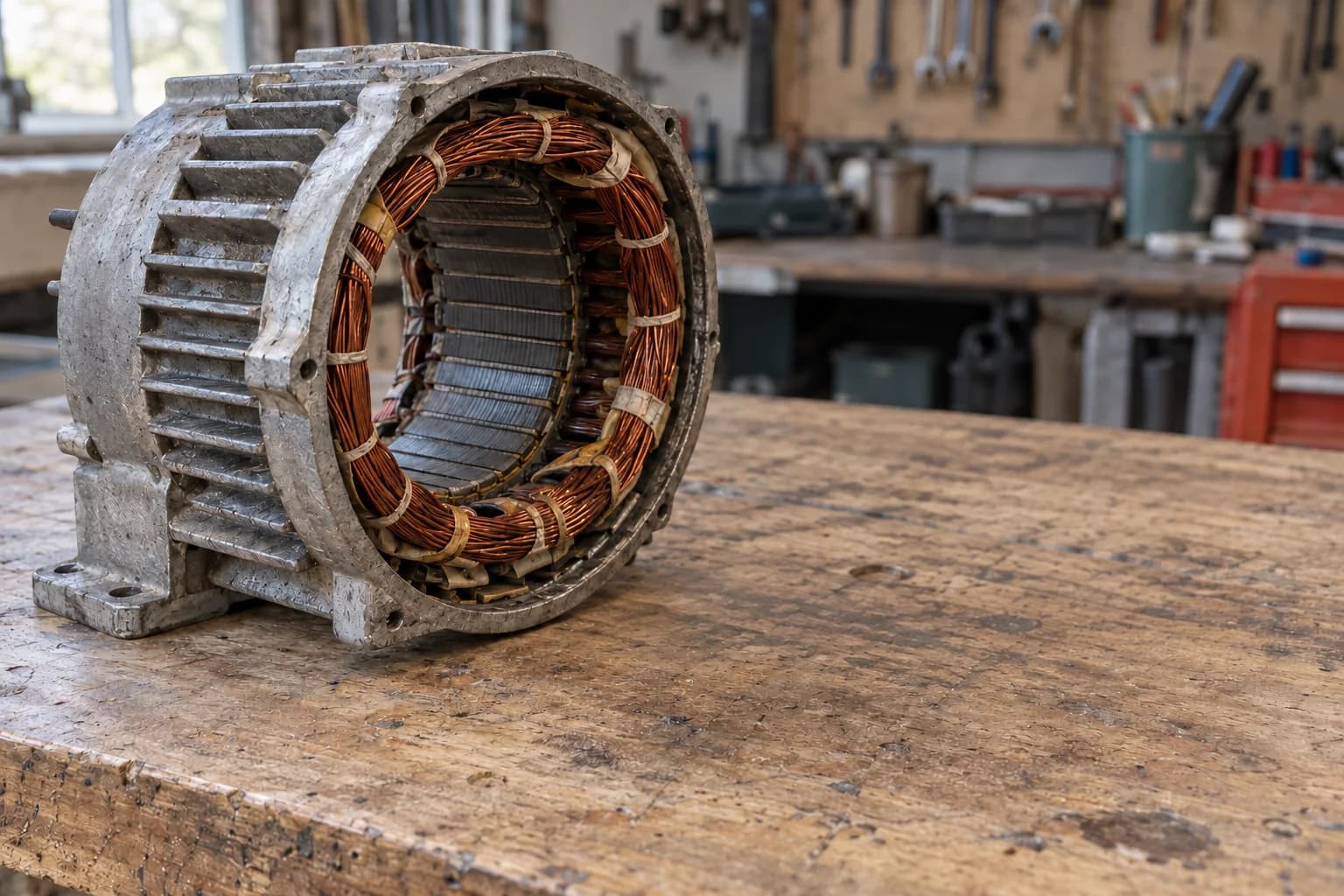
Second, the shaft turns the alternator rotor. Its magnetic field moves relative to coils in the stationary stator, inducing an alternating voltage. This is electromagnetic induction, the principle described by the U.S. Energy Information Administration. Alternators can use different arrangements to establish their magnetic field.
Third, power reaches the connected load through the generator controls, protective devices and distribution wiring. The load determines the current demanded. An electric motor uses electrical input to produce motion; the generator assembly supplies mechanical input to produce electrical output.
Engine speed and voltage regulation have different jobs
For a conventional synchronous generator, alternator speed and pole count determine frequency. The engine governor adjusts fuel delivery as load changes to help hold the required speed. An automatic voltage regulator, where fitted, controls alternator excitation to help maintain output voltage. Cummins describes these separate controls in its application manual.
A sudden load change can disturb voltage and frequency before the controls recover. A motor start can therefore challenge a generator whose steady running demand looks acceptable. Starting capability must cover the actual event and duration. A breaker trip or overload shutdown is a reason to review the load and manual before restarting.
How an inverter generator changes the electrical path
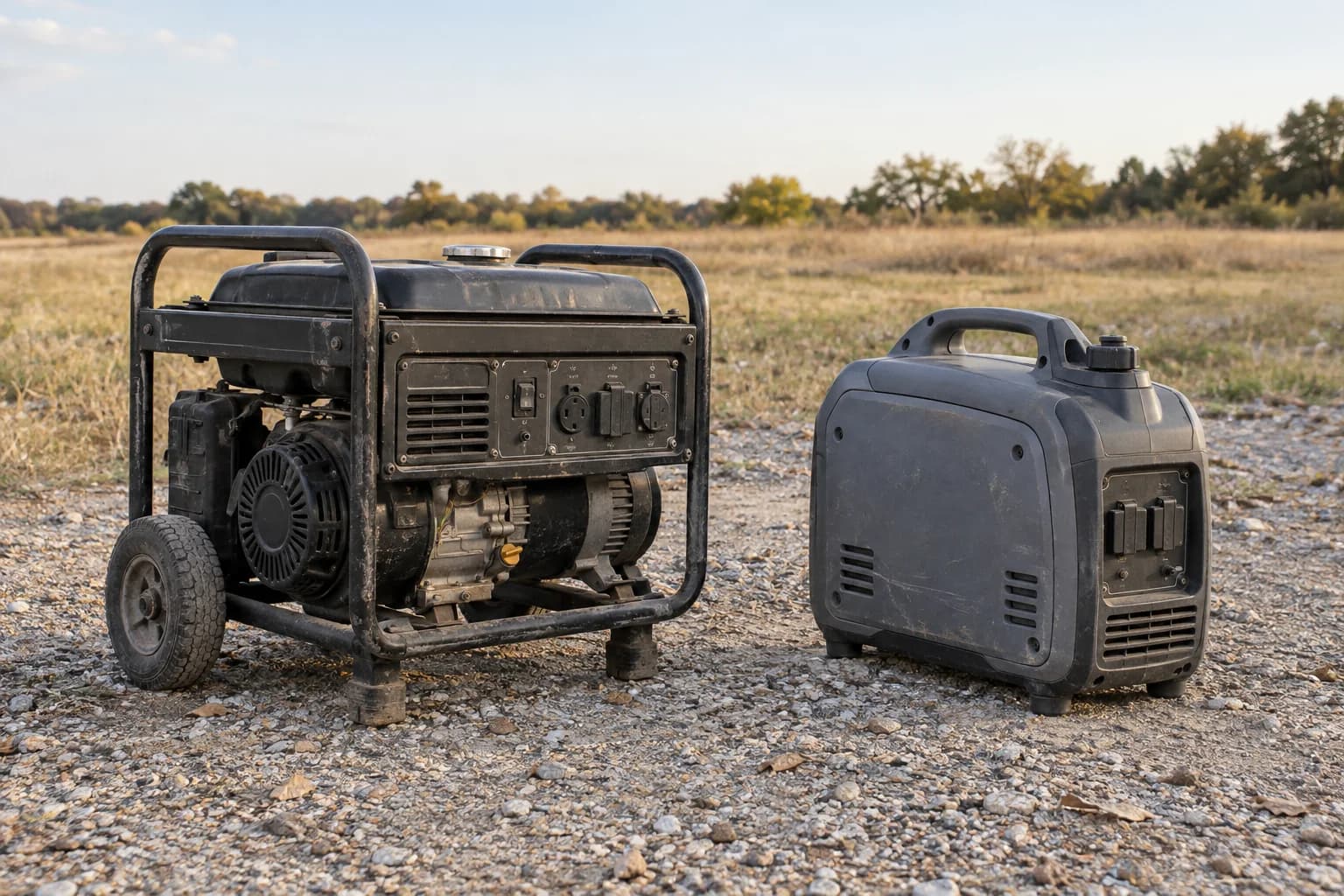
Honda describes an inverter generator as producing AC internally, converting it to DC, then using an inverter to form the final AC output. Electronic control manages that conversion. On models with an economy mode, the engine can change speed with demand while the output frequency remains controlled.
An inverter adds power electronics; it does not remove the engine, fuel or exhaust. Check the exact voltage, continuous output, surge behavior and power-quality specification. The word inverter alone does not prove compatibility with every appliance. Follow the generator and appliance instructions, including any economy-mode restrictions during starting.
| Feature | Conventional synchronous generator | Inverter generator |
|---|---|---|
| Output path | Alternator supplies AC through its control and protection system | Internal AC is converted to DC, then back to output AC |
| Frequency control | Related to alternator speed and pole count | Final AC waveform is formed electronically |
| Engine behavior | Speed control supports the required frequency under load | Some models vary speed with demand |
| Appliance selection | Verify voltage quality and starting response for the model | Verify voltage quality and starting response for the model |
| Exhaust safety | Requires safe outdoor combustion-generator operation | Requires safe outdoor combustion-generator operation |
Keep watts, volt-amperes and watt-hours separate
Watts describe real electrical power at a moment in time; 1 kW equals 1,000 W. Volt-amperes describe apparent power. For a single-phase AC load, VA equals RMS volts times RMS amps, and W equals VA times power factor. Cummins gives the relationship kW = kVA × power factor. Do not assume every motor or electronic load has a power factor of 1.
Kilowatt-hours describe energy over time. EIA explains that a constant 1 kW supplied for one hour is 1 kWh. A 4 kW generator rating describes a power limit, not a stored 4 kWh energy supply. Runtime depends on fuel and operating conditions; multiplying rated watts by tank size cannot predict it.
Generator output and outlet ratings are separate limits
Read the continuous or rated output, the temporary maximum output and its allowed duration, and the ratings beside each outlet. Then check the manual for shared breakers, voltage selection and distribution limits. Multiple receptacles provide connection choices; their labels are not capacities you can automatically add together.
For an illustrative 120V outlet rated 20A, multiplying 120 × 20 gives 2,400 VA. It equals 2,400 W only at power factor 1. That arithmetic does not authorize sustained operation at the full rating: the protective device, cord, connector, equipment instructions and applicable continuous-load requirements still apply.
An adapter cannot increase the generator output or the current allowed by the source circuit. A larger plug also cannot create a missing voltage. Match the destination voltage and full connector designation before choosing a cord or adapter.
Worked example: available power, current and energy
Assume a hypothetical generator is rated for 4,000 W continuous at 120V and has a 30A, 120V outlet. Assume an illustrative resistive load consumes a constant 1,500 W at power factor 1, with no starting surge. Use nominal voltage and ignore cord voltage drop for this arithmetic example.
The load current is 1,500 ÷ 120 = 12.5A. The outlet rating corresponds to 120 × 30 = 3,600 VA, or 3,600 W at the assumed power factor. Even though the generator is rated 4,000 W overall, this outlet cannot carry the full 4,000 W: that would require about 33.3A. The remaining generator capacity cannot be forced through the 30A connection.
If the load operates continuously for four hours, it consumes 1.5 kW × 4 hours = 6 kWh. This says nothing about how many gallons are required. For fuel planning, use the model fuel-consumption data at the relevant load, fuel and conditions. A cycling load also needs its actual duty cycle rather than the four-hour constant-load assumption.
Replace these assumptions with your equipment data. A compressor or pump requires separate starting information and acceptable transient voltage. This example demonstrates units and bottlenecks; it does not size a generator or approve a connection.
Use the explanation to build a practical load plan
Create one record for the generator and one for each required load. Keep manufacturer data beside the calculation so a replacement appliance, a different fuel or a changed connection can be checked without reconstructing the assumptions.
- Record generator rated output, temporary output duration, voltage and frequency.
- Record each load running demand and documented starting demand.
- Identify which loads run together and which can start automatically.
- Match the outlet, breaker, cord and destination ratings for each path.
- Verify the operating location and connection procedure before use.
Frequently asked questions
Common questions
Does a generator store electricity?
A fuel-powered generator produces electricity while operating. Its fuel stores chemical energy. A battery power station stores energy in a battery and uses an inverter to supply AC; its capacity is typically specified in watt-hours as well as an output wattage limit.
Why can a generator engine run without powering an appliance?
Engine operation confirms only one part of the system. Output protection, control settings, the cord, receptacle or electrical generating components may prevent usable power from reaching the load. Use the exact manual troubleshooting steps and qualified service for internal faults.
Does a 30 amp outlet mean the generator produces 30 amps?
It identifies the outlet current rating, not a guarantee of available generator output. Check the generator rating at the selected voltage, circuit protection, shared loads and every component in the connection.
Is maximum wattage the same as continuous wattage?
No. A temporary maximum or starting rating applies only under the manufacturer specified conditions and duration. Use the applicable continuous rating for sustained loads, then verify the actual starting event separately.
Primary references
CordFind summarizes connector specifications and public safety guidance. Always follow the instructions supplied with your equipment.
- EIA: How Electricity Is Generated
- Cummins: T-030 Liquid-Cooled Generator Set Application Manual, Controls and Load Calculations
- Honda: Inverter Generator Advantages and Conversion Process
- EIA: Measuring Electricity, Watts and Watt-Hours
- CPSC: Carbon Monoxide Safety and Portable Generators