Quick answer
Inventory every pump, float, alarm, control panel, heater, and communication device in the system. Record voltage, phase, running or full-load current, locked-rotor or manufacturer starting data, pump quantity, control sequence, and required duty. Add other simultaneous generator loads, evaluate the largest permitted pump start, then verify transfer equipment, protection, grounding, voltage drop, weather, fuel, and outage storage with the pump and generator manufacturers.
Identify the installed septic and pump system
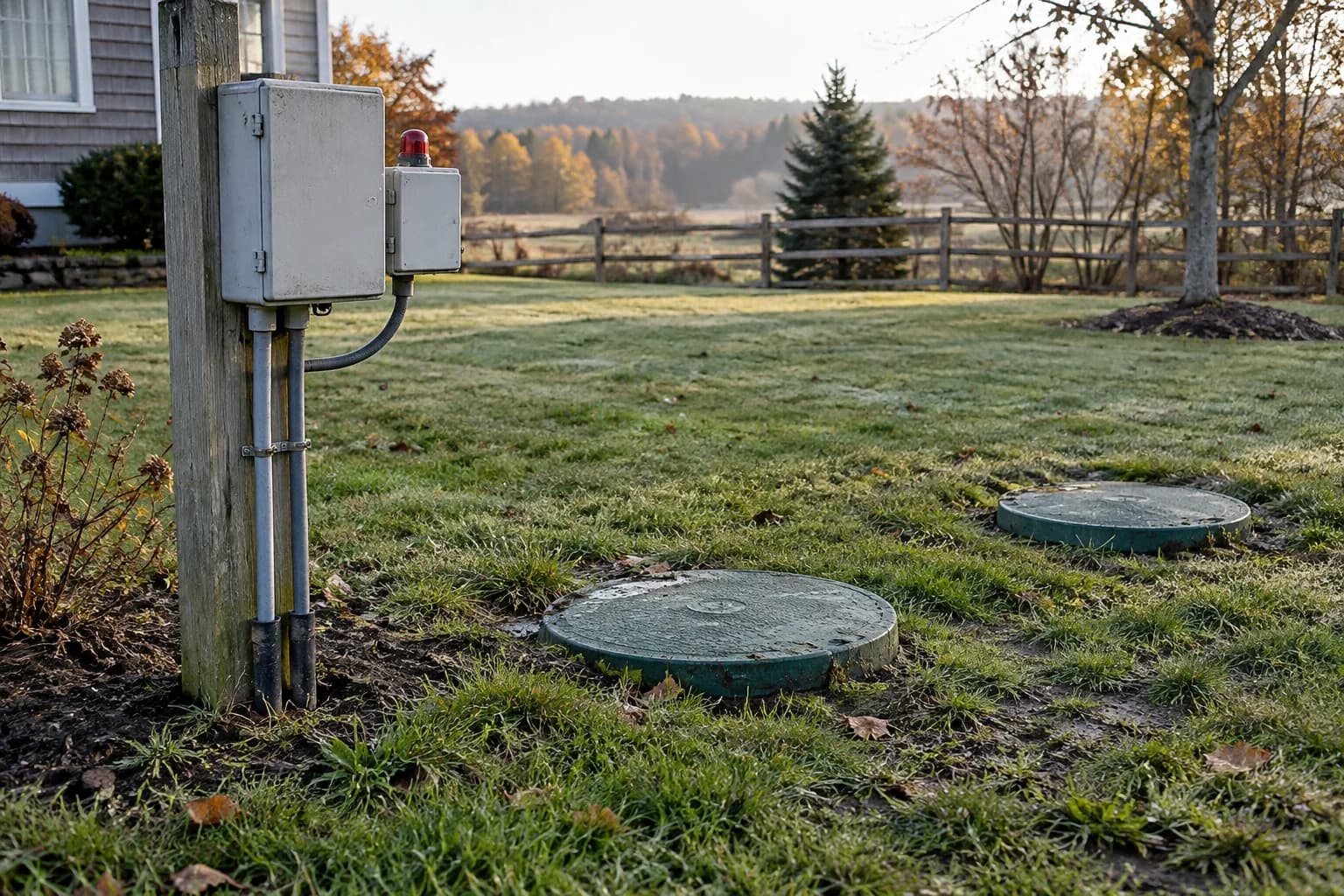
A gravity septic system may continue moving wastewater without an electric distribution pump, although alarms or treatment components can still require power. A pressure-dosed, mound, aerobic, lift, sewage-ejector, or grinder system can depend on one or more pumps and a control sequence. Find the as-built records, panel labels, pump model, and service documentation.
Record whether the station is simplex or duplex, the pump type, horsepower, voltage, phase, full-load or service-factor current, control panel, float or level sensors, alarm, alternation logic, high-water response, and any telemetry. Do not size from the word septic or horsepower alone.
Use manufacturer motor data for running and starting demand
Current pump literature shows that products with the same nominal horsepower can have different voltage and current ratings. Obtain locked-rotor current, starting watts, or generator application guidance from the pump or motor manufacturer when available. Breaker size and float-switch maximum rating are not substitutes for actual motor demand.
For single-phase input, an apparent-power screen multiplies volts by amps. For balanced three-phase input, multiply line-to-line volts by line amps and the square root of three. The generator decision also depends on power factor, starting duration, voltage dip, frequency recovery, control contactors, cable voltage drop, and whether another motor can start at the same time. Duplex systems need their permitted overlap and alternation sequence reviewed.
Keep the alarm and controls powered in the intended sequence
The pump motor may be the largest load, but the alarm and control panel tell occupants or operators when storage is being consumed or a pump has failed. Identify whether the alarm uses a separate branch circuit or battery backup and whether a transfer operation resets timers, counters, alternation, or remote communication.
Do not bypass floats, overload protection, motor contactors, or alarm circuits to make a temporary connection work. If a portable generator is part of the plan, the approved transfer point and startup procedure should restore the complete control sequence, not only energize an isolated pump motor.
Calculate how long the system can wait without pumping
Determine usable storage above the normal operating level and below a backup or overflow condition. Combine that with household or facility wastewater use to establish a response time. Reduce water use during an outage according to local health or septic-service guidance, but do not assume storage is unlimited.
A generator that requires manual placement, fueling, and startup may not protect an unattended property or a station with short available storage. The backup plan can require automatic standby power, battery-backed alarms, an alternate pump-out response, or a written contact procedure in addition to generator capacity.
Verify the electrical path and test a controlled pump cycle
Confirm generator voltage and phase, receptacle or feeder, breaker, cord or conductors, transfer equipment, neutral and grounding arrangement, GFCI requirements, enclosure and weather rating, and the one-way conductor distance. Wastewater areas add moisture, corrosion, contamination, and access hazards that require appropriate equipment and qualified work.
Using the pump and control manufacturer procedure, test an approved generator sequence and observe voltage, frequency, pump start, control panel, alarm, discharge, float operation, and return to utility. Stop for stalled starts, repeated trips, overheated conductors, abnormal sound, sewage backup, damaged controls, or unsafe access.
Frequently asked questions
Common questions
How many watts does a septic pump use?
There is no single septic-pump wattage. Pump type, horsepower, voltage, motor design, head, controls, and starting behavior vary. Use the installed pump and motor documentation.
Can a portable generator run a septic pump?
It may when the generator supports the exact voltage, running and starting demand, controls, transfer method, protection, and site conditions. The plan also needs safe outdoor generator operation and enough response time before storage is exhausted.
Does a gravity septic system need generator power?
A fully gravity-based flow path may not need a distribution pump, but alarms, treatment components, controls, or other property systems can still require electricity. Verify the installed design rather than assuming.
Should I power the septic alarm separately?
Follow the control-panel and system design. Some alarms use a separate circuit or battery backup so a pump-circuit failure remains visible. Do not alter that arrangement from generic advice.
Primary references
CordFind summarizes connector specifications and public safety guidance. Always follow the instructions supplied with your equipment.
- US EPA: How to Care for Your Septic System
- US EPA: Resolving Septic System Malfunctions
- Zoeller: Sewage Package Pump Specifications FM3292
- Zoeller: Sewage and Effluent Lift Station Selection Guide
- US EPA: Power Resilience Guide for Water and Wastewater Utilities