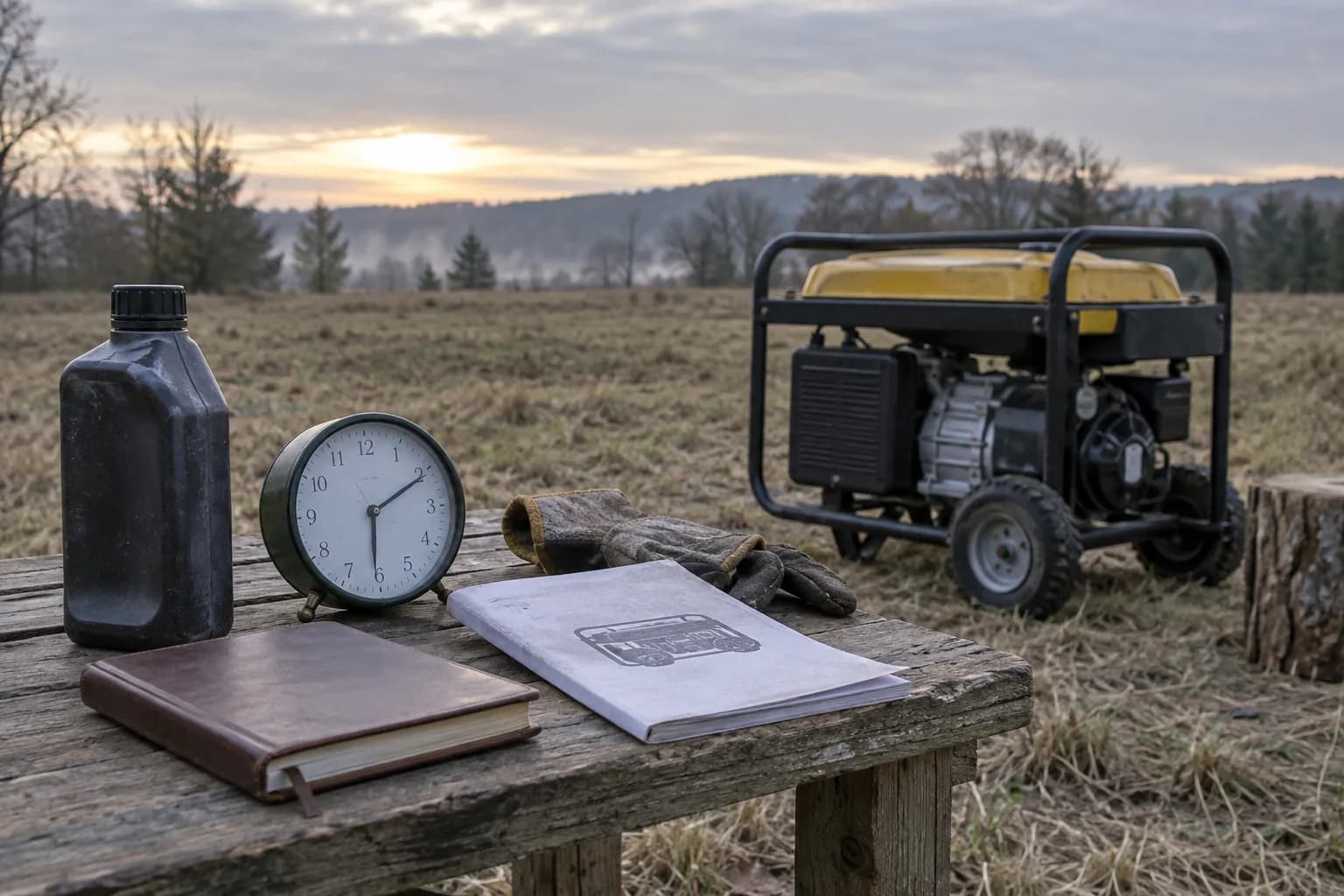
Quick answer
Use the exact model manual and current manufacturer guidance to find the permitted duty, inspection schedule, oil-check procedure, refueling method, maintenance intervals, and any required shutdown period. Do not promise a universal number of hours. For long outages, build a written cycle for load removal, safe shutdown, cooldown, inspection, maintenance, refueling, and restart.
There is no universal continuous-run limit
Portable generator manuals define model-specific fuel capacity, rated load, operating environment, oil system, inspection tasks, and service intervals. A large tank or external fuel supply does not remove the need to check oil, cooling, leaks, cords, load, and the required maintenance schedule.
Home standby systems can run automatically for long outages, but automatic operation does not mean maintenance-free operation. Current manufacturer guidance for some air-cooled standby families calls for a controlled shutdown and inspection during extended use. Other models and liquid-cooled sets can have different procedures.
Read the duty rating before comparing hours
Standby, prime, and continuous ratings describe different applications and load assumptions. A standby rating is not automatically suitable for an unlimited-hour prime-power job. Likewise, a portable generator intended for intermittent emergency use should not be treated as an industrial continuous-duty set because the wattage label looks sufficient.
Record the rating name, maximum permitted load, annual-hour or average-load limits when stated, ambient conditions, altitude, fuel, and maintenance assumptions. Ask the manufacturer or qualified provider to confirm the intended application when the generator will replace utility power for an extended period.
| Limit | Evidence to locate | Planning response |
|---|---|---|
| Fuel | Published rate and usable supply | Schedule safe shutdown and refueling |
| Oil and inspection | Manual interval and check procedure | Create hour-based inspection stops |
| Maintenance | Service table and hour meter | Stage approved parts and qualified support |
| Duty rating | Standby, prime or continuous rating | Use the set only for its approved application |
| Environment | Temperature, altitude and ventilation limits | Apply manufacturer derating and site controls |
| Load | Running level and starting events | Schedule loads and avoid repeated overload |
Build a portable-generator operating cycle
A portable generator should be shut down and allowed to cool before refueling. Remove or switch off loads according to the manual, stop the engine, close the fuel supply where required, and wait the specified cooling period. Inspect for leaks, damage, blocked airflow, loose connections, and maintenance now due before restarting.
Never add fuel to a running or hot generator. Do not defeat a low-oil shutdown to extend runtime. If the model cannot be checked or serviced safely during the outage, reduce reliance on it and arrange an alternate power plan.
Long-running standby systems still need controlled checks
A home standby generator can start, transfer, and operate without the homeowner at the controls. During a prolonged outage, follow the exact shutdown sequence before approaching or servicing it. The sequence may require removing building load, opening transfer or generator breakers, stopping the unit, disabling automatic start, and allowing cooldown.
Check the current model guidance for oil level, leaks, debris, louvers, battery status, service intervals, and restart steps. Do not copy a shutdown sequence from another brand or model. A transfer switch and automatic controller can energize or start equipment unexpectedly.
Use an hour-based outage log
Record generator hours at startup, every inspection, refueling, maintenance event, and final shutdown. Note fuel added, oil condition, alarms, weather, approximate load, unusual sound, and any tripped protection. The log makes the next service deadline visible and helps a technician understand what happened during the outage.
Pair the log with a load schedule. Refrigeration, pumps, cooking, charging, and heating support do not always need to operate simultaneously. Lower and steadier loading can reduce fuel use, but some diesel applications also have minimum-load considerations. Follow the exact generator guidance rather than targeting one universal percentage.
- Record start and stop hour-meter readings
- Schedule model-specific oil and inspection checks
- Keep approved fuel and service supplies available
- Document alarms and repeated trips without bypassing them
- Plan an alternate source before the generator reaches a stop condition
Frequently asked questions
Common questions
Can a generator run for 24 hours?
Some generators can operate through a long outage, but the exact model may require inspection, oil checks, maintenance, refueling shutdowns, or a cooldown within that period. Use the current manual.
Can I refuel a generator while it is running?
No. Shut down the portable generator and allow it to cool according to the manufacturer instructions before adding fuel.
Does an external fuel tank make runtime unlimited?
No. Oil, maintenance, duty, temperature, load, inspection, fuel-system approval, and other limits still apply.
How often should a standby generator be checked during a long outage?
Use the model-specific continuous-use guidance. Some current air-cooled standby guidance calls for a controlled daily inspection during continuous operation, but procedures vary.
Primary references
CordFind summarizes connector specifications and public safety guidance. Always follow the instructions supplied with your equipment.
- Generac: Continuous-Use Maintenance for Home Standby Generators
- Generac: Shutdown During a Long-Term Outage
- Generac: Home Standby Maintenance Schedule
- Honda: Generator Operation
- Cummins: Generator Manuals and Support