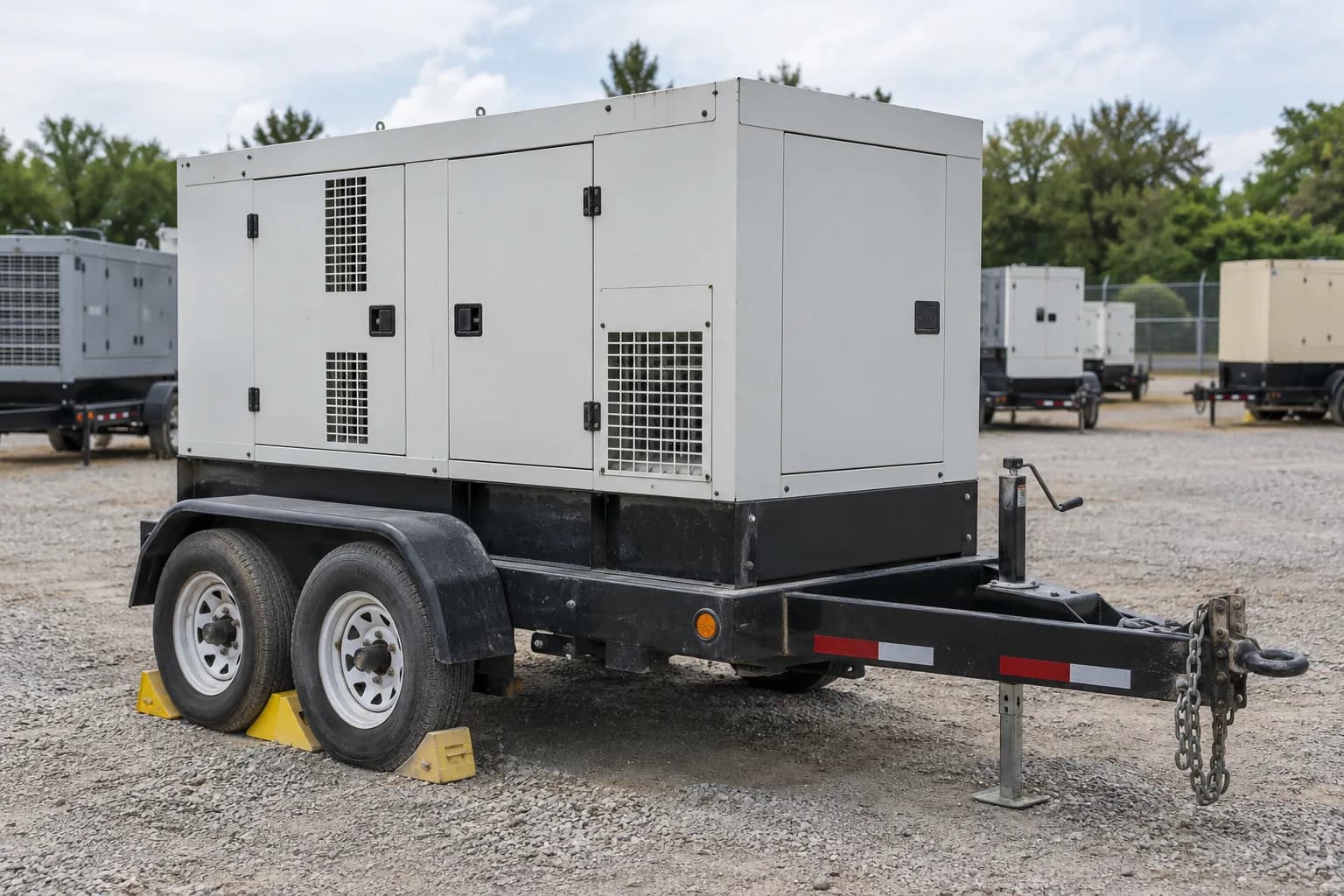
Quick answer
Start with a time-based load schedule and the required voltage, phase, frequency, starting demand, and power quality. Select a unit with the correct manufacturer rating for the intended duty, then plan compatible distribution, grounding, fuel, transport, security, exhaust clearance, and service support. Terminal connections and configuration changes belong to qualified personnel.
Define the operating job before choosing kilowatts
Write down why the generator is needed, how many hours it will run, which loads are critical, and what changes during a shift. Emergency standby, planned maintenance, construction, an event, and continuous remote operation have different consequences for redundancy, fuel, noise, service response, and acceptable downtime.
Generator manufacturers distinguish standby, prime, and continuous or base-load ratings. Those labels are not interchangeable marketing terms. Use the published rating whose operating limits match the job, ambient conditions, and expected annual hours. Ask the rental supplier to identify the exact rating used in its proposal.
Build a load profile that includes starting and power quality
Record volts, phase, hertz, running kilowatts or amps, power factor, starting method, starting current, and duty cycle for every major load. Note the sequence in which motors, pumps, HVAC equipment, cranes, welders, compressors, chargers, and lighting start. The largest simultaneous total may occur for seconds rather than hours, but the generator still has to hold acceptable voltage and frequency through that event.
Nonlinear loads and variable-frequency drives can introduce harmonics and unusual current waveforms. Sensitive controls may require tighter voltage or frequency performance than resistive heaters. Provide the equipment list to the generator manufacturer or rental application team instead of applying one blanket percentage reserve to every project.
| Load information | Site information | Operating information |
|---|---|---|
| Voltage, phase, frequency and power factor | Altitude, temperature, weather and available footprint | Hours per day, days, duty and criticality |
| Running and starting demand by load | Cable routes, distribution points and grounding plan | Fuel access, refill windows and expected load changes |
| Motor starting method and nonlinear equipment | Noise limits, security and exhaust separation | Monitoring, service response and redundancy needs |
Specify distribution and connection equipment at the same time
The quote should describe how power leaves the generator and reaches each load. Include terminal or receptacle type, main protection, feeder assemblies, transformers, distribution boxes, branch protection, GFCI requirements, cable ramps, and final connectors. A correctly sized generator can still be unusable if the distribution package does not match the site.
Mobile generator manuals commonly require installation and electrical work by qualified personnel. Follow the exact manual for grounding, neutral configuration, transfer equipment, connection sequence, shutdown, and verification. Never energize building wiring through an ordinary receptacle or an improvised cord.
Plan placement, fuel and access for the full rental period
Choose a stable location that supports the combined trailer and fuel weight and preserves required ventilation, exhaust discharge, cooling airflow, service access, fire separation, and cable routing. Keep exhaust away from people, air intakes, doors, windows, trenches, and enclosed or partially enclosed spaces. Protect the unit from traffic without blocking airflow or emergency access.
Estimate fuel from the exact model load-rate data, expected hour-by-hour load, usable tank quantity, and a reserve. Arrange safe delivery, spill response, security, and refueling windows. A large tank does not guarantee the required runtime if the estimate used an unrealistically light load point.
Use a written handover and return checklist
At delivery, record model, serial number, meter hours, fuel level, visible damage, configured voltage, breaker status, cable inventory, manuals, emergency contacts, and agreed service response. Confirm who is authorized to operate, refuel, reset, reconfigure, and connect the unit. Test the planned load sequence before the generator becomes the only source.
During operation, log load, voltage, frequency, fuel, alarms, maintenance, and changes to the distribution system. At return, document hours, fuel, damage, missing accessories, and unresolved faults. These records make rental charges and future sizing decisions easier to verify.
Frequently asked questions
Common questions
What size towable generator do I need?
Size from the actual voltage, phase, running load, motor starts, nonlinear loads, sequence, duty rating, site derating, and reserve. A supplier should review the load list rather than selecting from square footage alone.
Are towable generators always diesel?
No. Mobile sets are available in several fuel configurations. Choose from the exact model specifications, fuel availability, emissions requirements, duty, runtime, and site rules.
Can I connect a towable generator to a building?
Only through compatible transfer and distribution equipment under an approved, qualified installation plan. Never backfeed a building through a receptacle.
What should be included in a rental quote?
Include the exact generator and rating, distribution package, cables, transformers if needed, delivery, setup responsibility, fuel, service response, monitoring, testing, pickup, and damage or overtime terms.
Primary references
CordFind summarizes connector specifications and public safety guidance. Always follow the instructions supplied with your equipment.
- Caterpillar: Rental Power Planner
- Generac: Mobile Gaseous Generator Owner Manual
- Generac: MDE570 Mobile Diesel Generator Owner Manual
- OSHA: Using Portable Generators Safely