Quick answer
Create a phase-by-phase load and location schedule, then select the generator and temporary distribution together. Document voltage, phase, motor starts, feeder routes, branch protection, required GFCI or assured grounding program, grounding and bonding, fuel, weather, traffic protection, inspections, changes, and shutdown. Qualified personnel must control configuration and electrical work.
Map loads and locations for each construction phase
Divide the project into meaningful phases such as civil work, structure, enclosure, rough-in, drying, finishes, testing, and turnover. For each phase, list offices, lighting, pumps, compressors, welders, hoists, cranes, temporary heat, ventilation, chargers, saws, and specialty equipment. Record where each load will be used and which loads can operate at the same time.
Update the plan before the work changes, not after breakers begin tripping. A temporary system often grows through small additions that were individually reasonable but collectively exceed a feeder, branch, one generator leg, or fuel plan. A weekly look-ahead meeting can identify upcoming electrical demand and distribution moves.
Size for operating sequence, motor starts and duty
Add the running demand that can overlap, then evaluate motor and equipment starting events in their expected order. Pumps, compressors, hoists, cranes, welders, and HVAC equipment can create short peaks or voltage disturbances. Use nameplate and manufacturer application data. Do not substitute tool count or branch-breaker totals for a load calculation.
Consider whether the generator will provide emergency standby, prime power for a shift, or near-continuous power. Select the applicable manufacturer duty rating and account for altitude, temperature, ventilation, fuel, and planned operating hours. Document which loads will be delayed or shed when a major motor starts.
| Equipment | Electrical data | Schedule data | Distribution data |
|---|---|---|---|
| Pump or compressor | Volts, phase, running amps, starting method and current | Start time, run time and overlap | Assigned box, branch, cord and route |
| Welder or nonlinear load | Input rating, duty cycle and manufacturer generator guidance | Users and expected coincidence | Feeder and branch protection |
| Lighting and office loads | Watts, volts, power factor where applicable | Hours and criticality | Panel or box, circuit and location |
Design temporary wiring as a system
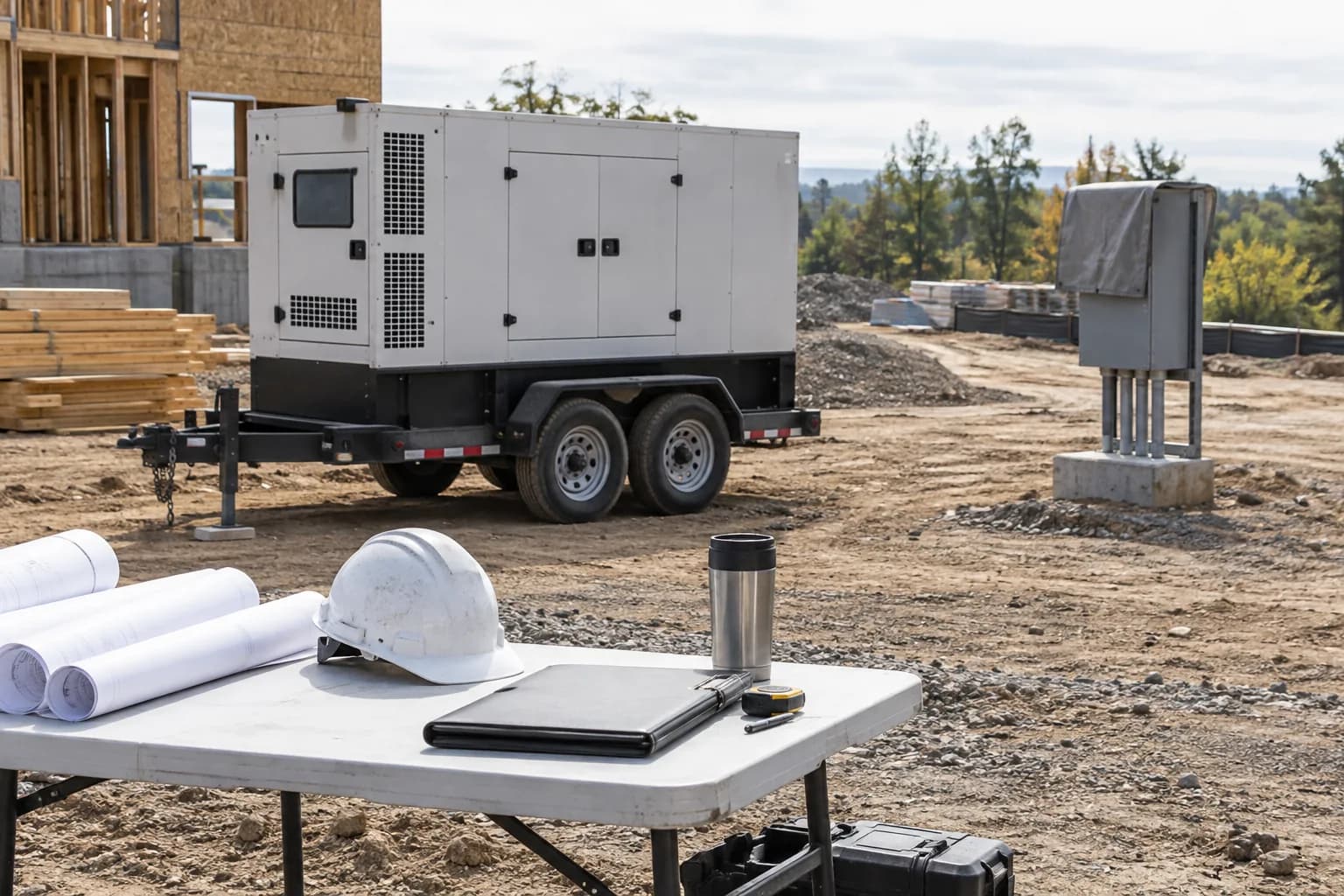
OSHA temporary wiring provisions address feeders, branch circuits, receptacles, grounding, physical protection, and removal after the purpose is complete. Develop a one-line drawing or equivalent schedule that shows the generator, main protection, feeders, transformers, panels or distribution boxes, branch circuits, and major loads. Label field equipment to match the plan.
Choose connectors and cable assemblies by complete electrical configuration and listing. Route cables away from standing water, sharp edges, heat, access doors, and vehicle paths. Use suitable ramps, supports, covers, strain relief, and elevated routing where required. Do not pass improvised cords through conditions that crush or damage them.
Document ground-fault and grounding controls
For the receptacle circuits covered by OSHA construction rules, the employer must use GFCI protection or a compliant assured equipment grounding conductor program. An assured program requires written procedures, inspections, testing, records, and competent-person administration. It is not simply a decision to omit a GFCI because a tool causes trips.
Generator grounding and neutral treatment depend on how the generator is connected and whether it supplies only equipment through its mounted receptacles or also feeds structures and distribution. Follow the exact generator instructions and applicable rules. Test equipment grounding continuity under the selected program and remove damaged equipment from service.
Control fuel, placement, inspection and change
Place engine-driven equipment outdoors with exhaust and cooling discharge away from people, buildings, openings, and air intakes. Preserve manufacturer clearances and service access. Protect the generator and fuel supply from traffic, flooding, unauthorized access, ignition sources, and incompatible storage while keeping emergency shutdown reachable.
Assign responsibility for pre-use inspection, refueling, load changes, alarm response, testing, maintenance, and shutdown. Log generator hours, fuel, load, faults, GFCI tests, assured-grounding records where used, damaged cords, and distribution changes. Remove temporary wiring when it no longer serves the construction purpose.
- Review the next phase before adding loads
- Test the intended start sequence under controlled conditions
- Inspect portable cord-and-plug equipment before use
- Stop after repeated trips, abnormal voltage or damaged equipment
- Keep drawings, labels and field conditions aligned
Frequently asked questions
Common questions
How do I size a generator for a construction site?
Build a phase-specific load schedule with voltage, phase, running demand, starts, duty cycle, overlap, derating, and reserve. Have the supplier or designer model challenging loads and the planned sequence.
Do construction generator outlets need GFCI protection?
OSHA specifies GFCI protection or a compliant assured equipment grounding conductor program for covered receptacle circuits. Confirm the exact applicability and administer the chosen method fully.
Can one generator serve several distribution boxes?
Potentially, when the source, feeders, protection, voltage, phase, grounding, boxes, branch circuits, voltage drop, and combined load are designed as one compatible system.
How often should the temporary power plan be updated?
Before material changes to loads, construction phase, generator configuration, feeders, distribution locations, or operating schedule, and whenever inspections or measurements show the plan no longer matches the field.
Primary references
CordFind summarizes connector specifications and public safety guidance. Always follow the instructions supplied with your equipment.
- OSHA 1926.404: Wiring Design and Protection
- OSHA 1926.405: Wiring Methods, Components, and Equipment
- OSHA: Construction Electrical Incidents eTool
- Caterpillar: Three Steps to Temporary Power