Quick answer
Inventory each load from its nameplate, build the real simultaneous schedule, add the largest documented additional start and keep a visible reserve. Then match voltage and phase and document weather protection, cable routing, applicable personnel protection and venue or qualified review. Do not energize an incomplete plan.
Build the load schedule by operating period
Collect each vendor and production load before assigning circuits. Record voltage, phase, frequency, running input, starting demand, plug or connection, duty and the times it will operate. Separate audio, lighting, cooking, refrigeration, pumps, inflatables, charging and support loads.
Use the maximum simultaneous period, not the sum of equipment that never runs together. Preserve a reserve for changes, but do not use reserve as permission to add undocumented vendors or equipment on site.
Design the complete temporary distribution path
Match generator output, disconnects, overcurrent protection, distribution boxes, connectors, flexible cords, grounding, neutral configuration and every downstream load. Record feeder and branch-circuit limits separately from the generator marketing rating.
Construction and workplace rules can include requirements for GFCI or an assured equipment grounding conductor program, suitable flexible cords, wet-location enclosures and protection from damage. Which rules apply depends on the activity and jurisdiction, so obtain a qualified and local determination rather than applying one construction rule to every event.
Control public, vehicle, weather and exhaust exposure
Keep generators outside and control carbon-monoxide exposure according to CPSC guidance and the manufacturer instructions. Establish barriers and supervision for hot surfaces, moving parts, fuel, energized equipment and noise without blocking cooling or exhaust.
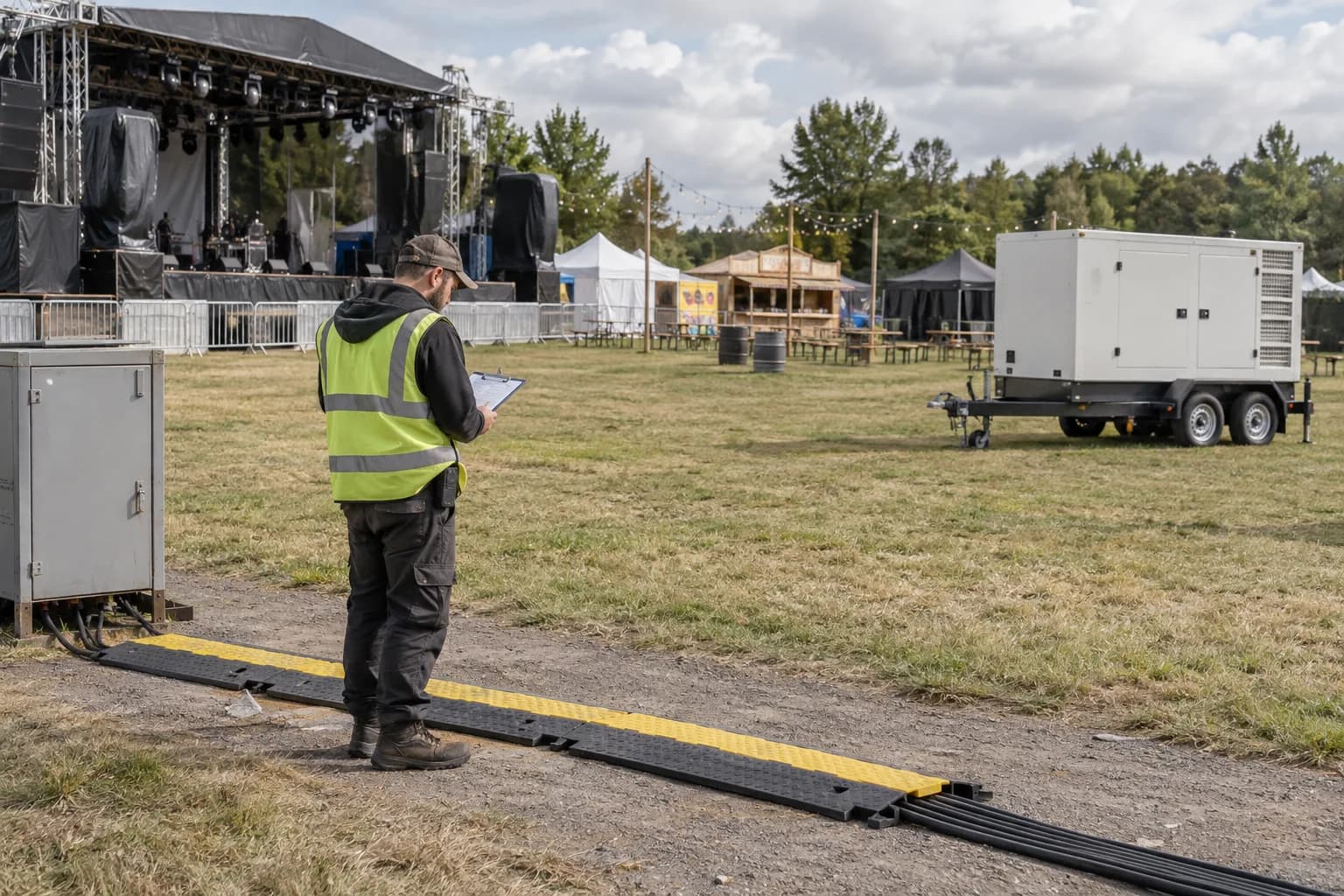
Route and protect cables so they are not crushed, cut, submerged, driven over, pinched in doors or accessible for tampering. Use equipment and enclosures suited to the weather and location. Stop operation when water entry, damage, overheating or unstable output appears.
Use an energization and shutdown handoff
Name the person authorized to energize, add loads, respond to trips, refuel and shut down. Keep the one-line or distribution map, load schedule, equipment ratings, inspection record, emergency contacts and manufacturer instructions at the control point.
Test the system before public opening with the venue and qualified temporary-power lead. Recheck after rain, relocation, cable-route changes, a protective-device trip or the addition of any vendor load.
Frequently asked questions
Common questions
How do I size a generator for an event?
Use the maximum simultaneous running schedule plus documented starting demand, then verify voltage, phase, per-circuit limits, distribution equipment, environmental controls and a reasonable reserve.
Does OSHA construction GFCI guidance apply to every festival?
Not automatically. Requirements depend on the work activity, site and jurisdiction. Construction and workplace standards are important references, but the venue and responsible safety or electrical authorities must identify what applies.
Can extension cords cross a public walkway?
The route must be designed and protected against damage and public contact under the applicable rules and venue plan. Do not place unprotected cords where people or vehicles can damage or trip over them.
Can the event open when the generator has enough watts but a site check is incomplete?
No. Capacity does not resolve weather, routing, protection, grounding, exhaust, public access or approval gaps. Keep the distribution de-energized until the complete plan is accepted.
Primary references
CordFind summarizes connector specifications and public safety guidance. Always follow the instructions supplied with your equipment.
- OSHA: Wiring Design and Protection, 1926.404
- OSHA: Wiring Methods, 1926.405
- OSHA: Use of Equipment, 1910.334
- FEMA: Temporary Emergency Power Course IS-815
- CPSC: Generators and Engine-Driven Tools